 Skagit County
 Deck Replacement Built for Sedro-Woolley's Climate
Sedro-Woolley sits in the Skagit Valley, where long wet winters, a humid growing season, and moisture-laden air off the Sound and the river bottomland combine to put real stress on outdoor structures. A deck here doesn't fail because homeowners neglect it. It fails because Skagit County weather is relentless about finding weak points: end grain that wasn't sealed, fasteners that were never rated for ground contact, ledger boards that were never flashed correctly, or framing lumber that looked fine on installation day but had no way to dry out once the rains started in October and didn't really let up until June.
When we replace a deck in Sedro-Woolley, we're not just swapping old boards for new ones. We're correcting the parts of the build that let moisture win the first time, so the replacement actually outlasts the deck it's replacing.
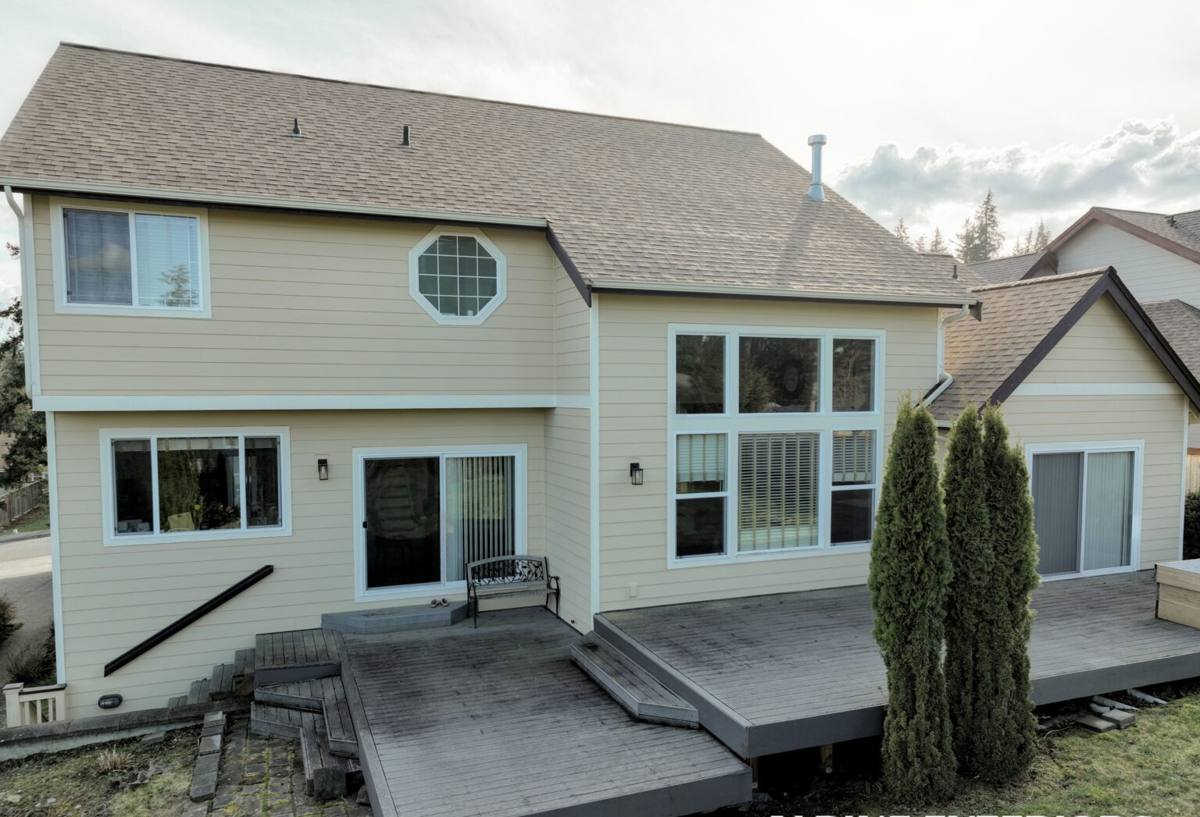
Why Decks Wear Out Faster Here Than in Drier Climates
Skagit County doesn't get extreme weather so much as it gets persistent weather. That's actually harder on a deck than the odd big storm. A few specific patterns show up again and again on decks we've assessed in this area:
- Moss and algae season runs long. Shaded decks, north-facing decks, and anything under fir or cedar canopy can stay damp for weeks at a time, which is exactly what moss needs to take hold on decking boards and stair treads.
- Driving rain gets under things. Wind-driven rain doesn't just fall on a deck, it pushes sideways into ledger connections, rail post bases, and any gap where flashing was skipped or done wrong.
- Humid air off the valley and Sound keeps wood from fully drying. Even sealed lumber needs stretches of dry weather to shed moisture. In a valley climate, those stretches are shorter and less frequent, so any small crack in a sealant or coating stays wet longer than it would elsewhere.
- Freeze-thaw cycles, even mild ones, work moisture deeper into wood fibers and into hairline cracks in older concrete footings.
None of this means a deck can't last in Sedro-Woolley. It means the build has to account for how much time the wood spends wet, not just how it looks on a dry day.
Signs Your Sedro-Woolley Deck Needs Replacing, Not Just Repair
Not every tired-looking deck needs a full teardown. But there are a few signs that point to replacement rather than patching:
Structural red flags
- Soft, spongy, or spring-loaded decking boards, especially near the house or in shaded corners
- A ledger board that's pulling away from the house, or shows staining and softness where it meets the siding
- Rail posts that wiggle at the base, which usually means the post itself or the framing it's bolted to has rotted
- Footings that have shifted, cracked, or heaved
- Fasteners that are rusted, bleeding stains into the wood, or backing out on their own
Cosmetic issues that don't require replacement
- Graying or weathered wood color on an otherwise sound structure
- Light surface moss that hasn't penetrated the board
- Minor cupping in a few boards that can be spot-replaced
If your deck has structural red flags in more than one spot, patching becomes a losing game. You end up chasing rot from board to board while the framing underneath keeps getting worse.
What a Correct Deck Replacement Actually Involves
A lot of deck jobs go wrong not because of the decking material, but because of what's underneath it. Here's what we treat as non-negotiable on every deck replacement in this area.
Ledger board flashing
The ledger, where the deck attaches to the house, is the single most common source of hidden rot we find in this region. It has to be properly flashed with the flashing integrated behind the house's water-resistive barrier, not just caulked and hoped for. Caulk alone is a maintenance item, not a moisture barrier, and in a climate that stays wet for months at a time, caulk-only ledgers are exactly where we find the worst rot.
Joist protection
Every cut end and every top edge of a joist is a place where water can wick into the wood. We use joist tape or an equivalent membrane on joist tops and seal cut ends before decking goes down, so the framing isn't relying on a single coat of exterior paint or stain to keep it dry for the next 20 years.
Post bases and footings
Posts should sit on top of proper post bases that hold the wood off the concrete, not buried in or bolted flush to a footing where water collects. We check footing depth and condition and replace any that have shifted or cracked before building on top of them.
Fasteners rated for the job
Hidden fastener systems and structural screws need to be rated for the specific decking material and for ground-contact or wet-climate exposure. Mismatched or under-rated fasteners are a common cause of early failure, especially with composite decking, where the wrong fastener can void the manufacturer's warranty outright.
Drainage and airflow underneath
A deck that can't breathe underneath stays wet longer after every rain. Where grading or landscaping has boxed in the underside of a deck, we address that as part of the replacement rather than building a new deck on top of the same drainage problem.
Choosing Decking Material for a Skagit Valley Climate
There's no single right answer here. It depends on your budget, how much upkeep you want to take on, and how the deck is situated relative to sun and shade. We'll walk through the honest trade-offs with you rather than push one product.
| Material | How it handles this climate | Maintenance | Typical lifespan here |
|---|---|---|---|
| Pressure-treated wood | Good rot resistance when installed and sealed correctly; needs the moisture to actually leave, so airflow and sealing matter more here than in dry climates | Annual cleaning, re-sealing every 1-2 years | 15-20 years with upkeep |
| Cedar | Naturally rot-resistant and handles humidity reasonably well, but is softer and more prone to surface wear from the constant damp-dry cycling | Regular cleaning, periodic oil or stain | 15-20 years with upkeep |
| Composite decking | Doesn't absorb water like wood, resists rot at the board level, and handles the region's moss and algae exposure better on the surface | Periodic washing; no staining or sealing | 25-30+ years, manufacturer-dependent |
| PVC decking | Fully synthetic, no wood fiber for moisture to attack, performs well in sustained wet conditions | Low; occasional washing | 25-30+ years |
Whichever material you choose, the framing underneath should be built to the same standard. A composite deck on poorly flashed, under-protected framing will still fail at the structure, even though the boards on top look fine.
Dealing with Moss, Algae, and Surface Growth
Because moss season runs long in this part of Skagit County, we factor surface texture and drainage slope into the build itself, not just the material choice. A few things that make a real difference over the life of the deck:
- Proper board spacing so water sheds through rather than sitting on the surface
- A slight slope away from the house so water doesn't pool near the ledger
- Decking profiles with less surface texture in heavily shaded areas, where deep grooves can trap moisture and organic debris
- Keeping nearby vegetation trimmed back so more of the deck sees sun and airflow during the drier months
No deck in this climate will stay moss-free without any homeowner upkeep, but a well-built deck needs far less scrubbing and far fewer emergency repairs than one where drainage and airflow were an afterthought.
Our Deck Replacement Process
We keep the process straightforward and communicate at each stage, since most homeowners are living around an active job site during the build.
- On-site assessment. We inspect the existing deck, ledger, framing, and footings to determine what's salvageable and what isn't, and to spot any moisture damage that's spread into the house's siding or framing.
- Written estimate. You get a clear breakdown of materials, scope, and cost factors before any work starts, no vague allowances.
- Demolition and disposal. The old deck comes out, including footings if they're compromised, and we haul debris off site.
- Framing and flashing. This is where the long-term durability of the deck actually gets decided, and it's the stage we spend the most care on.
- Decking, railing, and stairs. Installed to the manufacturer's fastening and spacing specifications, which also protects your product warranty.
- Final walkthrough. We go over the finished deck with you, including any maintenance recommendations specific to the material and site conditions.
Questions Worth Asking Before You Sign a Contract
- Will the ledger be flashed with a proper membrane, or just caulked?
- Are footings being inspected and, if needed, replaced or repoured?
- What fastener system is being used, and is it rated for this decking product?
- Is joist tape or an equivalent moisture barrier included?
- Does the estimate include permit costs, and who's pulling the permit?
Permits and Local Requirements
Deck replacements involving structural framing, guardrails, or attachment to the house typically require a permit through the applicable local jurisdiction. Requirements can vary depending on deck height, size, and whether the footprint is changing from the original structure. We handle the permitting conversation as part of the planning process so there are no surprises partway through the build.
Why It Matters That We Already Work in This Area
Building a deck correctly for Sedro-Woolley and the surrounding Skagit County area isn't about a different set of tools. It's about knowing, from repeated experience, which details get skipped by crews used to drier regions and which shortcuts show up as rot two or three winters later. Ledger flashing, footing drainage, and fastener selection matter everywhere, but the margin for error is smaller in a climate that stays wet as long as this one does. A crew that regularly works decks in this valley isn't guessing about how moisture behaves here, they've already seen what happens when it's handled wrong.
If you're weighing repair versus replacement, or just want an honest read on what your current deck's framing looks like underneath the boards, we're happy to take a look. Reach out for a free, no-pressure estimate using the form below.