 Skagit County
 Vinyl Siding Isn't a Bad Product — It's Just Not the Right One for This Climate
Vinyl siding gets a lot right. It's inexpensive, it goes up fast, and for a lot of the country it does exactly what homeowners need it to do for a couple of decades. If you're shopping for siding in Skagit County and you've been quoted vinyl, you're not being sold junk — you're being sold a product that was engineered for a different set of conditions than the ones we actually have here.
We install James Hardie fiber cement siding exclusively. We don't offer vinyl as an option, and we think homeowners deserve an honest explanation of why — not a sales pitch dressed up as one. This page is that explanation.
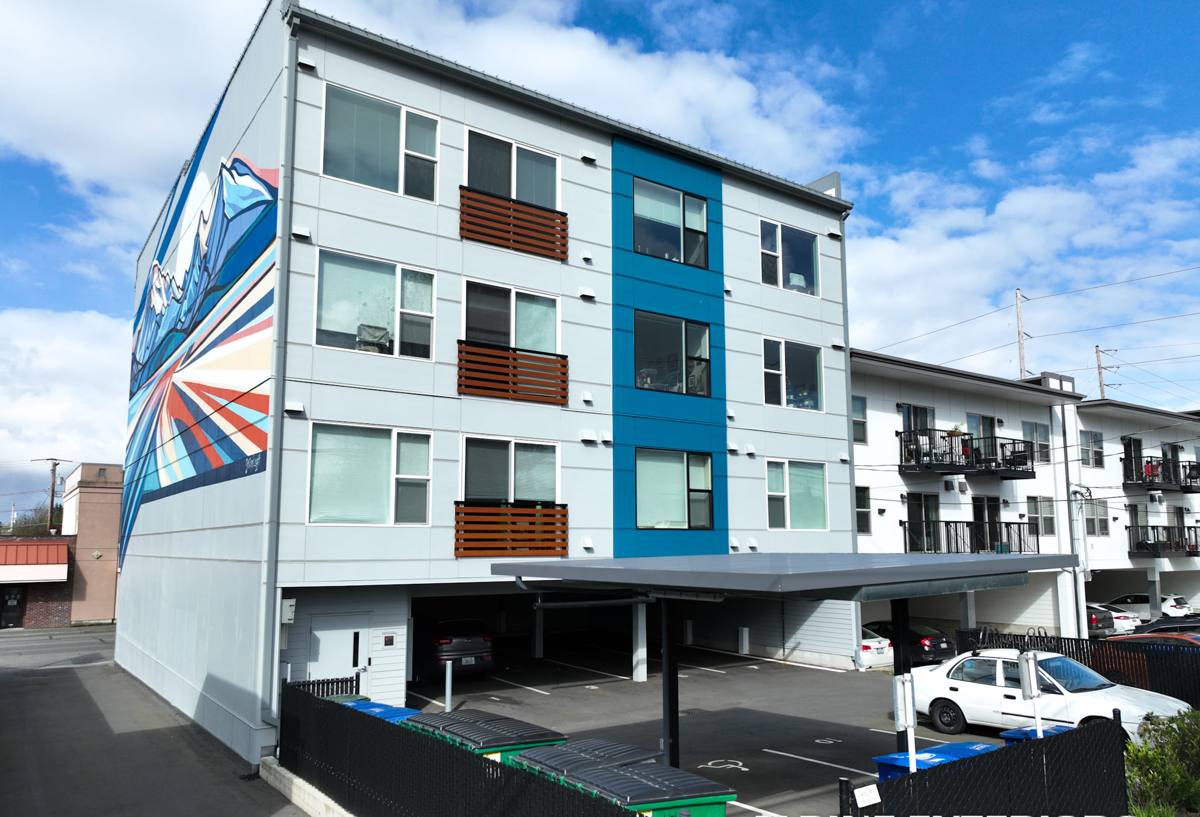
What Skagit County's Climate Actually Does to a House
Skagit County sits at the intersection of a few weather patterns that are individually manageable but genuinely hard on exterior building products when they combine: marine air moving in off the Salish Sea and Puget Sound, long stretches of driving rain off the Pacific systems, and the shaded, damp microclimates that come with our tree cover and cloud ceiling for much of the year. Add in salt-laden air for homes closer to the water in places like Anacortes and the shoreline communities, and you have conditions that test a siding product's ability to handle both moisture and material fatigue at the same time.
None of that is dramatic, storm-of-the-century weather. It's the opposite — it's low-grade, constant exposure, month after month, year after year. That's the kind of exposure that separates products that look fine in a showroom from products that hold up on an actual house.
Moisture Is the Real Test
Vinyl siding is not waterproof at the seams and laps — no lap siding product truly is. What matters is what happens to the water that gets behind it. Vinyl is designed to let moisture drain and the wall assembly behind it to dry. In a drier climate, that drying happens quickly between rain events. In Skagit County, where humidity stays elevated and direct sun is limited for long stretches of fall, winter, and spring, that drying window shrinks. Moisture that gets behind the panel — through wind-driven rain, a compromised seam, or simple condensation — has less opportunity to fully dry out before the next system rolls through.
The Moss and Mildew Season
Anyone who's owned a home in this county for more than a year or two knows the drill: moss and mildew don't take a season off. Vinyl's smooth, low-texture surface doesn't cause moss growth by itself, but the shaded, damp wall sections common on homes here — north faces, areas under eaves, spots shielded from wind — stay wet longer against any cladding, and vinyl's plastic surface holds surface grime and mildew staining in a way that shows more visibly over time than a painted, factory-finished fiber cement surface.
Where Vinyl Physically Struggles Over Time
Beyond moisture, there are a handful of well-understood physical behaviors of vinyl siding that matter more in our climate than in a hot, dry one:
- Thermal expansion and contraction: Vinyl expands and contracts with temperature swings more than fiber cement does. Panels are installed with slotted nail holes specifically to allow this movement — if it's installed too tight, or if a homeowner later has trim, shutters, or fixtures fastened directly through it, panels can buckle or warp.
- Impact and cold brittleness: Vinyl becomes more brittle in cold temperatures. It's not usually a problem in our relatively mild winters, but combined with age and UV exposure, older vinyl can crack from impacts — a thrown branch, a ladder, hail — that it would have shrugged off when new.
- UV fading: Color is baked into the vinyl itself, but UV exposure over years still causes fading and, on darker colors especially, a chalky surface texture. Because the color runs through the material, touch-up isn't really possible — a faded panel is a faded panel.
- Seams and laps stay visible: Vinyl overlaps horizontally in a way that, up close, reads as a plastic product rather than a painted, monolithic-looking wall. That's a cosmetic point more than a performance one, but it's part of why resale-focused homeowners often ask us about alternatives.
Installation Sensitivity Is the Part Nobody Talks About
Here's the part of the vinyl conversation that gets skipped in most sales pitches: vinyl siding's real-world performance depends enormously on installation quality, more so than most homeowners realize. It has to be hung loose enough to expand and contract, flashed correctly at every window, door, and penetration, and lapped with the right amount of overlap for our wind-driven rain exposure. Get any of that wrong — even slightly — and the problems show up years later as water intrusion behind the wall, not as an obvious defect on install day.
This isn't unique to vinyl. Every siding product has an installation-sensitivity profile. But vinyl's failure mode is particularly unforgiving because problems are hidden behind the panel until there's already damage to sheathing or framing. That's a real risk on a house that's going to sit through 60-plus inches of annual rainfall for the next twenty years.
Cost Over the Life of the Siding, Not Just on Install Day
Vinyl's upfront price is genuinely lower than fiber cement, and we're not going to pretend otherwise. The honest comparison has to account for what happens after installation, not just the day-one number.
| Factor | Vinyl Siding | James Hardie Fiber Cement |
|---|---|---|
| Upfront material and install cost | Lower | Higher |
| Expected functional lifespan | 15–25 years, shorter in wet/humid exposure | 30–50+ years when installed to spec |
| Repainting needed | Not designed to be painted (color fades, can't be fully refreshed) | ColorPlus factory finish typically holds 15+ years before repaint is even a consideration |
| Moisture/rot risk behind cladding | Higher if installation or flashing details are imperfect | Lower; fiber cement itself doesn't rot and resists moisture-driven failure |
| Fire performance | Combustible plastic; can melt or deform near heat sources | Non-combustible |
| Impact resistance | Can crack, especially when cold or aged | More impact-resistant; won't dent like metal or crack like aged vinyl |
Run those numbers over a 20- or 30-year ownership window and vinyl's upfront savings often get eaten up by earlier replacement, and in some cases by moisture-related repair costs that never show up in a siding-only comparison.
Warranty Structure: Read What's Actually Covered
Vinyl siding warranties are usually long on paper — sometimes "lifetime" — but they're also prorated, meaning the payout shrinks every year you own the product, and they typically cover material defects only, not labor, not installation error, and not fading past a certain threshold. Many are non-transferable or only partially transferable to a new owner, which matters if you plan to sell.
James Hardie's warranty structure is different in a way that's worth actually reading rather than taking on faith: a 30-year non-prorated warranty on the substrate for most products, plus a separate finish warranty on ColorPlus products that covers the factory finish itself. It's transferable to a subsequent homeowner under Hardie's terms, which is a real factor in a county where a fair number of homes do change hands within a couple of decades.
Why We Only Install James Hardie
We made the call years ago to standardize on one product line rather than offer vinyl, LP SmartSide, or other fiber cement alternatives as cheaper options. That's a business decision with trade-offs — we lose some bids to lower upfront quotes — but it comes down to a straightforward standard: we want to install something once, install it correctly, and not have a homeowner calling us in twelve years about moisture damage or fading that a better material choice would have avoided.
James Hardie's fiber cement is non-combustible, holds paint and factory finish far longer than vinyl holds its baked-in color, doesn't expand and contract the way plastic does, and is engineered in HZ5 and HZ10 climate zone formulations specifically for regions like ours with sustained moisture exposure. It's not the cheapest option on day one. It's the option we're willing to put our name behind for the next several decades on a house in this climate.
Questions Worth Asking Before You Decide
- What's the manufacturer's actual warranty language — non-prorated or prorated, and what specifically voids it?
- Is the warranty transferable if you sell the home, and under what conditions?
- How is the product rated for moisture exposure and freeze-thaw performance in a marine climate?
- What happens to the color and surface finish after 10, 15, 20 years of Pacific Northwest UV and rain exposure?
- Who is responsible for correcting a problem that traces back to installation rather than the material itself?
- What's the realistic total cost of ownership — including any repainting, repair, or earlier replacement — over 20 to 30 years, not just the installed price today?
Get a Straight Answer for Your House
Every home in Skagit County sits in a slightly different exposure — closer to the water, more tree cover, more sun, more wind. The right siding answer depends on your specific house, not a generic rule. If you'd like an honest look at what your home needs and a no-pressure estimate for James Hardie siding, we're glad to walk the exterior with you and talk through it. Use the form below to request a free estimate.