 Skagit County
 Siding in Cedardale: Built for a Wet, Salty Corner of Skagit County
Cedardale sits in one of the more exposed pockets of Skagit County, close enough to Puget Sound and the Skagit River delta to catch salt-laden air off the water and the kind of driving, sideways rain that Western Washington winters are known for. Homes here don't get a break between storms the way inland properties sometimes do, and that steady moisture load is exactly what wears exterior siding down over the years. If you own a home in or around Cedardale, the siding on it is doing more work than most homeowners realize.
We're a Skagit County-based exterior contractor, and Cedardale is part of our regular service area. We understand what the local climate does to a house because we see it on every service call: moss creeping up north-facing walls, paint that's chalked and faded well before its time, and siding seams that have opened up just enough to let water behind the surface. This page walks through what we see locally, how we approach siding work here, and why we've standardized on one product system instead of offering everything on the market.
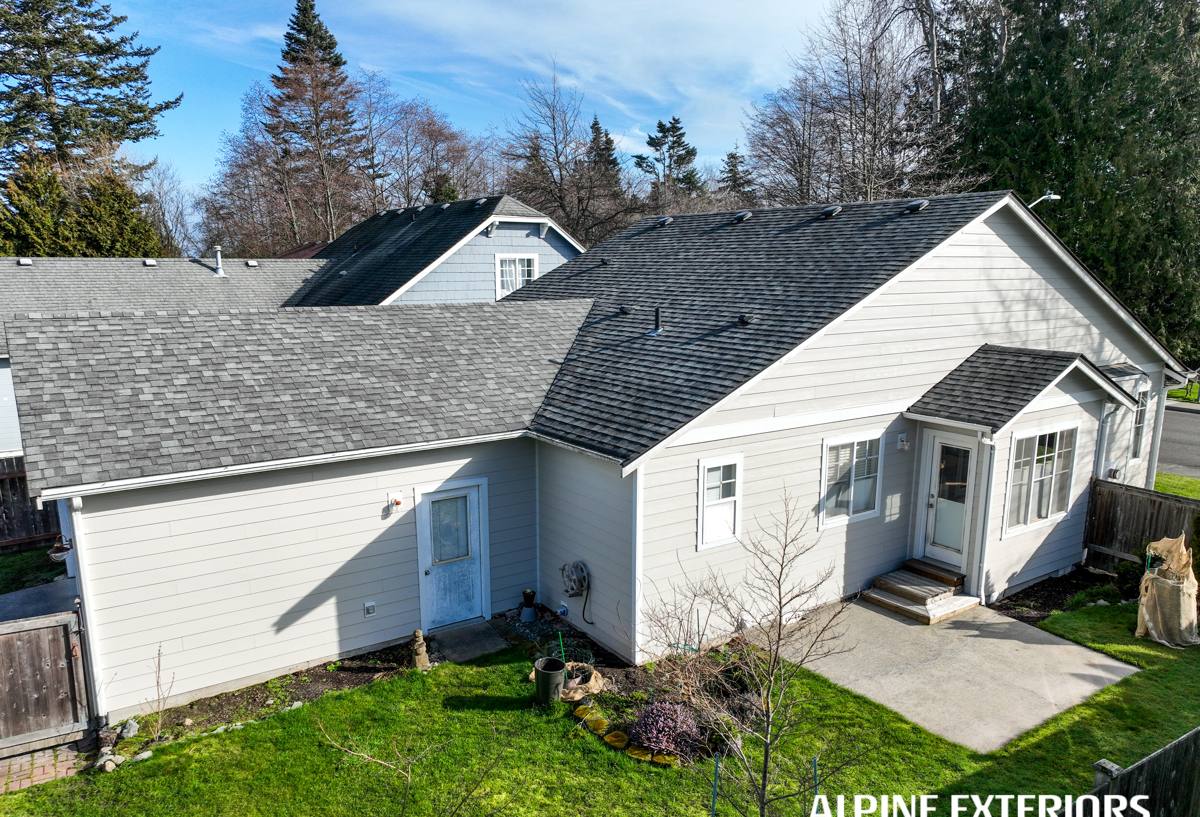
What Cedardale's Climate Does to a House
Three things define exterior wear in this part of Skagit County, and Cedardale gets a good dose of all three:
Salt Air
Proximity to Puget Sound means airborne salt settles on exterior surfaces, accelerating corrosion of fasteners and trim metal and breaking down lower-quality paint finishes faster than they'd fail further inland. Over years, that exposure shows up as pitting, rust streaks at fastener heads, and premature peeling.
Driving Rain
Wind-driven rain doesn't just run down a wall — it pushes sideways into seams, laps, and butt joints. Siding materials that swell, warp, or that rely on caulking and paint to stay sealed are the ones that struggle most under this kind of repeated wind-and-rain loading.
A Long Moss Season
Cool, damp, and shaded conditions for much of the year give moss and algae a long window to take hold, especially on north- and west-facing elevations and anywhere tree cover keeps a wall from drying out between rain events. Moss holds moisture against the surface, which is exactly what accelerates rot in wood-based products and finish breakdown in lower-grade siding.
None of this is unique to Cedardale — it's the reality for most of Skagit County — but Cedardale's mix of coastal exposure and tree cover puts it on the tougher end of that spectrum.
Signs Your Siding Is Losing the Fight
- Soft or spongy spots when you press on the siding, especially near the bottom courses or under windows
- Paint that's peeling, bubbling, or chalking off on your hand when you wipe it
- Visible moss or algae buildup that keeps coming back within a season of cleaning
- Gaps opening at seams, corners, or butt joints
- Warping, cupping, or boards that no longer sit flat against the wall
- Rust streaking from fastener heads or trim
- A musty smell or visible staining on interior walls that share an exterior wall
Any one of these on its own might just mean it's time for a cleaning or a paint job. Several of them together, especially soft spots or interior staining, usually mean moisture has already gotten behind the siding and it's worth having someone look at the wall assembly, not just the surface.
Why We Only Install James Hardie Fiber Cement
We get asked fairly often why we don't offer vinyl, LP SmartSide, or other lower-cost siding options. The honest answer is that we made a decision as a company to stop installing products that we watched fail, or start looking rough, faster than they should in this specific climate — and to only stand behind one system we're confident holds up here.
Vinyl siding is inexpensive and easy to install, and for many parts of the country it's a perfectly reasonable choice. In a coastal, wet climate like ours, though, it has real limits: it expands and contracts with temperature swings, can crack in cold snaps, fades over time in UV exposure, and doesn't offer much of a barrier if water gets behind it. It's also not something we can paint to match a home's trim or refresh the color on later.
Engineered wood products like LP SmartSide use resin-treated wood strand technology that's genuinely improved over older wood siding, but it's still wood-based, which means it's more sensitive to sustained moisture exposure than fiber cement, and manufacturer warranties typically require strict installation and maintenance practices to stay valid — details that are easy to miss and expensive to get wrong in a climate that doesn't give siding much time to dry out.
Cedar and primed spruce siding can look beautiful, but real wood requires ongoing maintenance — repainting or restaining on a cycle, careful caulking, and vigilance about moss and moisture — that most homeowners underestimate until they're a few years in.
James Hardie fiber cement is non-combustible, doesn't swell or rot the way wood-based products can, and comes with a factory-applied ColorPlus finish that's baked on rather than field-painted, which means better fade resistance and no repainting cycle in the years right after installation. Hardie also engineers specific product lines for different climate zones — the HZ5 line used in our region is built for the freeze-thaw and moisture conditions we actually get. It's backed by a strong transferable warranty when installed to Hardie's specifications, which matters if you ever sell the home.
We're not saying every other product is bad — we're saying that after years of doing exterior work in this specific climate, this is the system we trust enough to put our name behind.
James Hardie Product Lines We Install
| Product Line | Best For | Look |
|---|---|---|
| HardiePlank Lap Siding | Most homes; the classic siding profile | Traditional horizontal lap, smooth or cedar-textured |
| HardieShingle | Accent gables, dormers, or full-shingle styling | Staggered or straight-edge shingle profile |
| HardiePanel | Modern or craftsman styling, board-and-batten look | Vertical panel siding |
| HardieTrim | Corners, window and door trim, fascia | Clean, paintable trim boards |
All of these are available in ColorPlus factory-finished colors, which come with a separate finish warranty covering fading, chipping, and cracking of the color coat.
What a Siding Project Looks Like Here
Every Cedardale property is a little different depending on tree cover, sun exposure, and how close it sits to open water, so we start with an actual walk of the exterior rather than a generic quote.
Assessment
We look at the current siding condition, check for soft spots or moisture intrusion, and evaluate the house wrap and flashing underneath if the old siding is coming off. This is often where we catch problems — rot at window sills, missing kick-out flashing, gaps at trim — that have nothing to do with the siding material itself but need to be fixed before new siding goes on.
Prep and Moisture Barrier
Proper weather-resistive barrier and flashing details matter as much as the siding itself in a climate that gets this much wind-driven rain. We don't skip this step to save time.
Installation to Manufacturer Spec
James Hardie's warranty is conditional on installation following their specifications — proper fastening, clearances, and caulking at the right joints. Correct installation is what actually determines whether siding performs well for decades versus needing early attention.
Trim and Finish Details
Corners, window trim, and transitions are where water problems usually start if they're going to start at all, so we pay particular attention to these details rather than treating them as an afterthought.
Roofing, Windows, and Decks — The Full Exterior Picture
Siding doesn't work in isolation. A roof that's shedding granules or has failing flashing will send water down behind siding no matter how well the siding itself is installed. Windows with failed seals let moisture into wall cavities from the inside out. And decks in a climate like this face their own version of the same moss-and-moisture problem siding does.
Because we handle siding, roofing, windows, and decks, we can look at a Cedardale home's exterior as one connected system rather than quoting a wall replacement while ignoring a roof detail that's going to undermine it. If we see a roofing or window issue while we're out for a siding estimate, we'll tell you, even if it's not why you called.
Cost Factors to Expect
| Factor | Why It Matters |
|---|---|
| Home size and wall complexity | More corners, dormers, and trim details mean more labor and material cuts |
| Existing siding removal | Tear-off and disposal of old wood, vinyl, or damaged siding adds cost and time |
| Underlying damage | Rotted sheathing or framing found during tear-off needs repair before new siding goes on |
| Product line and profile | Lap, shingle, and panel styles carry different material and labor costs |
| Color and trim package | ColorPlus finish and trim upgrades affect overall project pricing |
| Access and site conditions | Tree cover, slope, and setback affect scaffolding and staging needs |
We give real numbers during an in-person estimate rather than ballparking sight unseen — too much of the cost depends on what we find once we're actually looking at the walls.
Maintaining Fiber Cement Siding in a Moss-Prone Climate
- Rinse siding with a garden hose once or twice a year to knock down surface dirt and organic buildup before it takes hold
- Trim back tree branches and shrubs that keep a wall shaded and slow to dry
- Check caulking at trim and penetrations annually and re-caulk if it's cracked or pulling away
- Address gutter overflow or downspout issues quickly — misdirected water is one of the fastest ways to stain or damage siding locally
- Avoid pressure washing directly at seams and edges, which can force water behind the siding
- Watch north- and west-facing walls first — they're usually the earliest to show moss in this climate
Why a Local Crew Matters in Skagit County
A crew that works Cedardale and the surrounding Skagit County area regularly knows which walls take the worst weather, what flashing details tend to fail first in homes built during certain eras, and how long a job realistically takes given our rain patterns. That's different from a crew passing through the region for a one-off job. Local reputation is also on the line every time — we're going to be working in this same area next year, and the year after that, which keeps us honest about what we recommend and how we install it.
If your Cedardale home's siding is showing its age, or you're planning ahead rather than reacting to a problem, we'd be glad to take a look. Reach out for a free, no-pressure estimate — we'll walk the exterior with you, tell you what we actually see, and give you a straight answer on what it would take to get it right.