 Skagit County
 Siding Built for Clear Lake's Wet, Wooded Climate
Clear Lake sits in the foothill country of Skagit County, tucked between farmland and timber where the marine air off Puget Sound collides with the moisture pulled down from the Cascade foothills. Homes out here don't get the direct salt spray of a waterfront lot, but they get something almost as hard on siding: long stretches of damp, shaded weather, heavy fall and winter rainfall, and tree cover that keeps roof and wall surfaces from drying out between storms. That combination is exactly why we point every Skagit County homeowner toward James Hardie fiber cement and away from products that struggle with sustained moisture exposure.
We install siding, roofing, windows, and decks across Skagit County, and Clear Lake is squarely inside our regular service area. We're not dispatching a crew from Seattle or Bellingham who's never seen a Skagit Valley winter. We know how the fog sits in these low-lying areas through the fall, how the moss creeps up north-facing walls under tree canopy, and how driving rain off a windstorm finds every gap in a poorly flashed wall.
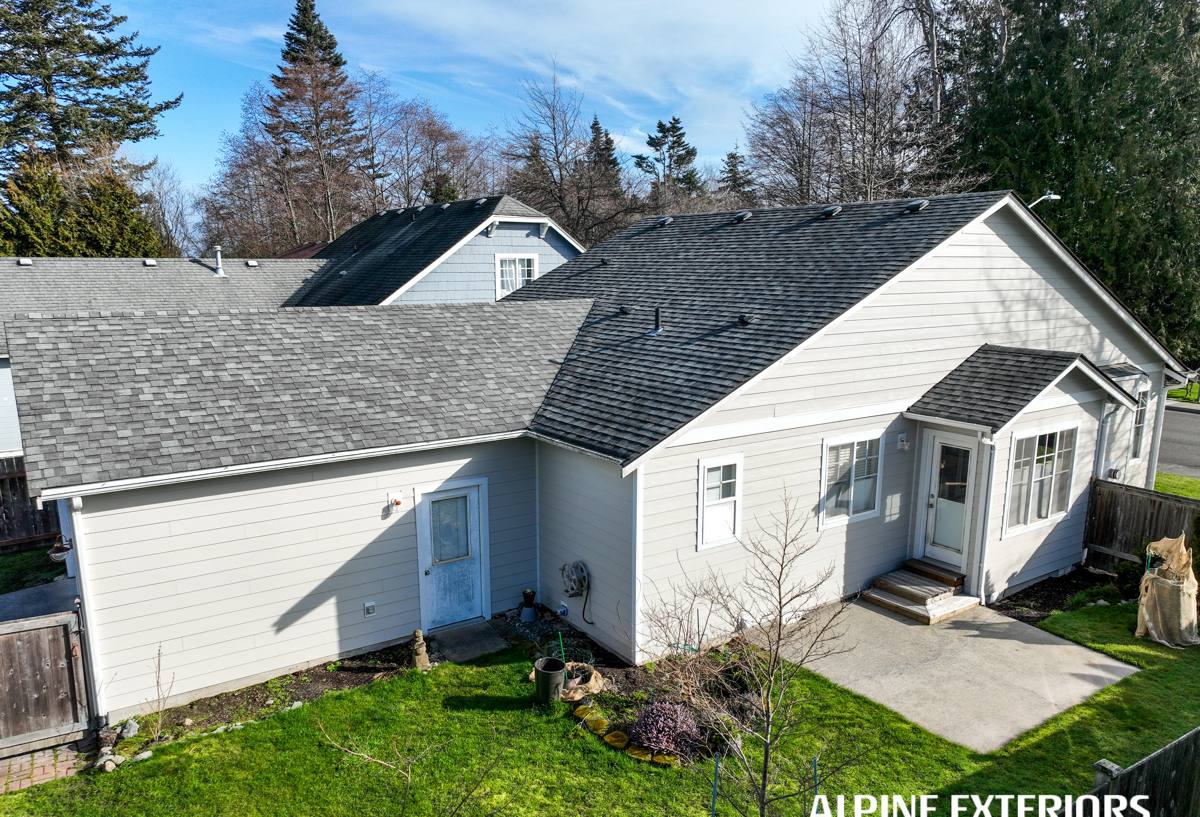
What Clear Lake Homes Are Up Against
Salt Air and Regional Moisture
While Clear Lake itself is inland, Skagit County as a whole sits close enough to Puget Sound and the Salish Sea that homes throughout the region deal with a version of coastal moisture load — humid air, frequent rain, and long gray stretches where exterior surfaces simply don't get a chance to fully dry. Add in Clear Lake's own tree cover and lower-lying terrain, and you get siding, trim, and roofing that stay damp longer than they would on an open, sun-exposed lot.
Driving Rain
Fall and winter storms in this part of Washington don't just fall straight down — wind-driven rain gets pushed sideways into wall assemblies, working its way behind poorly lapped siding, around loose trim, and through failed caulk joints. Over years, that's how water finds its way into sheathing and framing even when the siding itself looks fine from the ground.
A Long Moss Season
Shaded lots, tree cover, and consistent moisture make Clear Lake prime territory for moss and algae growth on siding, trim, and roofing. It's not just cosmetic — moss holds moisture against a surface far longer than open air would, which accelerates rot in wood-based products and paint failure in coatings that aren't built to handle it.
Why We Only Install James Hardie Fiber Cement
We made a decision a long time ago to standardize on James Hardie fiber cement siding and stop installing everything else — no vinyl, no LP SmartSide, no Cemplank, no Allura, no primed spruce or cedar. That's not a marketing angle; it's a response to what we've seen happen to other products in exactly this kind of climate.
- Non-combustible material — fiber cement won't ignite from embers or radiant heat the way wood-based sidings can, which matters more every wildfire season in the Pacific Northwest.
- Engineered for moisture — Hardie's HZ5 product line is specifically formulated for the Pacific Northwest's freeze-thaw and rain exposure, unlike general-purpose siding not engineered for a specific climate zone.
- Factory-applied ColorPlus finish — baked-on color resists moisture intrusion at the surface far better than field-applied paint, and it doesn't need repainting on the same cycle as wood siding.
- Long, transferable warranty — a real manufacturer warranty that follows the house, which matters when a Clear Lake home eventually changes hands.
- Proven long-term performance — decades of field history in wet Pacific Northwest climates, not a newer product still building a track record.
We're upfront that other products have real advantages in their own right — engineered wood siding can be lighter and faster to install, vinyl is inexpensive up front, cedar has a natural look some homeowners love. But for a Skagit County home that's going to sit through forty or fifty more years of wet winters, we'd rather install something built for exactly this exposure than something that will ask for more maintenance, more repainting, or more moisture-related repair down the line. That's the trade-off we're not willing to make on our own installs.
How a Siding Project Works Here
Inspection and Assessment
We start by looking at the whole exterior, not just the siding surface. Trim, flashing, window and door transitions, and the condition of the wall assembly underneath all factor into whether a project is a straightforward re-side or whether there's rot or moisture damage to address first. In a moss-prone, tree-covered area like Clear Lake, we pay particular attention to north- and west-facing walls and anywhere gutters or downspouts have been dumping water against the house.
Removal and Repair
Old siding comes off, and any compromised sheathing or framing gets repaired before anything new goes up. Covering damaged material with new siding just hides a problem that keeps getting worse.
Weather Barrier and Flashing
This step matters as much as the siding itself, especially with driving rain in the forecast most winters. Proper house wrap, correctly lapped and taped seams, and flashing at every window, door, and roof transition are what actually keep water out of the wall — the siding is the visible layer, but the barrier underneath is doing the real work.
Hardie Installation to Spec
James Hardie siding performs the way it's rated to perform only when it's installed to the manufacturer's specifications — correct fastening, proper clearances from grade and roof lines, and correctly sealed joints. We install to spec because that's what keeps the product warranty valid and what keeps water out over the long run.
Beyond Siding: Roofing, Windows, and Decks
Siding doesn't work in isolation — a home's roof, windows, and decks all interact with the same moisture and weather exposure. We handle all four so the details that connect them (roof-to-wall flashing, window trim, deck ledger attachment) are coordinated rather than left to whoever's schedule opens up first.
- Roofing — a roof in poor condition undermines even well-installed siding, since water that gets past a bad roof edge or valley often ends up running down behind wall siding.
- Windows — window flashing and trim are one of the most common failure points in wall assemblies; we integrate window work with siding replacement when both are due.
- Decks — in a climate this wet, deck framing and ledger connections need the same moisture discipline as the walls above them.
Cost Factors for a Clear Lake Siding Project
Every home is different, but the factors that move a siding project's cost up or down are consistent. We give firm, itemized numbers only after walking a specific property — the table below is meant to help you understand what drives the estimate, not to substitute for one.
| Factor | Why It Matters |
|---|---|
| Home size and wall complexity | More square footage and more corners, gables, and dormers mean more material and labor |
| Existing siding condition | Rot or moisture damage found underneath adds repair scope before new siding goes up |
| Siding profile and trim detail | Lap width, shingle-style accents, and trim board choices affect material cost |
| Tree cover and access | Heavily wooded lots common around Clear Lake can add setup and cleanup time |
| Color and finish selection | Factory ColorPlus finishes vary in price by color and coating type |
| Combined scope | Bundling siding with roofing, window, or deck work can improve overall efficiency |
What to Ask Before Hiring a Siding Contractor
Skagit County has plenty of contractors who'll quote a siding job. Not all of them specialize in fiber cement, and not all of them will still be around in five years if a warranty issue comes up. A few questions are worth asking before signing anything:
- Are you a certified or factory-trained James Hardie installer, and can you show it?
- Will you inspect and repair any rotted sheathing before installing new siding, or just cover it?
- What weather barrier and flashing details will you use around windows, doors, and roof lines?
- Is your bid itemized, and does it include the manufacturer's product warranty paperwork?
- Do you carry current liability insurance and workers' comp coverage in Washington?
- Can you provide references from other Skagit County jobs, ideally in a similarly wooded or wet-exposure setting?
A Local Crew Who Knows This Ground
Clear Lake isn't a big enough community to support its own dedicated exterior contractor, but that doesn't mean it should get generic service. We treat every Skagit County property — whether it's right on Clear Lake, out toward Sedro-Woolley, or elsewhere in the county — with the same attention to the specific moisture, moss, and rain exposure that defines this region. That local knowledge shapes real decisions: how we detail flashing, where we watch for rot, and why we only stand behind one siding product for a climate like this.
If you're weighing a siding, roofing, window, or deck project on a Clear Lake home, we're glad to walk the property, look at what your exterior is actually dealing with, and put together a straightforward estimate — no pressure, no inflated urgency, just an honest look at what your home needs.