 Skagit County
 Allura Is a Real Fiber Cement Product — We Just Don't Install It
Allura is a legitimate fiber cement siding manufacturer, not a knockoff or a product we're trying to talk you out of for no reason. Fiber cement as a category — a mix of cement, sand, and cellulose fiber pressed into planks — is genuinely one of the best siding substrates available for a wet, coastal climate like ours. Allura makes that substrate. So do a couple of other manufacturers. We've looked closely at the category, and we made a deliberate business decision to install only James Hardie fiber cement across every job we take on in Skagit County. This page explains why, honestly, without pretending Allura is a bad product — because it isn't.
What follows isn't a takedown. It's the same reasoning we'd walk through with a homeowner standing in their driveway asking "why not just use whichever fiber cement is cheaper this month?" The answer has more to do with how the product is engineered, finished, and supported in this specific region than with any one factor being disqualifying on its own.
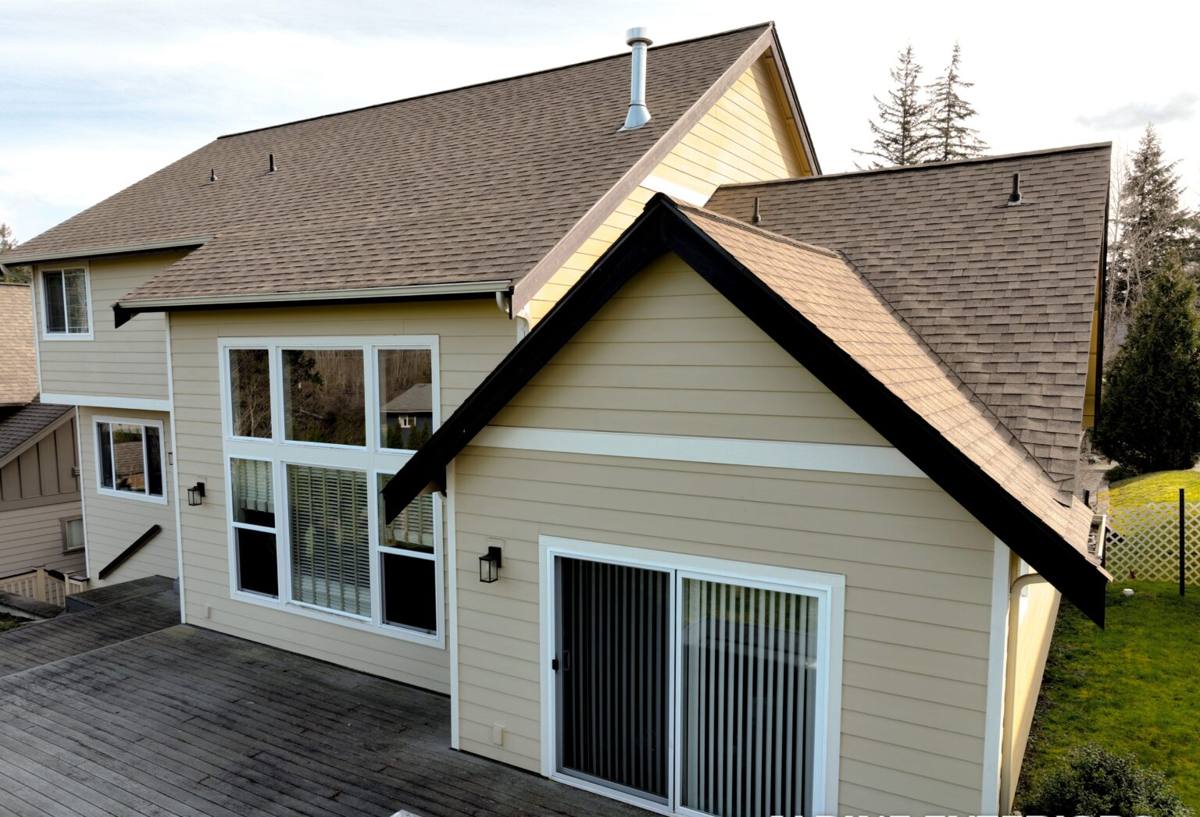
What Allura Gets Right
Credit where it's due. Allura fiber cement:
- Is non-combustible, like all true fiber cement — a real advantage over vinyl or wood in wildfire-adjacent or ember-exposure situations.
- Resists rot, insects, and woodpecker damage far better than primed spruce or cedar.
- Holds paint and factory finishes better than wood over the long haul.
- Is manufactured domestically and has a track record in the market, not an unproven newcomer.
If a homeowner already has Allura on their home and it was installed correctly, we're not going to tell them it's failing or that they need to rip it off the wall. It's a serviceable, code-compliant fiber cement product. Our decision not to install it new is about what we can stand behind with our own labor and our own name, on homes that sit a few miles from Puget Sound.
Why Skagit County's Climate Raises the Stakes
Fiber cement siding lives or dies on how its finish, joints, and edges are protected from water over decades — and Skagit County is not a gentle place for that finish to earn its keep. Salt-laden air off the Sound and the Skagit River delta accelerates finish breakdown on anything that isn't fully sealed at cut edges. Driving rain off winter storms drives water sideways into laps and butt joints, not just straight down. And our long moss season — realistically eight or nine months of the year with enough dampness for moss, algae, and mildew to take hold on north-facing walls and shaded elevations — punishes any finish that isn't built to shrug off sustained moisture contact.
None of that makes fiber cement the wrong category. It makes the specific engineering and finish system behind the fiber cement matter a lot more here than it would in a dry inland climate. That's the lens we used when we standardized our crews on one product line instead of quoting whatever fiber cement happened to be cheapest that quarter.
Where the Trade-Offs Show Up
Factory Finish and Color Warranty
James Hardie's ColorPlus factory-baked finish is applied and cured under controlled conditions, then backed by a dedicated finish warranty separate from the substrate warranty. That two-layer warranty structure — one covering the plank, one covering the paint — is a big part of what lets us tell a homeowner their color will hold up without repainting for a long time. Other fiber cement lines vary in how their prefinished options are structured, and in some cases homeowners end up relying on field-applied paint for certain colors or trim pieces, which shifts more of the long-term finish performance onto the installer's prep work and the weather on install day. In a region where you might get one good painting week between rain systems, that's a meaningful difference.
Climate-Zone Engineering
Hardie engineers separate product formulations for different climate zones — its HZ5 line is specifically formulated for regions with freeze-thaw cycles and sustained moisture exposure, which describes the Skagit Valley and the Sound-adjacent parts of our service area well. We haven't seen the same depth of climate-zone-specific engineering documented across the fiber cement category as a whole, and we're not in a position to install a product on a client's home based on a feature we can't verify holds up the same way here as it does in a drier market.
Installer Familiarity and Local Support
This is the least glamorous reason and maybe the most important one. James Hardie runs a certified installer network with product-specific training, installation specs, and a manufacturer backstop if something in the system fails. Our crews are trained on one nailing pattern, one set of clearances, one caulk and flashing detail set, one set of factory cut-edge treatment rules — and they do it on every single job, week after week. When a crew installs three or four different fiber cement brands across a season, each with its own fastening spec, gap tolerance, and touch-up paint match, the odds of a small detail getting mixed up go up. We decided we'd rather be excellent at one system than adequate at several.
Allura vs. James Hardie: A Side-by-Side Look
| Factor | Allura Fiber Cement | James Hardie (What We Install) |
|---|---|---|
| Core material | Fiber cement | Fiber cement |
| Factory finish system | Varies by product line and color | ColorPlus baked-on finish with separate finish warranty |
| Climate-specific engineering | Not documented to the same depth | HZ5 line engineered for wet, freeze-thaw regions like ours |
| Local certified installer network | Smaller in our service area | Established certified installer program |
| Warranty structure | Manufacturer-specific, varies | Long-term substrate warranty, transferable to one subsequent owner |
| Non-combustible | Yes | Yes |
Why Installation Details Matter More Than the Product Label
Here's something that gets lost in "which brand" conversations: most fiber cement failures we've been called out to inspect over the years trace back to installation, not the material itself. Uncaulked or improperly caulked butt joints. Siding installed tight to the ground or a deck surface with no drainage gap. Nail heads blown through the face instead of set flush. Cut edges left untreated where a saw exposed raw fiber cement to weather. Any fiber cement product, Allura included, will underperform if it's installed this way — and any fiber cement product, installed correctly, will perform well for a long time.
So part of our reasoning isn't really about Allura versus Hardie as materials. It's that we can only fully guarantee correct installation on a system our crews install every day, with a manufacturer's field-tested spec sheet we've internalized rather than looked up. Spreading that expertise across multiple brands dilutes it.
What We Look at Before Recommending Any Siding
Whether a homeowner is asking about Allura, LP SmartSide, vinyl, or cedar, we run through the same checklist before we recommend a product for a Skagit County home:
- How close is the home to the Sound, a river, or another source of sustained salt or moisture exposure?
- How much of the exterior is shaded and slow-drying, where moss and algae are most likely to establish?
- What's the sun exposure on south and west walls, where UV and finish fade matter most?
- Is the existing wall assembly set up for a proper drainage plane and rain screen, or does that need to be added?
- What warranty coverage — on both the substrate and the finish — will actually transfer if the home sells in the next 10 to 20 years?
- Does our crew have deep, current experience installing this exact product to its manufacturer spec?
That last question is the one that rules out Allura for us, not because it fails on the others, but because we can't claim the same depth of hands-on experience with it that we have with the product we install every week.
Why We Standardized on James Hardie
We didn't start out only installing one brand. Over time, standardizing gave us a few things we couldn't get any other way: a crew that has installed thousands of linear feet of the exact same product and knows its quirks cold, a finish and substrate warranty structure we can explain accurately instead of hedging, and a manufacturer climate-engineered line built for exactly the kind of wet, salt-touched, moss-prone conditions Skagit County throws at a house. For us, that combination beats the flexibility of quoting whichever fiber cement is available or cheapest on a given week.
That's the honest version of "why we don't install Allura." It's a fine product made by a real manufacturer. We just decided our homeowners are better served by a crew that's mastered one system built and warrantied for this specific climate than by a crew that's competent across several.
Get a Straight Answer for Your Home
If you're comparing fiber cement brands, weighing a re-side against repairs, or just want an honest read on what your current siding needs, we're happy to walk your property with you. Fill out the form below for a free, no-pressure estimate — no sales pitch, just what we'd actually recommend for your home and your budget.