 Skagit County
 Siding in Edison, Washington: A Climate Built to Test Your Exterior
Edison sits in the low farmland of Skagit County, close enough to Samish Bay and Padilla Bay that salt-tinged air is a fact of life, not an occasional nuisance. Add the region's long wet season, persistent low clouds, and the shade cover from surrounding trees and outbuildings, and you get an exterior environment that punishes cheap or poorly installed siding faster than most homeowners expect. We've worked on homes throughout this part of Skagit County long enough to know exactly which materials hold up here and which ones start showing trouble within a few winters.
This page covers what Edison-area homes typically face, how our siding, roofing, window, and deck work fits together as a full exterior system, and why we install James Hardie fiber cement siding exclusively — no vinyl, no LP SmartSide, no primed wood.
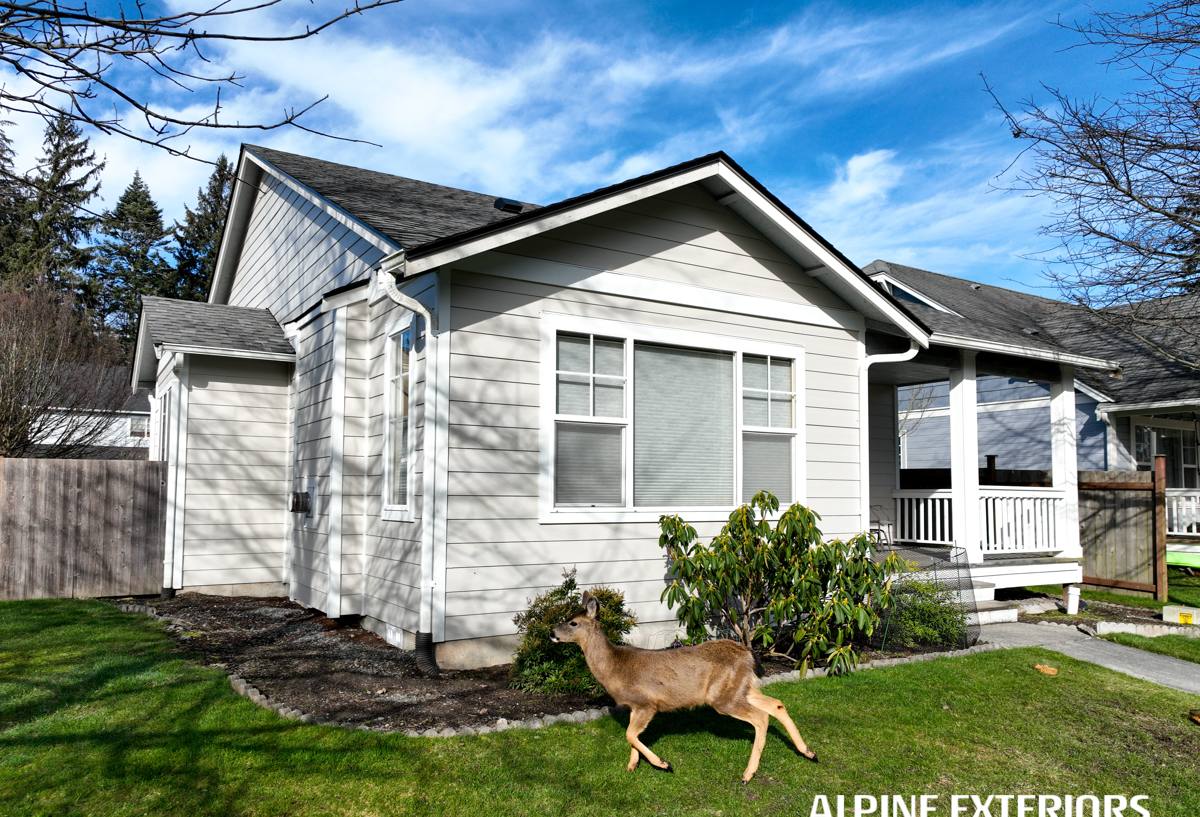
What Skagit County's Coastal-Rural Climate Does to a House
Salt Air and Moisture Together
Homes near Samish Bay and the surrounding sloughs get a steady, low-grade dose of salt-laden air blowing in off the water. On its own, salt air accelerates corrosion of metal fasteners and trim. Combined with Skagit County's rain — which falls in long, low-intensity stretches rather than short downpours — it creates conditions where moisture sits against a wall system for days at a time instead of drying quickly between storms.
Moss, Algae, and Shade
Edison's farmland setting means a lot of homes sit near tree lines, hedgerows, or outbuildings that keep north- and west-facing walls shaded for much of the year. Shade plus moisture is exactly what moss and algae need to establish themselves on siding, trim, and roofing. Once moss takes hold on a porous or poorly sealed surface, it holds water against the material and speeds up whatever decay process is already underway.
Wind-Driven Rain
Open farmland offers little wind break, and storms coming off the Sound often arrive with enough lateral force to drive rain up under poorly lapped siding, around loose trim, or through gaps at window and door flashing. This is less about total rainfall and more about rain finding its way into places a calmer climate wouldn't test.
Common Problems We See on Edison-Area Homes
- Wood and engineered-wood siding with soft, swollen bottom edges, especially near grade or under gutters that overflow during heavy storms
- Moss and algae staining concentrated on shaded north and west walls
- Rusted or bleeding fasteners on older siding installs, a direct result of salt-air exposure on standard hardware
- Paint failure and peeling on painted wood trim, often years before the rest of the house shows wear
- Caulk and sealant joints that have dried out and cracked, letting wind-driven rain behind the siding plane
- Gutters and downspouts undersized or clogged with debris from nearby trees, dumping water directly onto wall sections below
None of these are unusual problems — they're the predictable result of ordinary building materials meeting Skagit County's specific combination of salt, shade, and sustained moisture. The fix isn't exotic; it's choosing a siding system engineered for exactly this kind of exposure and installing it correctly the first time.
Why We Install Only James Hardie Fiber Cement
We stopped installing vinyl, LP SmartSide, primed wood, and other fiber cement alternatives because we kept seeing the same climate-driven failures repeat themselves on jobs we didn't do — and we didn't want our name on work that would need premature repair. James Hardie's fiber cement is cement, sand, and cellulose fiber, not wood fiber or engineered wood, which means it doesn't absorb water and swell the way wood-based products can. That single difference matters enormously in a climate where moisture sits against walls for extended periods.
What Matters Specifically for This Area
- Non-combustible core — relevant given Skagit County's dry-season wildfire risk in surrounding wooded areas
- ColorPlus factory finish — a baked-on finish that resists the fading and peeling we see on field-painted wood trim in this climate, and doesn't require repainting on the same cycle
- HZ5 engineered product line — Hardie's climate-specific formulation designed for regions with sustained moisture and freeze-thaw cycling, which fits the Pacific Northwest
- Moisture-resistant substrate — fiber cement doesn't swell, delaminate, or attract moss-friendly softness the way wood-based sidings can when exposure runs long
- Transferable warranty — protects the investment for the buyer if the home changes hands, which matters given how long fiber cement siding is meant to last
We're upfront that Hardie siding costs more upfront than vinyl or LP SmartSide. Our position is that in a climate like Edison's, the cheaper materials tend to shift cost from the installation to the next decade in the form of repainting, spot repairs, and earlier full replacement. We'd rather install one product correctly than offer three products and let a homeowner guess which one will hold up.
How Siding Materials Compare in This Climate
| Material | Moisture Behavior | Maintenance in Salt Air / Moss Conditions | Typical Lifespan Here |
|---|---|---|---|
| James Hardie fiber cement | Does not absorb or swell; dimensionally stable when wet | Occasional wash; factory finish resists fading | 30+ years with proper install |
| Vinyl siding | Doesn't absorb, but panels can warp or gap, letting moisture behind the wall plane | Low, but seams and J-channels trap moisture and debris | 15-25 years, shorter with wind exposure |
| LP SmartSide / engineered wood | Wood-based core can swell at cut edges and fastener points if moisture intrudes | Requires vigilant caulk and paint maintenance | 15-25 years, heavily dependent on upkeep |
| Primed wood / cedar | Absorbs moisture readily; prone to swelling, cupping, rot | Frequent repainting and moss treatment needed | 10-20 years without aggressive maintenance |
These are general patterns, not guarantees — installation quality changes every one of these numbers. But the underlying material behavior is consistent, and it's why our standard for Edison-area homes is fiber cement.
Why a Local Crew Makes a Real Difference Here
Siding installation is where climate-specific knowledge actually shows up in the finished product. A crew that installs in a dry inland climate most of the year won't necessarily flash a window opening, lap a butt joint, or space fasteners the way a wall in coastal Skagit County demands. We work this region regularly enough to know where wind-driven rain tends to find weaknesses, which wall orientations need extra attention to moss and shade, and how local permitting and inspection expectations run in Skagit County.
A local crew also means someone who already knows the area shows up if a warranty question comes up five or ten years down the line — not a call center reading from a script for a product installed by a subcontractor who's since moved on.
Siding Is Part of a Larger Exterior System
We don't treat siding as an isolated project. Roofing, windows, decks, and siding all interact on the same building envelope, and a weakness in one usually shows up as damage in another.
Roofing
A roof that's shedding granules, holding moss, or leaking at flashing points will send water down onto the siding below it. Any siding project on an older Edison home is a good moment to have the roof condition checked, especially given how much moss buildup this climate produces on shaded slopes.
Windows
Old or poorly flashed windows are one of the most common hidden entry points for wind-driven rain. When we replace siding around existing windows, we check flashing and sealant condition and flag anything that's likely to undermine the new siding install from behind.
Decks
Decks attached to the house create a ledger connection point where water intrusion is common if flashing wasn't done correctly. We look at these connections as part of any siding scope that touches the same wall.
What to Expect From the Process
- On-site inspection of current siding, trim, and any related roofing, window, or deck concerns
- Honest assessment of what's driving the current problems — moisture, moss, fastener corrosion, or installation-level issues
- A written scope and estimate specifying Hardie product line, profile, and ColorPlus color
- Proper prep work: removal of failing material, inspection and repair of sheathing and house wrap underneath
- Installation to Hardie's fastening, clearance, and flashing specifications — not shortcuts that void the warranty
- Final walkthrough covering warranty documentation and basic maintenance expectations
Maintenance Checklist for Edison Homeowners
- Rinse siding annually, focusing on shaded north- and west-facing walls where moss and algae accumulate fastest
- Keep gutters clear, especially under trees, so overflow doesn't dump water directly onto wall sections
- Trim back vegetation and hedgerows that keep siding shaded and slow to dry after rain
- Inspect caulking around windows, doors, and trim joints yearly and recaulk before gaps develop
- Watch for soft spots, staining, or bubbling paint on any remaining wood trim or fascia as an early warning sign
- Have your roof checked when siding work is scheduled, since the two systems shed water onto each other
Getting Started
If you're in Edison or elsewhere in Skagit County and dealing with moss buildup, failing paint, soft trim, or siding that's simply past its useful life, we're glad to take a look. We'll give you a straightforward read on what's happening with your current exterior and what a Hardie fiber cement install would involve for your home — no pressure, no upsell to a product we wouldn't put on our own house. Reach out using the form below for a free estimate.