 Skagit County
 Siding Built for March Point's Marine Environment
March Point sits out on the water in Skagit County, close enough to the Salish Sea that salt air is a daily fact of life, not an occasional nuisance. Homes here take a different kind of weathering than houses ten miles inland. Wind off the water carries fine salt spray onto siding, trim, and window frames. Combine that with Western Washington's long wet season and you get an exterior environment that is genuinely harder on building materials than most manufacturers' warranty testing accounts for. We've worked on enough homes in this corner of Skagit County to know which products hold up out here and which ones start showing problems years before they should.
This page is about what we actually see on March Point homes, how our siding, roofing, window, and deck work is suited to this specific stretch of coastline, and why the product we install matters as much as the crew installing it.
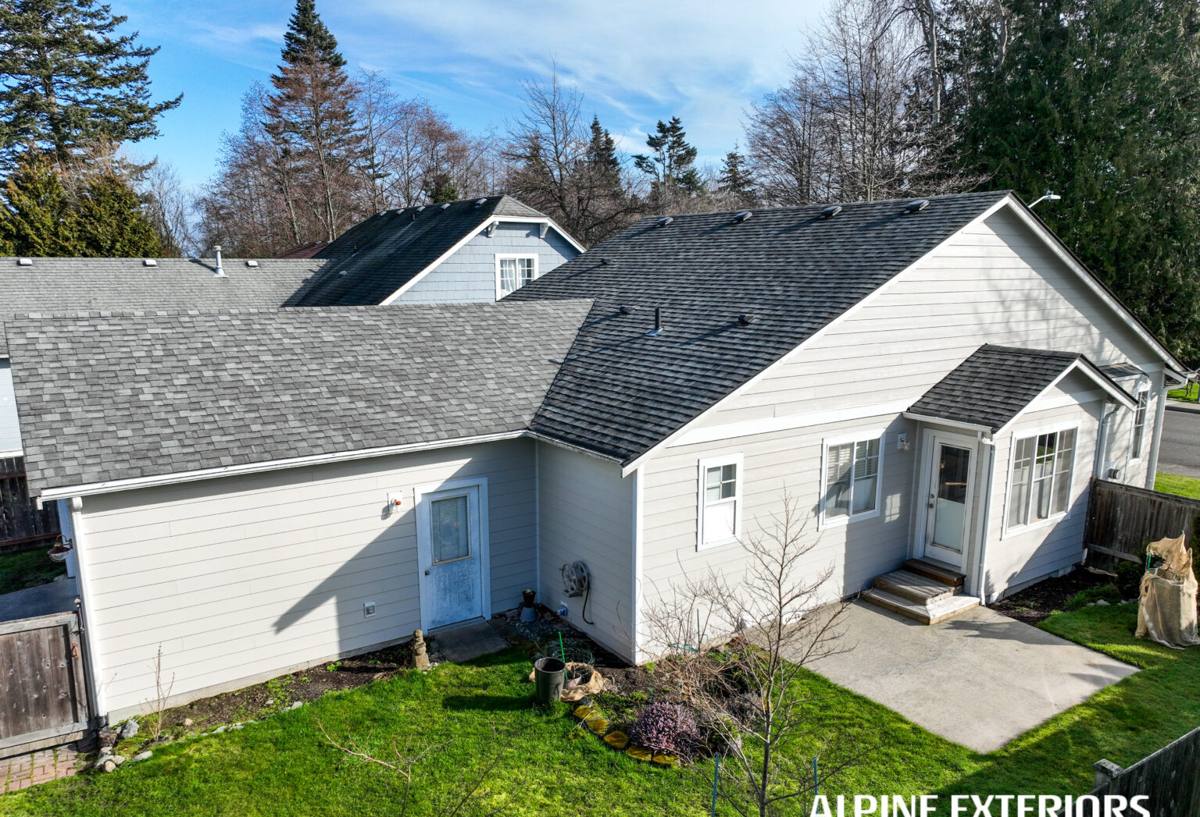
What the Climate Does to a House on the Point
Salt Air and Corrosion
Airborne salt doesn't just affect metal fasteners and flashing — it accelerates the breakdown of paint films, softens caulking faster than inland exposure would, and can leave a fine residue on siding that holds moisture against the surface longer than a plain rinse-off would suggest. Materials that rely on a factory or field-applied paint coat for their weather resistance are the ones we watch most closely on inspections in this area, because salt exposure shortens the interval before that coating starts to chalk, crack, or pull away at the seams.
Driving Rain and Wind-Driven Moisture
March Point's exposure to open water means rain doesn't always fall straight down — wind pushes it sideways into wall assemblies, especially on the west and southwest faces of a house. That kind of wind-driven rain finds every gap in flashing, every under-caulked seam, and every siding product that swells or wicks moisture at the cut edge. Over a few winters, a house with poor water management at the trim and butt joints will show it — soft spots, peeling paint, or dark staining where water has been sitting rather than shedding.
Moss, Mildew, and the Long Wet Season
Skagit County's siding season for algae and moss growth runs long — shaded north and east walls in particular can stay damp for weeks at a stretch through fall, winter, and spring. Porous or wood-based siding materials give moss and mildew something to grip onto and feed from. Once organic growth establishes itself in a siding surface, it holds even more moisture against the wall, which speeds up whatever deterioration was already underway. This is one of the biggest differences between a siding job that looks good for five years and one that still looks good after fifteen.
Why We Install James Hardie Fiber Cement — and Nothing Else
We made a decision as a company to install only James Hardie fiber cement siding. We don't install vinyl, LP SmartSide, Cemplank, Allura, primed spruce, or cedar. That's not a marketing position — it's the result of years of seeing which products actually perform in Pacific Northwest coastal conditions and which ones create callbacks.
Why We Passed on the Alternatives
- Vinyl siding is affordable and low-maintenance in mild climates, but it expands and contracts more than fiber cement in temperature swings, can warp or crack in wind-driven impacts, and its color is baked into the material — meaning fading over time can't be touched up the way a factory-finished product can.
- LP SmartSide and other engineered wood products perform reasonably well when installation details are followed exactly, but they're wood-based, which means any breach in the factory coating — a poorly sealed cut edge, a missed caulk joint — gives moisture a path into a material that can swell and deteriorate from the inside out. In a high-moisture, high-salt environment like March Point, that margin for installation error gets thinner.
- Cemplank and Allura are also fiber cement products and share some of Hardie's core moisture resistance, but they don't carry the same factory-finish system, product-line engineering for specific climates, or the depth of installer network and warranty backing that Hardie has built over decades in this region.
- Primed spruce and cedar are traditional, attractive, and can look excellent — but they're the most maintenance-intensive option in a marine climate. Cedar in particular needs regular refinishing to keep water out, and in a shaded, damp environment like parts of March Point, that maintenance interval shrinks fast.
None of these are bad products in every setting. They're just not the right fit for a peninsula environment with heavy salt exposure, driving rain, and a long damp season — and we'd rather stand behind one product we trust completely than offer five and hope the homeowner picked the right one.
What Hardie Gets Right for This Area
James Hardie fiber cement is non-combustible, dimensionally stable, and resistant to moisture-driven swelling and rot in a way that wood-based products can't match. The ColorPlus factory finish is baked on under controlled conditions, which gives it better adhesion and fade resistance than field-applied paint — and Hardie backs that finish with its own warranty, separate from the substrate warranty. For coastal Pacific Northwest homes, Hardie also makes HZ5 product lines engineered specifically for climates with more moisture and temperature swings, which is exactly the profile March Point sits in.
| Factor | James Hardie Fiber Cement | Vinyl / Wood-Based Alternatives |
|---|---|---|
| Moisture resistance | Engineered to resist swelling, rot, and moisture wicking | Vinyl doesn't rot but can warp; wood-based products can swell if coating is breached |
| Salt air / coastal exposure | Factory ColorPlus finish holds up under regular salt exposure | Field or baked-in color fades faster under salt spray |
| Fire resistance | Non-combustible material | Vinyl can melt/deform; wood-based products are combustible |
| Maintenance | Occasional wash; repaint interval measured in decades with ColorPlus | Vinyl low-maintenance but can't be refinished; wood needs regular recoating |
| Impact resistance | Dense fiber cement resists dents and cracking | Vinyl can crack in cold; wood can dent and split |
Roofing, Windows, and Decks for the Same Conditions
Siding is only part of a home's defense against March Point's weather. We handle roofing, windows, and decks as well, because a house is one connected system — a weak point in any of these lets moisture in regardless of how good the siding is.
Roofing
Roofs on the point take wind and driving rain from an exposed direction more often than sheltered inland properties. Proper underlayment, ice-and-water shield at vulnerable transitions, and correctly lapped flashing at every penetration matter more here than in a calmer microclimate. We look at ventilation too — a roof that traps moist attic air accelerates moss growth and shortens shingle life.
Windows
Window flashing and sealant are common failure points on coastal homes. Wind-driven rain tests every window opening, and a window installed without proper flashing integration into the wall's water-resistive barrier will eventually leak, even if the window unit itself is high quality. We pay close attention to how new windows tie into existing siding and sheathing so water has nowhere to go but out.
Decks
Outdoor living structures on March Point deal with the same salt air and rain exposure as the siding, plus standing water and UV cycling. Ledger board flashing, proper joist spacing, and materials suited to a wet climate all factor into how long a deck lasts before boards start cupping or fasteners start rusting.
How a Project Typically Works
- On-site assessment. We look at existing siding, trim, flashing, and any signs of moisture intrusion — not just the surface material, but what's happening underneath it.
- Scope and product selection. For siding, that means the right Hardie product line and profile for the home's exposure and style — HZ5 where coastal exposure calls for it.
- Written estimate. Clear scope, materials, and timeline before any work starts.
- Installation to manufacturer spec. Proper fastener spacing, clearances, flashing integration, and caulking — the details that determine whether a warranty is actually valid down the road.
- Final walkthrough. We go over the finished work with the homeowner before calling the job done.
Why a Local Crew Matters Here
A crew that mostly works inland or in drier parts of the state doesn't build the same instincts around flashing details, exposure ratings, and material choices that a crew working Skagit County's coastal areas every week develops. We know which walls on a March Point home are going to take the worst of the wind-driven rain before we even walk the site, and we know which siding and trim details matter most in a marine environment. That local knowledge shows up in the small decisions — where extra flashing goes, how tight the caulk joints are cut, which side of the house gets the closer inspection — that add years to a job's lifespan.
Signs Your March Point Home May Need Attention
- Peeling, bubbling, or chalking paint on siding, especially on west- or south-facing walls
- Dark streaking or persistent moss growth on shaded siding sections
- Soft or spongy spots when pressing on siding or trim near the ground or window sills
- Visible gaps or cracked caulk at siding seams, window trim, or roof-to-wall transitions
- Rust staining around fasteners or metal flashing
- Windows that feel drafty or show interior sill staining after heavy rain
- Deck boards that cup, feel spongy, or show fastener corrosion
Getting Started
If you're seeing early signs of wear on a March Point home, or you're planning ahead for a full siding, roofing, window, or deck project, we're happy to take a look and walk you through what we see — no pressure, no obligation. Reach out for a free estimate and we'll give you a straight answer about what your home actually needs.