 Skagit County
 Siding Built for Sedro-Woolley's Climate
Sedro-Woolley sits in the Skagit Valley, close enough to the water and the mountains that homes here take a beating from both directions. Winters bring long stretches of driving rain that comes in sideways off marine weather systems, and the humidity rarely lets up long enough for wood or wood-composite siding to fully dry out between storms. Add in the moss and algae growth that thrives in shaded, damp yards throughout the valley, and you've got a climate that is genuinely hard on exterior materials. We've seen what this weather does to siding that wasn't built for it, and it's why we're selective about what we put on homes in this area.
Skagit County Siding is a local crew. We're not dispatched from a call center two states away, and we're not subcontracting your job out to whoever's available. We know what a Sedro-Woolley winter looks like, and we build our installation schedule and our material choices around that reality.
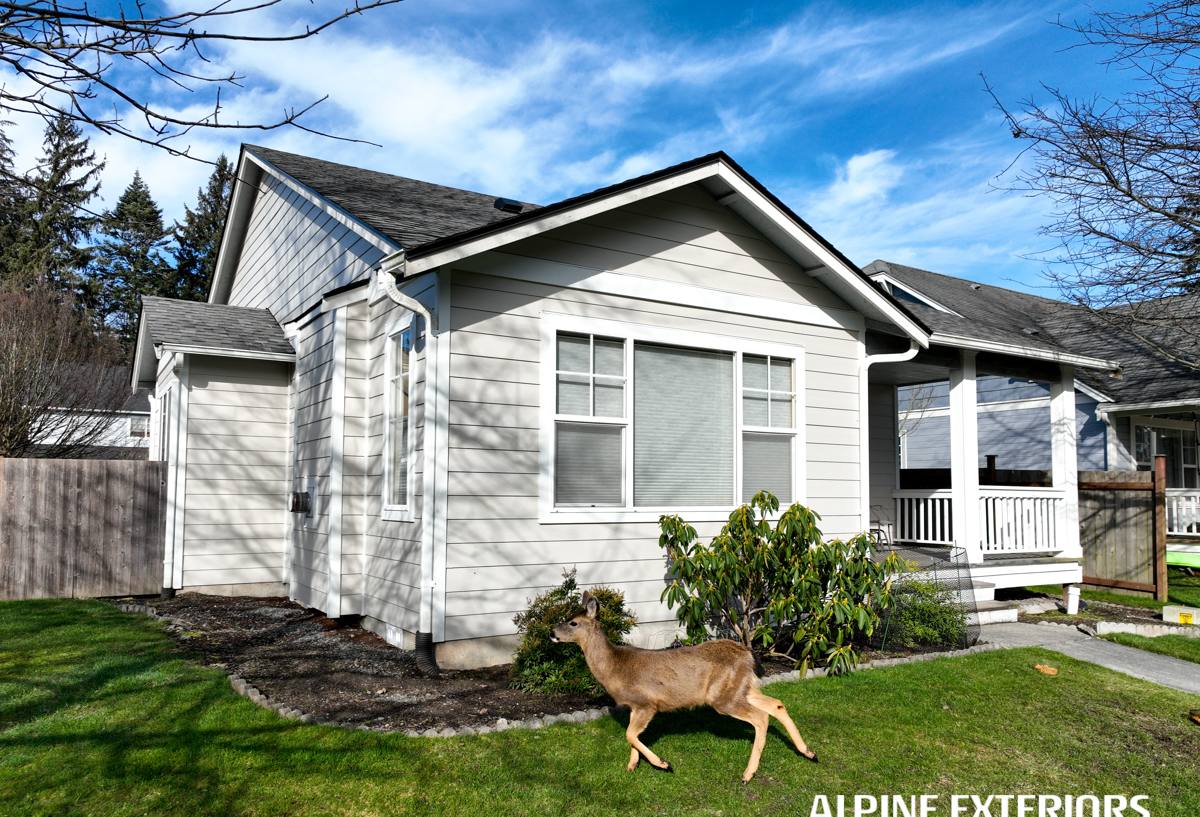
What Sedro-Woolley Homes Are Up Against
Moisture That Doesn't Quit
The Skagit Valley gets a long wet season, and Sedro-Woolley's inland-but-still-marine climate means siding here rarely gets a real chance to dry out between fall and spring. Materials that absorb moisture, swell, and then shrink back down as they dry are under constant stress in a cycle like this. Over years, that stress shows up as cracking, splitting, and paint or finish failure.
Moss and Algae Growth
Shaded lots, mature tree cover, and persistent dampness make Sedro-Woolley yards a good environment for moss and algae to take hold on siding, especially on north-facing walls and anywhere overhangs block direct sun. Some siding materials are more porous and give moss more to grip onto; others shed it more easily and clean up better.
Salt Air Influence
While Sedro-Woolley is farther inland than the coastal Skagit communities, the valley still sees salt-influenced air moving in off Puget Sound and the Salish Sea, especially during storm systems. That salt content in the air and rain accelerates corrosion on fasteners and metal components and adds another layer of wear to painted or coated surfaces.
Temperature Swings
Skagit County doesn't get extreme heat, but the valley does see real temperature swings between summer afternoons and cool, damp nights and mornings. Siding materials expand and contract with those swings, and that movement is part of what causes seams to open up and caulking to fail over time on lower-quality installations.
Why We Only Install James Hardie Fiber Cement
Skagit County Siding installs James Hardie fiber cement siding exclusively. We don't install vinyl, LP SmartSide, primed spruce, cedar, or other fiber cement brands like Cemplank or Allura. That's a deliberate standard, not a limitation, and it comes down to how these materials actually perform in a climate like ours over the long run.
What We See With Other Materials
- Vinyl siding is affordable and low-maintenance in mild climates, but it can warp or become brittle under UV exposure and temperature swings, and it's not fire-resistant. Its seams and panel movement can also let moisture work behind the cladding over time.
- Wood-composite products like LP SmartSide use engineered wood strand technology with a resin-saturated overlay. It performs reasonably well when installed and maintained correctly, but any wood-based product is more vulnerable to moisture intrusion at cut edges and seams than fiber cement, and it requires more consistent maintenance to keep that vulnerability in check.
- Primed spruce and cedar are traditional choices with real natural beauty, but solid wood siding demands the most maintenance of any option: regular repainting or staining, vigilance against rot, and susceptibility to insect damage. In a valley with as much sustained moisture as Sedro-Woolley sees, that maintenance burden is significant.
- Other fiber cement brands like Cemplank and Allura are legitimate fiber cement products. We simply don't install them because we've standardized our crew, our tooling, and our warranty relationship around one manufacturer we trust completely, rather than splitting our expertise across several.
Why James Hardie
James Hardie fiber cement is non-combustible, which matters more every year given wildfire smoke and ember exposure across the Pacific Northwest. It's engineered specifically for climates like ours through Hardie's HZ5 product line, which is formulated for regions with the freeze-thaw cycles and sustained moisture the Skagit Valley experiences. The factory-applied ColorPlus finish is baked on under controlled conditions, which gives it more consistent, longer-lasting color performance than field-applied paint, and it comes backed by a strong transferable warranty when installed to Hardie's specifications. Fiber cement also doesn't feed moss and algae growth the way wood-based products can, which is a real practical advantage on shaded Sedro-Woolley lots.
Siding Material Comparison
| Material | Moisture Resistance | Fire Resistance | Maintenance | Typical Lifespan |
|---|---|---|---|---|
| James Hardie Fiber Cement | Excellent | Non-combustible | Low | 30-50 years |
| Vinyl | Good (seam-dependent) | Poor | Low | 20-30 years |
| Wood Composite (LP SmartSide) | Fair to Good | Combustible | Moderate | 20-30 years |
| Solid Wood / Cedar | Fair (maintenance-dependent) | Combustible | High | 15-30 years with upkeep |
These are general industry ranges, not guarantees, and actual performance always depends heavily on installation quality and ongoing maintenance. But the pattern holds across the industry: fiber cement, and James Hardie specifically, consistently requires the least upkeep while holding up best against sustained moisture and fire exposure.
Beyond Siding: Roofing, Windows, and Decks
Siding is only one part of a home's exterior envelope, and problems in one area often show up in another. A roof that's shedding water improperly can drive moisture down behind siding at the eaves. Windows with failed flashing can let water in around the frame no matter how good the siding is. Decks exposed to the same rain and moss conditions as your siding need materials and maintenance that account for it. We handle all four — siding, roofing, windows, and decks — because treating the exterior as one connected system, rather than four separate projects, is how you actually solve moisture problems instead of chasing them from one spot to the next.
What Correct Installation Involves
Fiber cement siding performs the way it's supposed to only when it's installed to Hardie's specifications. This isn't a material you can install loosely and expect to hold up.
Key Installation Steps
- Proper weather-resistive barrier and flashing installation behind the siding, so any moisture that does get past the cladding has somewhere to drain
- Correct fastener spacing, type, and depth — over-driven or under-driven nails are one of the most common causes of early failure
- Proper clearance between siding and grade, decks, roofing, and other transitions to keep the bottom edge of the siding from sitting in standing water or debris
- Correctly sized gaps and sealant at butt joints and trim to allow for expansion and contraction without letting water in
- Field-cut edges properly sealed, since factory-primed edges lose some of their protection once cut on site
A rushed or corner-cut installation can undermine even the best material. That's a big part of why the crew doing the work matters as much as the product on the truck.
Why a Local Skagit County Crew Matters
Hiring locally isn't just a feel-good preference — it has practical consequences for the outcome of your project. A crew based in Skagit County understands the drainage patterns, prevailing wind and rain direction, and shaded, moss-prone conditions typical of Sedro-Woolley lots, and that knowledge shapes decisions on the job that a generic installation crew from outside the area might not think to make. A local company is also easier to reach if a warranty question comes up years down the road, and our reputation in this community depends on doing the work right the first time, not on moving on to the next city before problems surface.
Questions to Ask Any Siding Contractor
- Are you a certified or trained installer for the specific product you're proposing?
- Will you follow the manufacturer's written installation instructions, including fastener and flashing details?
- What does the warranty actually cover, and is it transferable if you sell the home?
- Who handles cleanup, and what's the process if something needs to be corrected after installation?
- Can you explain, in plain terms, why you're recommending this specific material for my home?
Planning a Siding Project in Sedro-Woolley
Every home is different, and the right approach depends on your home's age, current siding condition, sun and shade exposure, and how it's held up against the valley's weather so far. Some homes need a full siding replacement; others have isolated moisture damage that's worth addressing before it spreads. A proper assessment looks at the whole exterior system, not just the surface appearance of the siding.
If you're noticing cracking, staining, soft spots, or persistent moss buildup on your home's siding, or you're simply planning ahead for a replacement, we're happy to take a look. We offer free, no-pressure estimates for siding, roofing, window, and deck work throughout Sedro-Woolley and the rest of Skagit County — use the form below to get started.