 Skagit County
 Avon and the Skagit Valley Climate You're Building Against
Avon sits in the Skagit River valley, close enough to the water and the tidal flats that the same weather patterns shaping the rest of Skagit County shape it too: long wet winters, a short dry summer window, and a lot of days in between that are neither one nor the other. Homes here don't just get rained on — they sit under a low, damp marine layer for weeks at a stretch, with fog off the river bottoms and moisture that doesn't fully leave the air even between storms. That combination is harder on a house's exterior than a simple rainfall total suggests.
The valley floor around Avon is flat and low-lying, which means water doesn't run off as fast as it does on a hillside home, and homes tucked near trees or river bottomland get less direct sun to dry siding, trim, and roofing out between storms. Add proximity to Skagit Bay and the broader Salish Sea, and you get a steady dose of salt-tinged air working on fasteners, flashing, and any exterior material that isn't built to handle it. None of this is unique to one street or subdivision — it's the baseline condition for exterior work anywhere in this part of the county, and it's the lens we use for every siding, roofing, window, and deck job we do in the area.
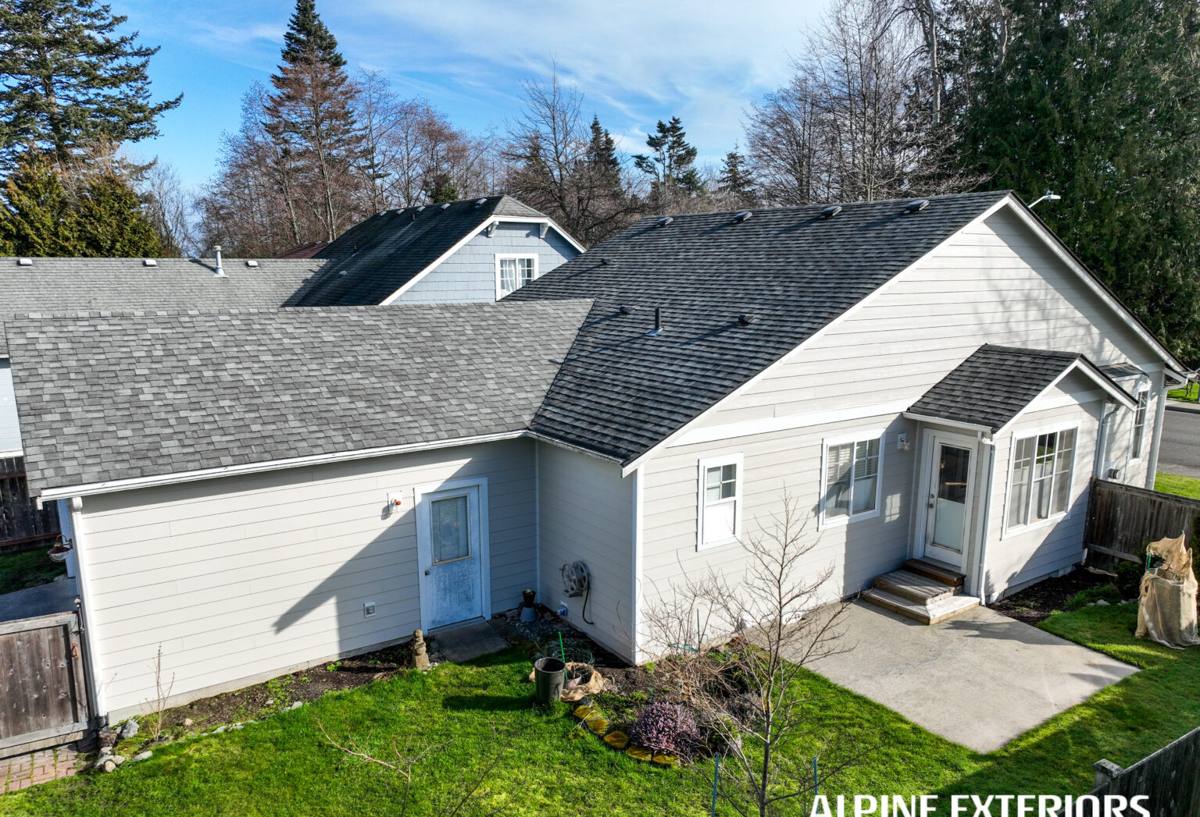
What Driving Rain and Salt Air Do to Siding Over Time
Wind-driven rain doesn't behave like a garden hose aimed straight at a wall. It gets pushed sideways and upward under eaves, around window trim, and into every seam and joint that isn't properly lapped or sealed. Over years, that repeated wetting-and-drying cycle is what actually damages siding — not any single storm, but the slow accumulation of moisture finding its way behind or into a material that can't shed it fast enough.
Salt air adds a second layer of wear. It accelerates corrosion on exposed metal fasteners and flashing, and it can leave a fine residue on painted or coated surfaces that holds moisture against the material longer than clean rainwater would. Materials that rely on a surface coating or paint film to stay protected are the ones most exposed to this — once that film is compromised by UV, abrasion, or age, the substrate underneath is directly exposed to the same wet-salt cycle. This is a big part of why we're picky about what we put on a house in this part of the state: the climate doesn't forgive weak points.
Where the Damage Usually Shows Up First
- Bottom edges of siding boards, where water sheets down and lingers longest
- Butt joints and seams that weren't properly caulked, back-primed, or flashed
- Areas under windows and around trim where wind-driven rain gets pushed sideways
- North- and west-facing walls that get less direct sun to dry out between storms
- Any spot where two dissimilar materials meet and expand or contract at different rates
Moss, Mold, and the Shade Problem
Skagit County's moss season is long, and Avon's mix of tree cover, low elevation, and river-valley humidity makes it a good environment for moss and algae growth on anything that stays damp and shaded. On roofing, moss holds moisture against shingles and can work its way under tabs, shortening the life of the roof system. On siding, algae and mildew growth is mostly a surface and maintenance issue on a properly built wall — but on materials with more texture, more seams, or a coating that's starting to fail, it becomes a magnet for organic growth that's genuinely hard to keep ahead of.
This is one of the reasons we lean so heavily on factory-applied finishes rather than field-applied paint for siding. A factory coating is more consistent, adheres better, and holds up longer against the freeze-thaw-and-regrow cycle that a shaded Skagit Valley wall goes through every winter. It doesn't eliminate the need for occasional cleaning, but it gives you a much better starting point than a surface that's already fighting moisture from day one.
Why We Only Install James Hardie Fiber Cement
We get asked why we don't offer vinyl, LP SmartSide, Cemplank, Allura, primed spruce, or cedar alongside Hardie, and the honest answer is that we made a standard for ourselves and we stick to it rather than selling whatever a homeowner asks for. Each of those alternatives has real strengths — vinyl is inexpensive and low-maintenance in mild climates, engineered wood products are lightweight and easy to install, cedar has a natural look a lot of people love. None of that is in dispute.
What we weigh against those strengths is how each product actually performs over 15, 20, 30 years in exactly the conditions Avon sees: sustained moisture, salt-tinged air, and a moss season that doesn't let up. Wood-based products, including engineered wood and cedar, depend on maintaining an intact protective layer — any breach lets moisture in, and moisture is the one thing this climate has in abundance. Vinyl can warp or fade with age and doesn't offer the same fire resistance. Fiber cement products vary by manufacturer in formulation, engineering, and warranty backing, and we've standardized on James Hardie specifically because of its ColorPlus factory finish, its HZ5 product line engineered for the Pacific Northwest's moisture exposure, non-combustible composition, and a warranty structure that's transferable and well-established.
That's the whole case: not that other products are bad, but that after years of doing this work in exactly this climate, Hardie is the one material we're comfortable standing behind on every job.
What Correct Hardie Installation Actually Involves
The product only performs as engineered if it's installed to Hardie's own specifications — proper clearances from grade and roof lines, correct fastener patterns, back-flashed windows and doors, and rain-screen or drainage-plane detailing where the wall assembly calls for it. A lot of the siding failures we get called out to inspect aren't material failures at all; they're installation shortcuts that let water in behind a product that would otherwise have handled the climate fine.
How a Siding Job Works, Start to Finish
- Assessment. We look at your existing siding, trim, flashing, and any signs of moisture intrusion before recommending a full replacement versus targeted repair.
- Moisture and structural check. Where we suspect trapped moisture — common on older homes in this valley — we check sheathing condition before covering anything back up.
- Weather barrier and drainage plane. A correctly installed water-resistive barrier and drainage gap behind the siding gives any moisture that does get past the cladding a way out.
- Flashing at every penetration. Windows, doors, hose bibs, vents, and roof-to-wall transitions all get flashed before siding goes up around them — this is where most long-term leaks actually originate.
- Hardie installation to spec. Correct fastener spacing, joint treatment, and clearances, following manufacturer requirements rather than shortcuts.
- Trim, caulking, and final detail work. The small details — caulk joints, touch-up paint on cut edges, proper clearance at the bottom of the wall — are what determine how the job ages.
Beyond Siding: Roofing, Windows, and Decks for Avon Homes
Siding doesn't work in isolation — it's one piece of a building envelope that also includes the roof, windows, and any attached structures like decks, and in a wet valley climate those systems all affect each other. A roof that's shedding water improperly can send extra runoff down a wall. Windows with failed seals let moisture into the same wall cavity we're trying to keep dry from the outside. A deck built without attention to ledger flashing is one of the most common sources of hidden rot on homes in this region.
We handle all four trades for that reason — not to upsell unrelated services, but because a siding job that ignores a leaking roof valley or an unflashed deck ledger is only solving part of the problem. When we're on-site for an estimate, we'll flag issues we see in adjacent systems even if you only called about one of them.
Roofing in a Moss-Prone Valley
Roof material choice, ventilation, and moss prevention all matter more here than in a drier climate. We look at attic ventilation as part of any roofing conversation, since poor ventilation traps moisture that shortens roof life from the inside as well as the outside.
Windows and Moisture Management
Window replacement is also a flashing job as much as a glass job — a well-built window installed with poor flashing will leak eventually, and a modest window installed with correct flashing will usually outperform it.
Decks Built for Wet Ground and Wet Air
Ledger board flashing, proper fastener selection for a salt-influenced environment, and decking material choice all matter more here than in an inland, dry-summer climate.
Why a Local Crew Matters in Avon
A crew that regularly works Skagit County knows what this valley does to a house because they've opened up enough walls and roofs here to see the patterns firsthand — which details fail first, which orientations take the worst weather, where moisture tends to hide on a river-valley lot versus a drier upland site. That's knowledge you can't fully get from a spec sheet or a general contracting background in a different climate.
Being local also means faster response if something needs a look after a big storm, easier scheduling around the realistic weather windows for exterior work in this area, and a crew that's still around years later if a warranty question comes up. Exterior work is a long-term relationship with your house, not a one-time transaction, and that's easier to honor when the company doing the work is actually rooted in the county it serves.
Cost Factors for a Siding Project in Avon
Every home is different, and we don't publish fixed pricing because it depends on your home's size, current condition, and how much of the underlying structure needs attention before new siding goes on. The factors below are the ones that most often move a project up or down in scope.
| Factor | Why It Matters |
|---|---|
| Existing wall condition | Hidden moisture damage or rot found during tear-off adds sheathing repair before new siding can go on |
| Home size and complexity | More corners, gables, and trim detail mean more labor and material per square foot of coverage |
| Current siding removal | Full tear-off versus siding over an existing layer changes both cost and long-term performance |
| Window and door count | Every opening needs flashing and trim work, which adds time regardless of wall square footage |
| Access and site conditions | Tight lots, landscaping, or difficult staging can add time for scaffolding and material handling |
| Color and finish selection | Factory ColorPlus finishes versus field-painted options affect material cost and future maintenance |
Vetting a Contractor: What to Check Before You Sign
- Washington state contractor license and active bonding/insurance, verifiable independently
- Manufacturer training or certification for the specific siding product being installed
- A written scope of work that spells out flashing, drainage plane, and fastener details — not just "install siding"
- Willingness to explain why they're recommending a specific product for your home and climate
- A real, transferable warranty in writing, covering both material and workmanship separately
- References or completed local work you can actually see, not just photos
If we're a good fit for your Avon home, we'd rather earn that with a straightforward look at your siding, roofing, windows, or deck than a sales pitch. Reach out for a free, no-pressure estimate — we'll walk the exterior, tell you honestly what we see, and lay out your options.