 Skagit County
 Roof Repair Built for Avon's Weather, Not a Generic Climate
Avon sits low in the Skagit River valley, close enough to Puget Sound to pick up salt-laden air and open enough to catch driving rain off the water with little to break it up. That combination is harder on a roof than most homeowners realize. Salt air accelerates corrosion on exposed metal fasteners, flashing, and vent caps. Wind-driven rain doesn't just fall straight down — it gets pushed sideways under shingle tabs, into hairline gaps around penetrations, and up under ridge caps that would stay dry in a calmer climate. Layer on a moss season that can run eight or nine months out of the year here, and you have a roof environment that punishes shortcuts.
A roof repair done for a dry-climate playbook — patch the obvious hole, caulk the visible gap, move on — tends to fail again within a season or two in Skagit County. A repair done right accounts for where water actually travels once wind gets involved, and for how much organic growth will be sitting on the surface holding moisture against the roofing material for months at a time.
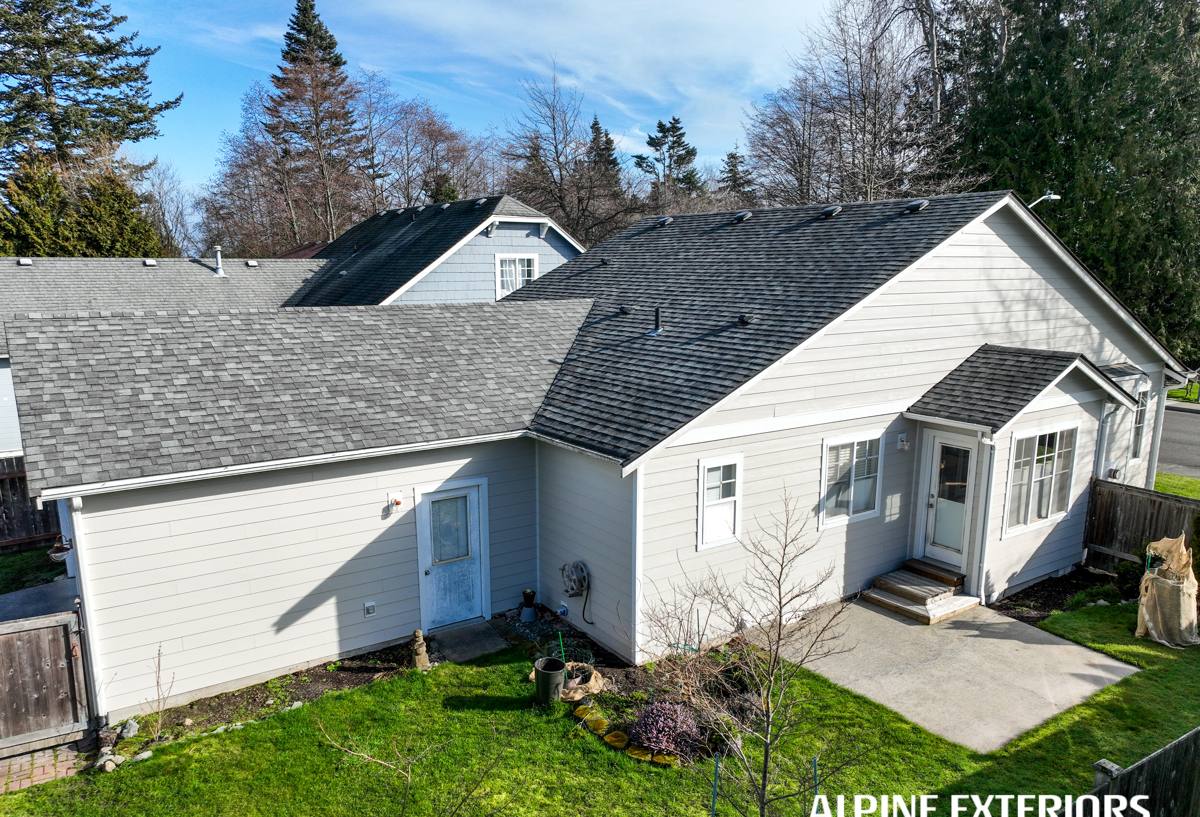
Signs an Avon Roof Needs Repair, Not Full Replacement
Most roofs don't fail all at once. They fail in specific, identifiable spots first, and catching those spots early is what keeps a repair a repair instead of a replacement. Around Avon, we see the same handful of failure points over and over:
- Granule loss and curling at the roof edges and in valleys, where wind-driven rain hits hardest and moss holds moisture longest
- Rusted or lifted flashing around chimneys, skylights, and plumbing vents — often the first thing salt air attacks
- Dark streaking or thick moss mats on north-facing slopes that stay shaded and damp most of the year
- Soft spots or staining on interior ceilings near exterior walls, usually tracing back to a small flashing or underlayment failure rather than a whole-roof problem
- Gutter overflow or granule buildup in gutters, a sign the roof surface is shedding faster than it should
If the roof deck underneath is still sound and the damage is contained to a section, a targeted repair is almost always the right call. Replacement becomes necessary when the decking has soaked through in multiple areas, when the roofing material is past its practical service life across the whole surface, or when repeated repairs in the same spot signal a design or ventilation problem that a patch won't solve.
What a Correct Roof Repair Actually Involves
Diagnose the water path, not just the symptom
A leak rarely shows up directly below where the water got in. Wind-driven rain can travel several feet along the underlayment or roof deck before finding a way through. Before any material comes off, we trace the likely path — checking flashing, fastener patterns, and adjacent penetrations — so the repair addresses the actual entry point instead of just the ceiling stain.
Match materials, not just color
Shingle color fades and product lines change, so an exact match isn't always possible. What matters more is matching the material's weight, profile, and fastening pattern so the repaired section performs the same as the surrounding roof under wind load. A patch that looks close but sits proud or thin will be the first thing to lift in the next storm.
Rebuild flashing and moisture points properly
Most repair callbacks trace back to flashing that was resealed instead of replaced. Caulk and sealant are a short-term fix over a long-term problem. Where flashing has corroded or pulled away, we replace it and re-integrate it with the underlayment so water sheds over the top of every layer, the way it's supposed to — not just sealed at the surface.
Address moss and organic growth before closing up
If moss or algae contributed to the failure, we clean the surrounding area and remove growth that's holding moisture against the repaired section, rather than patching over material that's still wet or actively degrading underneath.
Moss and Salt Air: The Two Problems Generic Roof Advice Ignores
Most roof repair guidance online is written for climates that don't deal with sustained moss growth or coastal air. In Skagit County, both are constant factors, not occasional ones.
Moss doesn't just look bad — it lifts shingle edges as it grows, creating a gap where wind-driven rain can get a foothold. Left long enough, moss mats hold water against the roofing surface for weeks at a stretch, which speeds up granule loss and rot in the decking below. Any repair on an Avon roof needs to account for whether moss caused or contributed to the original failure, and whether it's likely to recur in that same spot given the roof's pitch and shade pattern.
Salt air's damage is quieter. It works on exposed metal — nail heads, flashing edges, vent stacks — corroding fasteners from the outside in. A repair that reuses corroded fasteners or leaves compromised metal flashing in place is a repair that's already counting down to its next failure. We use fasteners and flashing rated for coastal exposure on Avon jobs specifically because standard-grade hardware doesn't hold up here the way it might further inland.
Our Repair Process
- Inspection and honest assessment. We look at the full roof, not just the reported leak, and tell you plainly whether it's a repair or if replacement makes more sense.
- Written scope and price. You know exactly what's being replaced, what's being cleaned, and what it costs before work starts.
- Safe removal of damaged material. We pull back only what needs to come off, protecting the surrounding roof and landscaping.
- Deck check. If the underlayment or decking underneath is compromised, we address it before closing the roof back up — patching over a wet or rotted deck just hides the problem.
- Rebuild with matched, coastal-rated materials. Flashing, fasteners, and shingles selected for how they'll actually perform in Avon's conditions.
- Cleanup and walkthrough. We clear debris and show you what was done and why.
Repair vs. Replacement: How We Help You Decide
| Factor | Points Toward Repair | Points Toward Replacement |
|---|---|---|
| Age of roof | Under 15-20 years, depending on material | Near or past expected service life |
| Extent of damage | Isolated to one section or penetration | Spread across multiple slopes |
| Roof deck condition | Solid, no rot found | Soft spots or rot in more than one area |
| Repair history | First or second repair in this spot | Same area repaired multiple times before |
| Moss/algae staining | Surface-level, cleanable | Deep, long-term growth affecting multiple slopes |
No single factor decides it alone — we weigh all of them together and give you a straight recommendation, including when repair is clearly the more cost-effective choice.
Why It Matters That We Already Work in Avon
A crew that only occasionally works this part of Skagit County has to relearn the local conditions on every job. A crew that regularly works Avon and the surrounding valley already knows which slopes tend to hold moss the longest, how far wind-driven rain typically travels under shingle tabs in this exact wind exposure, and which fastener and flashing grades actually hold up to the salt air here instead of just meeting a generic spec sheet. That local pattern recognition shows up as fewer callbacks and repairs that are sized correctly the first time — not over-scoped to pad the invoice, and not under-scoped in a way that fails again in a year.
It also means faster, more accurate estimates. When we've already seen the same roof age, pitch, and exposure combination on nearby homes, we're not guessing at what's under the surface — we have a realistic sense of it before we're even on the ladder.
A Practical Pre-Call Checklist for Avon Homeowners
- Check attic or ceiling for staining after a heavy wind-and-rain event, not just after steady rain
- Look at gutters for granule buildup, which signals shingle wear
- Note which slopes have visible moss or dark streaking, and how long it's been there
- Check flashing around chimneys and vents for rust or lifting, if safely visible from the ground
- Have the approximate age and roofing material on hand — it speeds up an accurate assessment
Get a Straight Answer on Your Avon Roof
If you're seeing staining, missing granules, moss buildup, or a flashing issue on your Avon home, it's worth getting a professional look before the next storm season adds to the damage. We'll walk the roof, tell you honestly whether it's a repair or a replacement, and give you a clear, written estimate — no pressure, no upsell. Reach out below for a free estimate.