 Skagit County
 Siding Built for Skyline's Climate
Skyline sits within Skagit County's mix of marine-influenced weather and inland valley moisture, which means homes here deal with a longer, wetter shoulder season than most people expect from the Pacific Northwest's "mild" reputation. Salt-tinged air moving in off Puget Sound and the surrounding waterways, driving rain that comes sideways during winter storms, and a moss season that can stretch from late fall into spring all put steady pressure on exterior materials. None of that is dramatic on any single day — it's the accumulation over years that separates siding that holds up from siding that doesn't.
We've worked on homes throughout Skagit County long enough to know that "it rains a lot here" undersells the real issue. The problem isn't just total rainfall — it's how often siding gets wet, how slowly it dries between storms, and how much organic growth (moss, algae, lichen) has a chance to establish on north-facing walls and shaded elevations. Siding that can't handle that cycle shows it within a handful of years, not decades.
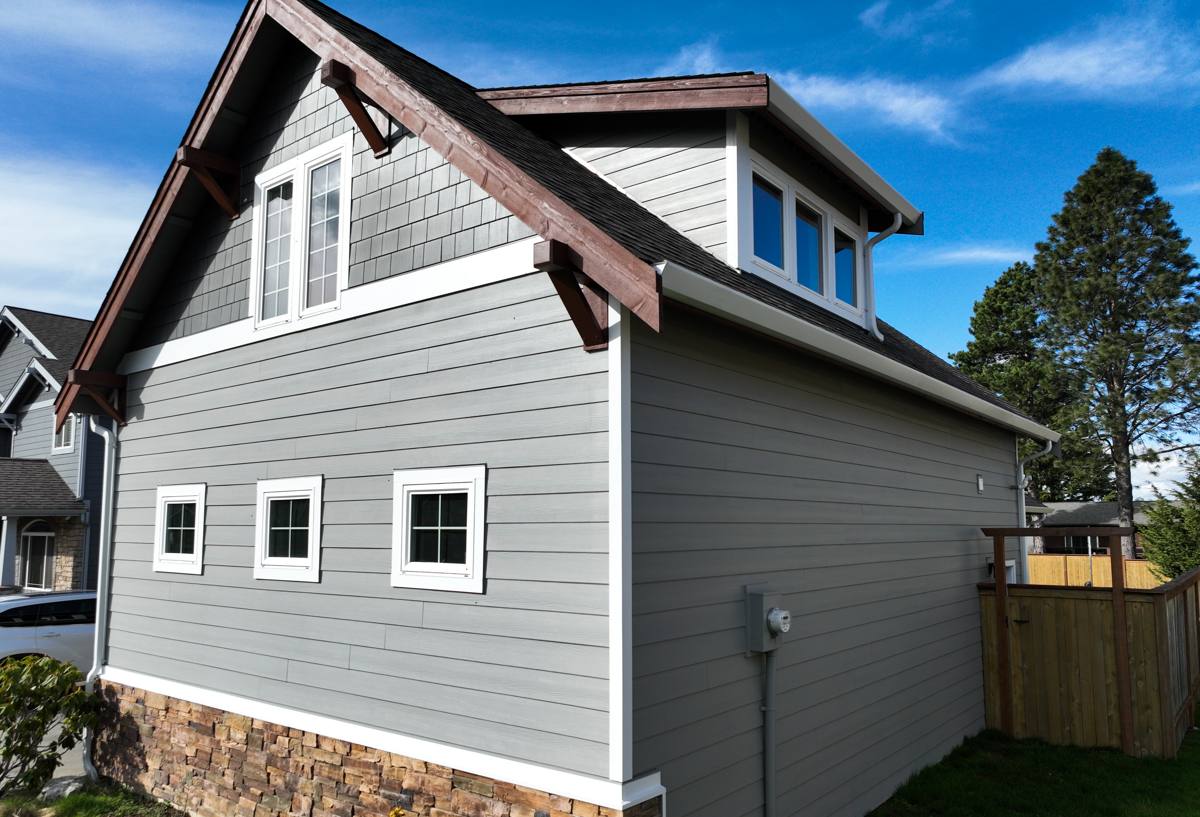
What Skyline Homes Are Up Against
Moisture That Doesn't Let Up
Skagit County gets a real wet season, and Skyline's mix of tree cover and proximity to water means humidity lingers even on days without active rain. Siding that absorbs moisture — or that relies on paint film and caulking to keep water out — is fighting a losing battle when it doesn't get enough dry time between weather events.
Salt Air and Corrosion
Homes closer to Skagit County's waterways and Puget Sound shoreline see salt-laden air that accelerates wear on fasteners, trim, and any material sensitive to chloride exposure. It's a slower process than storm damage, but it's constant, and it favors materials engineered to resist it over time.
Moss, Algae, and Shaded Walls
Skyline's tree cover is part of what makes the area attractive to live in, but it also means shaded, damp wall sections that rarely get direct sun. That's exactly the environment moss and algae need to take hold, and once organic growth gets into seams or behind poorly installed siding, it holds moisture against the wall and accelerates rot underneath.
Why We Only Install James Hardie Fiber Cement
We get asked fairly often why we don't offer vinyl, LP SmartSide, or other fiber cement brands like Cemplank or Allura. The honest answer is that we made a call about what performs reliably in Skagit County conditions specifically, and stuck with it rather than offering a menu of products with very different long-term outcomes.
Vinyl
Vinyl siding is affordable and low-maintenance in the sense that it doesn't need painting, but it's a thin plastic product that expands and contracts significantly with temperature swings, can crack or become brittle over time, and doesn't hold up well to impact. In a climate with sustained wet-dry cycling and occasional wind events, we've found it's not the product we want putting our name behind.
LP SmartSide and Wood-Based Products
LP SmartSide is an engineered wood product, and wood-based siding — including primed spruce and cedar — is fundamentally more moisture-sensitive than fiber cement. It performs fine when installation details (caulking, flashing, gaps at grade) are executed perfectly and maintained consistently, but in a climate where wall assemblies rarely get a long dry stretch, any installation shortcut or maintenance lapse shows up as swelling, delamination, or rot at seams and cut edges sooner than it would with fiber cement.
Other Fiber Cement Brands
Cemplank and Allura are legitimate fiber cement products, and we're not going to claim they're junk — they're not. Our decision comes down to factory finish quality, product engineering specific to Pacific Northwest moisture conditions, and warranty structure. James Hardie's ColorPlus factory-applied finish and its HZ5 product line (engineered for wetter climates) give us a level of consistency and long-term performance we can stand behind without qualifications.
What James Hardie Gets Right for This Area
- Non-combustible core — fiber cement doesn't feed a fire the way wood-based products can
- HZ5 engineering — Hardie's climate-specific product line is built for wetter, moisture-heavy regions like ours
- ColorPlus factory finish — baked-on color that resists fading and doesn't require repainting on the same schedule as field-painted siding
- Dimensional stability — fiber cement doesn't expand and contract the way vinyl or wood does, which means tighter, longer-lasting seams
- Strong transferable warranty — meaningful protection that can pass to a future homeowner, which matters for resale
None of that means Hardie is maintenance-free. It still needs caulking checked periodically, still needs to be kept clear of soil and mulch contact at the base, and still benefits from an occasional gentle wash to keep moss and algae from establishing. But the baseline durability is a different category from the alternatives.
How We Approach a Siding Job in Skyline
Every Skagit County property has its own exposure — how much tree cover it has, which direction the prevailing weather hits it from, how close it sits to water, how much shade the north wall gets. Before we quote anything, we walk the property and look at the actual conditions your home is dealing with, not just a generic checklist.
What a Proper Installation Includes
- Inspection of the existing wall assembly and sheathing for hidden moisture damage before new siding goes up
- Correct water-resistive barrier and flashing details at windows, doors, and penetrations
- Proper fastening per Hardie's installation specs — this is where a lot of poor installs go wrong and warranty claims get denied
- Appropriate clearance at grade, decks, and roof lines to keep siding from sitting in standing moisture
- Factory-finished ColorPlus panels installed with Hardie-approved caulking and touch-up products
Installation quality matters as much as the product choice. Even the best fiber cement siding will underperform if it's nailed too tight, missing proper flashing, or installed without the right gaps and clearances. That's a big part of why we standardized on one product — it lets our crews build deep, consistent expertise on the installation details that actually determine how the siding performs ten and twenty years out, rather than switching between product systems with different rules.
Comparing the Options
| Material | Moisture Resistance | Maintenance | Typical Lifespan | Do We Install It |
|---|---|---|---|---|
| Vinyl | Doesn't absorb water, but seams and fasteners can let moisture behind panels | Low, but can crack or fade | 20-30 years, shorter with impact/UV damage | No |
| LP SmartSide / Wood | Moisture-sensitive; performance depends on flawless installation and upkeep | Higher; needs paint/caulk maintenance | 15-30 years depending on exposure and care | No |
| Other Fiber Cement (Cemplank, Allura) | Good; similar core material to Hardie | Moderate | 30-50 years | No |
| James Hardie Fiber Cement | Engineered for wet climates (HZ5); strong resistance to moisture and organic growth | Low to moderate; periodic caulk checks and washing | 30-50+ years with proper install | Yes |
Roofing, Windows, and Decks — The Whole Envelope
Siding doesn't work in isolation. A roof that's shedding water poorly, windows without proper flashing, or a deck ledger that's trapping moisture against the wall can undermine even a well-installed siding job. Since we handle roofing, windows, and decks in addition to siding, we look at your home's full exterior envelope rather than treating siding as a standalone project. That's especially relevant in Skyline, where tree cover and shaded elevations mean water management around the whole structure — not just the walls — determines how well everything ages.
Why a Local Crew Matters Here
Skagit County's microclimates vary enough — proximity to water, elevation, tree cover, sun exposure — that a crew unfamiliar with the area can miss details that matter. We know what driving rain off the water does to a west-facing wall, how long a shaded north side stays damp after a storm, and where moss tends to establish first. That local knowledge shapes decisions on flashing, clearances, and finish selection that a generic installation approach might overlook.
We're also around after the job is done. If a question comes up about maintenance, a warranty issue, or how a section of siding is holding up after a hard winter, you're calling a crew that knows your property and works in this county regularly — not a company that installed and moved on.
Getting Started
If you're noticing moss buildup, worn caulking, soft spots, or siding that just looks tired on your Skyline home, it's worth having someone take a look before small issues turn into structural ones. We offer a free, no-pressure estimate — walk the property with us, ask questions about James Hardie versus whatever you currently have, and get a straight answer about what your home actually needs. Use the form below to get in touch.