 Skagit County
 Anacortes Sits in a Tougher Spot Than Most of Skagit County
Anacortes is surrounded by water. Sitting on Fidalgo Island with Puget Sound, Rosario Strait, and the ferry approach to the San Juan Islands all close at hand, homes here take on a different kind of weather load than houses twenty miles inland in the Skagit Valley. The wind carries salt spray further inland than most homeowners realize, the rain tends to come in sideways off the water during winter storms, and the combination of shade, moisture, and mild temperatures gives moss and algae a long growing season on anything that stays damp. None of this is exotic or unusual for a coastal Pacific Northwest town — it's simply the baseline your exterior has to handle, year after year, without you thinking about it.
That baseline matters when you're choosing what to put on the outside of your house. A siding, roofing, or trim product that performs fine in a drier or more sheltered part of the county can struggle on a home that catches wind straight off the strait. We've built our approach around what actually holds up in this specific environment, not a generic recommendation that works "well enough" everywhere.
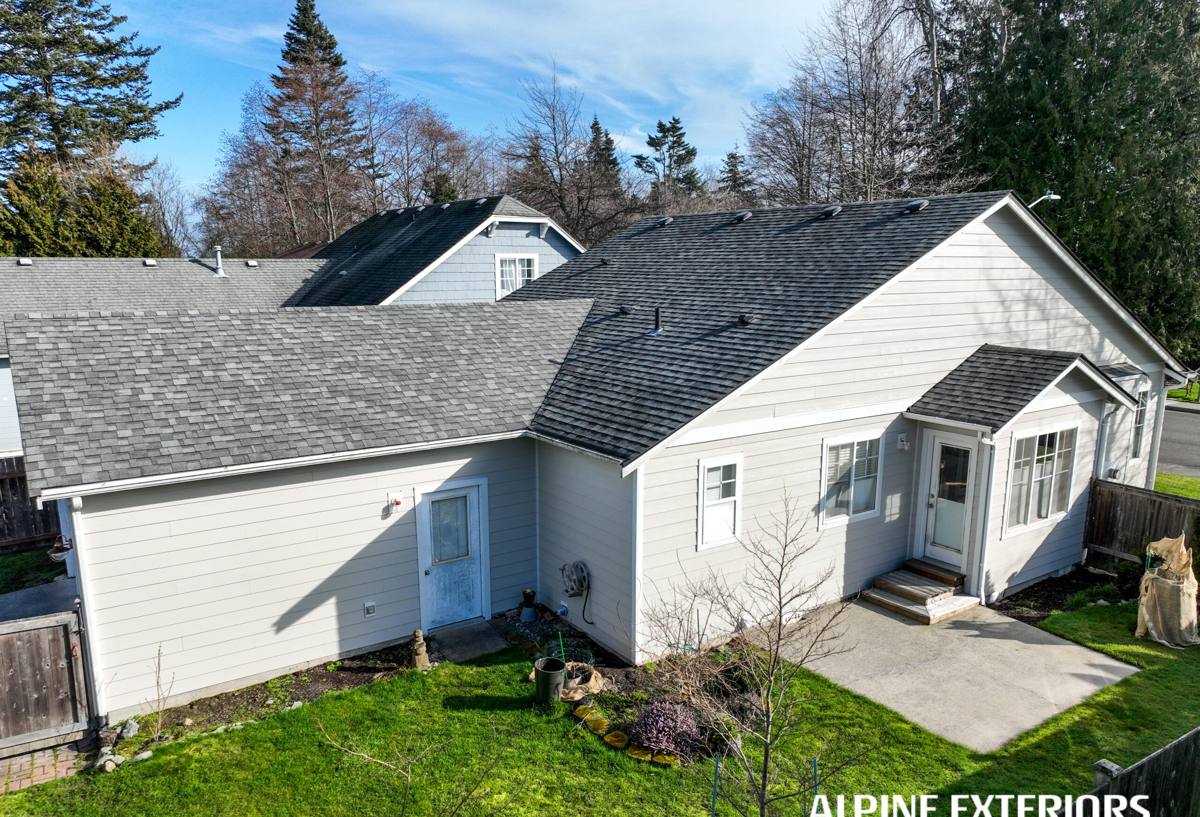
What Salt Air and Driving Rain Actually Do to a House
Moisture Intrusion Is the Real Enemy
Wind-driven rain doesn't just wet the surface of your siding — it pushes water into every seam, joint, and fastener hole it can find. On a coastal lot with little windbreak, that pressure is higher and more frequent than it would be on a sheltered inland property. Over years, siding materials that absorb moisture or swell at the edges start to fail from the inside out, often before any damage is visible from the street. By the time paint is peeling or boards are visibly warped, moisture has usually been working behind the surface for a while.
Salt Air Accelerates Corrosion and Finish Breakdown
Airborne salt is corrosive to metal fasteners, trim, and flashing, and it also degrades some paint and coating systems faster than inland exposure would. Homes closer to the water tend to show chalking, fading, and fastener staining sooner than the same products would show inland. This is one of the reasons fastener choice and flashing detail matter as much as the siding material itself on a property like this.
Moss and Algae Thrive on North Sides and Shaded Walls
Skagit County's mild, wet winters and overcast stretches give moss and algae a long window to establish themselves, especially on north-facing walls, under eaves, and anywhere siding stays damp longer than it dries. Moss holds moisture against the surface and can work into seams and butt joints over time. A siding product that resists moisture absorption and has a factory-applied finish designed to shed biological growth has a real, practical advantage here — not a marketing one.
Why We Install Only James Hardie Fiber Cement Siding
We made a decision a long time ago to standardize on James Hardie fiber cement siding and not offer vinyl, LP SmartSide, or other engineered wood products. That's not because those products have no place in the market — it's because, for the conditions homes face in Anacortes and the rest of Skagit County, we don't think they hold up as well over the long haul, and we'd rather stand behind one system we trust completely than offer several we have reservations about.
Non-Combustible Material
Fiber cement is primarily sand, cement, and cellulose fiber. It doesn't burn, which matters both for everyday peace of mind and for insurance considerations in a region where wildfire risk has become a bigger part of the conversation in the Pacific Northwest.
Built to Handle Water Differently Than Wood-Based Products
Fiber cement doesn't swell, rot, or delaminate the way wood-based siding products can when they take on repeated moisture. That's a meaningful difference on a coastal lot that sees more wind-driven rain than the county average.
ColorPlus Factory Finish
James Hardie's ColorPlus finish is baked on at the factory under controlled conditions, rather than field-painted after installation. It resists fading and chipping better than most field-applied paint jobs and comes with its own finish warranty, which matters in a climate that's hard on painted surfaces.
HZ5 Engineering for Pacific Northwest Exposure
James Hardie engineers its HZ product lines for specific climate zones. The HZ5 formulation is built for regions with the kind of moisture exposure western Washington sees, which is a more relevant spec for a home on Fidalgo Island than a one-size-fits-all national product.
Comparing Siding Materials for a Coastal Skagit County Home
| Factor | James Hardie Fiber Cement | Vinyl Siding | LP SmartSide / Engineered Wood |
|---|---|---|---|
| Moisture resistance | Does not swell or rot; engineered for wet climates | Water-resistant surface, but seams and panels can trap moisture behind them | Wood-based core is vulnerable to moisture intrusion at cuts and joints |
| Salt air / coastal exposure | Stable material, factory finish resists fading and chalking | Can become brittle and discolored faster in coastal wind exposure | Finish and edge sealing are critical; gaps invite moisture and decay |
| Fire performance | Non-combustible | Combustible, can melt or deform under heat | Combustible wood-based product |
| Finish durability | Factory-baked ColorPlus finish, separate finish warranty | Color is through the material but can fade and chalk over time | Typically field or factory primed, needs ongoing paint maintenance |
| Long-term maintenance | Occasional washing; caulk and touch-up as needed | Low maintenance but can crack and is hard to color-match when repaired | Requires more diligent paint and sealant upkeep, especially at cut edges |
This isn't a claim that the alternatives are worthless products — plenty of homes around the country wear them fine. It's a statement about what we've decided is the right standard for the homes we put our name on in this specific climate.
We Also Handle Roofing, Windows, and Decks
Siding doesn't work in isolation. The roofline, window flashing, and any attached deck or porch structure all interact with how water moves around your home's exterior. Because we handle roofing, windows, and decks in addition to siding, we look at the whole envelope rather than treating siding as a standalone project. A siding replacement is often the right time to also address aging window flashing, a roof nearing the end of its service life, or a deck ledger board that's been sitting in moisture longer than it should. Coordinating that work under one crew avoids the gaps in responsibility that can happen when multiple contractors touch the same wall assembly at different times.
What Correct Installation Looks Like on This Kind of Site
Flashing and Water Management Come First
Good siding installation starts before the first board goes up. Proper flashing at windows, doors, and roof-to-wall intersections, along with correctly installed weather-resistant barrier and rainscreen detailing where called for, does more to keep a home dry than the siding material itself. On a wind-exposed coastal lot, cutting corners here is where problems start.
Fastener Spacing and Clearances
James Hardie publishes specific installation requirements — fastener type and spacing, minimum clearance from grade, decks, and roofing, and gapping at butt joints. These specs exist because manufacturer warranties are tied to correct installation, and because a coastal climate leaves less room for error than a sheltered inland site would.
Caulking and Joint Treatment
Butt joints and trim intersections are common failure points if they're sealed poorly or left too tight with no room to move. We follow manufacturer joint treatment guidance rather than relying on caulk alone to do a job that proper gapping and flashing should be doing.
Living With Moss Season: What Homeowners Can Expect to Maintain
Even a well-installed fiber cement exterior benefits from a small amount of routine attention in a climate like this. None of it is difficult, but skipping it for years lets moss and grime build up in ways that are harder to reverse.
- Rinse siding gently once or twice a year, focusing on north-facing and shaded walls where moss establishes first
- Keep gutters clear so overflow doesn't run down the siding face repeatedly during heavy rain
- Trim back vegetation and tree limbs that keep a wall section shaded and damp longer than the rest of the house
- Check caulking at trim and joints every couple of years and touch up where it's cracked or pulled away
- Have a professional look at flashing and joints if you notice a section that stays visibly wet longer than the rest of the exterior
What Not to Do
Avoid pressure washing directly at high pressure close to the siding surface — it can force water behind joints and damage the finish. A garden hose or low-pressure setting from a reasonable distance is enough for routine cleaning.
Why a Local Crew Matters in a County Like This
Skagit County isn't uniform. A crew that mostly works drier inland sites doesn't necessarily have a feel for what a coastal Anacortes lot demands in terms of flashing detail, fastener choice, and clearance from grade. Working across this county regularly means seeing the same failure patterns repeat on the same kinds of exposures, and building installation habits around preventing them rather than reacting to them later. It also means being reachable for a warranty question or a follow-up visit without a homeowner having to track down a contractor who worked here once and moved on.
Getting Started
If your Anacortes home is due for new siding, or you're weighing options after storm damage, fading, or moisture issues, we're happy to take a look and walk you through what we see — no pressure, no obligation. Reach out for a free estimate and we'll give you an honest read on your home's exterior and what it would take to get it right.