 Skagit County
 Cedar Siding Isn't a Bad Product — It's a High-Maintenance One
We get asked about cedar siding often enough that it deserves a straight answer instead of a sales pitch. Cedar is a real, time-tested building material. It's naturally rot-resistant compared to other softwoods, it holds paint and stain reasonably well when new, and it has a warmth and grain pattern that manufactured products spend a lot of engineering trying to imitate. None of that is in dispute.
What we don't think is fair to homeowners is selling cedar siding as a low-maintenance, install-it-and-forget-it exterior in a climate like ours. Skagit County sits right where Puget Sound marine air, near-constant winter rain, and a long, shaded moss season all combine to work against solid wood siding. We stopped installing it because we got tired of watching good installs fail early through no fault of the crew that hung them — the wood just doesn't hold up the way homeowners expect it to, given what they paid.
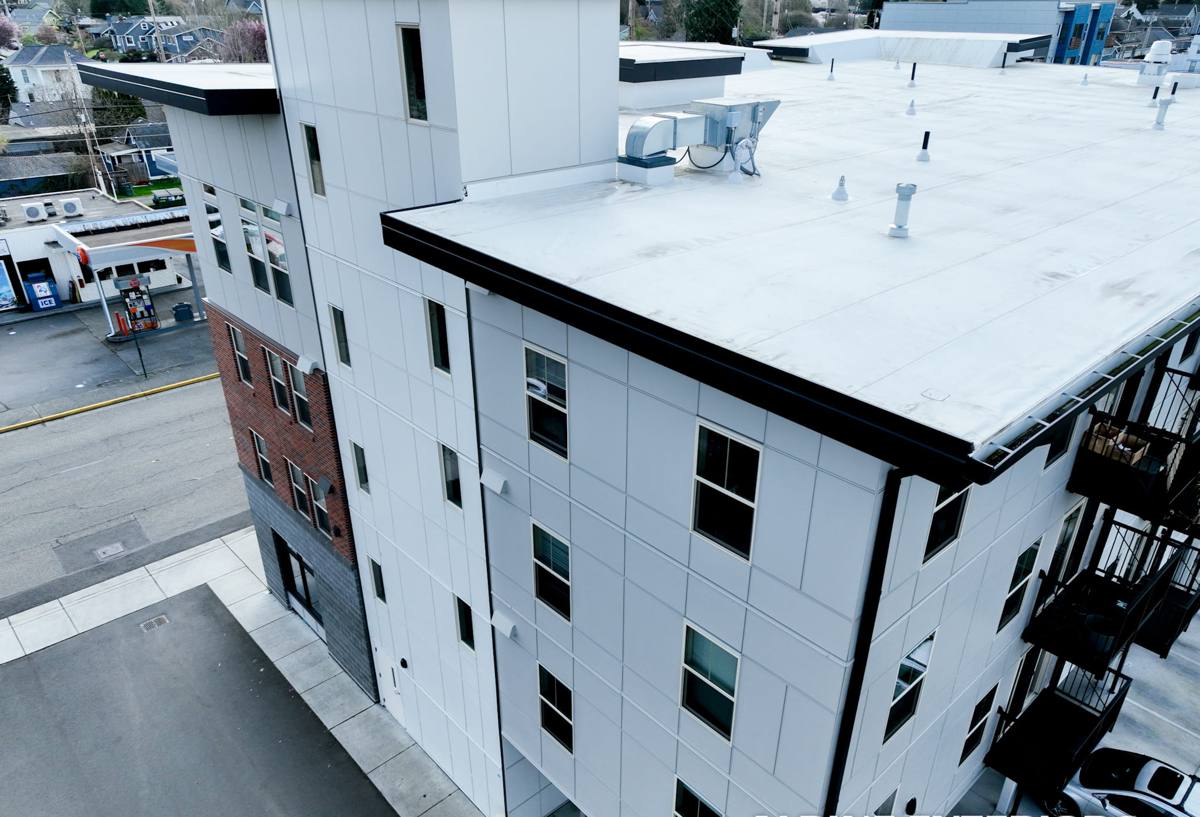
What Driving Rain and Salt Air Do to Wood Siding Here
Cedar is wood. Wood moves with moisture — it swells when wet and shrinks when it dries out, and it does that cycle constantly through a Skagit Valley winter. Every swing opens the door a little wider for water to get behind the finish, into the grain, and eventually into the board itself.
Add in the salt-laden air that rolls in off the Sound and up through the valley, and you get a second problem: salt is hygroscopic, meaning it pulls moisture out of the air and holds it against the surface it's sitting on. On homes closer to the water, that means cedar siding stays damp longer after a storm than it would somewhere drier inland. Longer damp periods mean more time for finish breakdown, more time for mildew and fungal growth to take hold, and more opportunities for water to find a seam, a nail hole, or a butt joint that isn't perfectly sealed.
None of this is a defect in the wood. It's just physics, and it's physics that our climate makes worse than most.
The Moss and Algae Problem
Skagit County's moss season isn't a few weeks — on shaded, north-facing walls and under tree cover, it's close to year-round. Moss and algae need moisture, organic material, and low light to establish themselves, and untreated or unsealed cedar checks every one of those boxes. Once moss gets a foothold on a wood surface, it holds water against the board constantly, which accelerates exactly the kind of rot and finish failure we described above.
Keeping moss off cedar siding isn't a one-time job. It typically means periodic soft-washing, moss treatments, and re-sealing on a schedule — and skipping even one cycle on a shaded elevation can let moss get ahead of you fast. We'd rather put homeowners in a product where that isn't a recurring line item on their calendar.
Where Moss Tends to Take Hold Fastest
- North-facing walls that rarely see direct sun
- Siding under large trees or close to dense landscaping
- Lower courses near sprinklers, downspouts, or grade splash-back
- Any area where gutters overflow or divert water onto the wall below
The Real Maintenance Burden, Not the Marketing Version
Cedar siding is sold on its natural beauty, and that beauty is real when it's new or freshly refinished. What doesn't always make it into the sales conversation is what it takes to keep it looking that way. Painted or stained wood siding on the Washington coast typically needs refinishing on a real schedule, not "whenever it starts to look bad" — because by the time it looks bad, moisture has usually already gotten past the finish.
| Factor | Cedar Siding | James Hardie Fiber Cement |
|---|---|---|
| Refinishing cycle | Repaint/restain roughly every 3-7 years depending on exposure | ColorPlus factory finish designed to hold color for decades without repainting |
| Moisture behavior | Absorbs water, swells and shrinks, prone to cupping and warping | Engineered to resist moisture-driven swelling and warping |
| Moss/algae resistance | Organic surface, needs periodic treatment on shaded walls | Non-organic surface, far less hospitable to moss and algae growth |
| Combustibility | Combustible wood product | Non-combustible fiber cement |
| Insect vulnerability | Susceptible to carpenter ants, rot from sustained moisture | Not a food or nesting source for wood-destroying insects |
| Typical warranty | Often limited or finish-only through the manufacturer | Long-term transferable product warranty through Hardie |
None of these differences mean cedar "fails" the day it goes up. It means the ongoing cost and labor of keeping it looking good and performing well is higher, and that cost is easy to underestimate when you're only looking at the price of the material at install time.
Rot, Insects, and the Damage You Don't See Coming
Cedar's natural oils give it decent resistance to rot and insects compared to something like pine, but "resistant" isn't "immune," and that resistance fades as the board ages and its natural oils leach out. Once a section of cedar starts holding moisture — behind a failed caulk joint, under a piece of trim, at a butt seam that's opened up — rot can start in that spot while the rest of the wall still looks fine from the ground.
Carpenter ants are a real concern in the Pacific Northwest, and they're drawn to damp, softening wood exactly like what you get when cedar siding starts to fail at a joint. By the time a homeowner notices staining, soft spots, or ant activity, there's often sheathing or framing damage behind the siding that costs a lot more to fix than the siding itself.
Fire Considerations
Cedar is a combustible wood product, full stop. That matters less on a wall than it does on decking or fencing close to a structure, but it's still a factor we weigh. Fiber cement siding is non-combustible, which is one more reason it's become the standard we install rather than a marketing footnote — it's a genuine difference in what the material does when it's exposed to heat or flame, not a hypothetical.
The Warranty Gap Nobody Mentions
When cedar siding is sold, the warranty conversation is usually about the finish — the paint or stain manufacturer's coverage — not the wood itself. Wood siding manufacturers are generally reluctant to offer strong, long-term warranties on the board performance, because they know how much the outcome depends on local climate, installation detail, and how consistently the homeowner keeps up with refinishing. That's a reasonable position for them to take, but it puts nearly all of the long-term risk on the homeowner.
James Hardie backs its fiber cement products with a strong, transferable warranty because the product is engineered and tested to perform consistently across climates, including wet coastal ones like ours. That's not a small distinction — it's the difference between a manufacturer standing behind decades of performance and one covering you for a finish that's expected to wear off on a schedule.
Why We Install James Hardie Instead
We standardized on James Hardie fiber cement because it's built to handle exactly the conditions that give cedar trouble here: sustained moisture, salt air, and long stretches without direct sun. Hardie's HZ5 product line is specifically engineered for climate zones like ours. The ColorPlus factory finish is baked on and warranted, so homeowners aren't stuck on a repainting cycle to protect the substrate underneath. It's non-combustible, it isn't a food source for insects, and it doesn't swell and shrink with every wet-dry cycle the way solid wood does.
That's the whole reasoning behind refusing to install cedar: we'd rather put something on your home that performs the way you expect it to for the next 30 years than something beautiful on day one that turns into a maintenance project by year five.
Questions Worth Asking Before You Choose Any Siding Material
- What does the manufacturer actually warranty — the material, the finish, or both?
- How often will this siding realistically need to be refinished in a wet, coastal climate?
- How does this product handle moss and algae exposure on shaded walls?
- Is the product combustible, and does that matter for my situation?
- What's the total cost over 20-30 years, not just the install price?
Talk to Us Before You Decide
If you're weighing cedar against fiber cement for a home in Skagit County, we're happy to walk your property, point out the elevations that would be hardest on wood siding, and explain exactly why we'd put James Hardie there instead. Reach out for a free, no-pressure estimate — there's no obligation, and you'll get a straight answer, not a sales script.