 Skagit County
 Siding Built for Lyman's River Valley Climate
Lyman sits in the Skagit River valley east of Sedro-Woolley, in the stretch of Skagit County where the lowlands start giving way to the Cascade foothills. It's a quieter, more rural corner of the county — wooded lots, farmland, older farmhouses, and newer homes tucked in among the trees along the river corridor. That setting is part of what makes it a good place to live, and part of what makes exterior maintenance a different job than it is twenty miles downriver in town.
Homes here deal with a lot of standing moisture. Driving rain off the valley is a given most of the year, but the bigger issue is what happens after the rain stops: tree cover and river-valley humidity keep siding, trim, and roofing damp longer than homes out in open, sunnier parts of the county. That extended dampness is exactly the condition moss, algae, and wood rot need to get established, and it's the single biggest factor we design around when we're siding a home in this area.
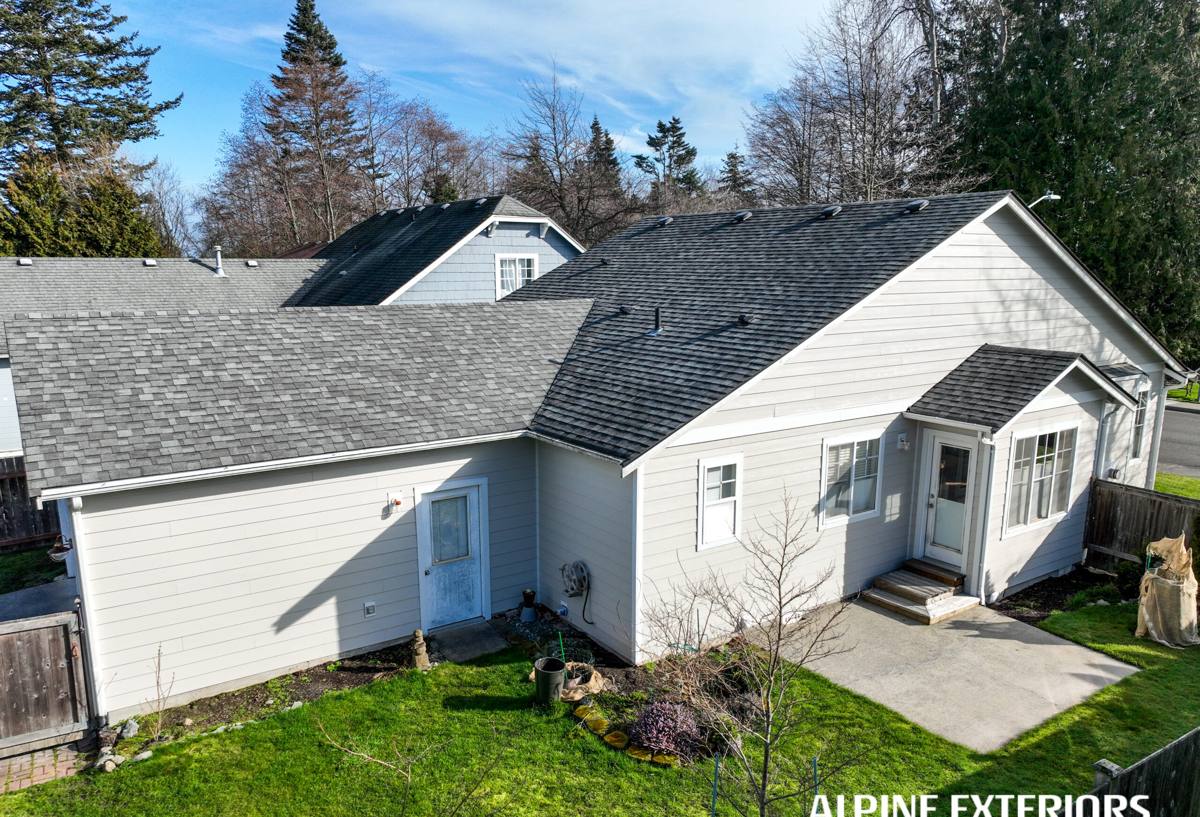
What Skagit County's Climate Does to Exterior Siding
Every siding material reacts differently to sustained moisture exposure, and Lyman's combination of rainfall, shade, and river valley humidity is a tough test for most of them.
- Wood and wood-composite products absorb moisture at cut edges and fastener points, which is where rot typically starts — often from the inside out, so it's not visible until it's advanced.
- Vinyl siding doesn't rot, but it doesn't stop moisture either — water tracks behind panels and settles against the sheathing, and constant damp-and-dry cycling in shaded areas accelerates warping and fading.
- Moss and algae growth is heavier and faster on north-facing walls, under eaves, and anywhere tree canopy blocks direct sun — which describes a lot of Lyman's tree-shaded lots.
- Caulking and paint film on traditional siding break down faster under repeated wet-dry cycles, which means more frequent repainting and recaulking just to keep water out.
None of this means siding in this area is a losing battle. It means the material and the installation details matter more here than they would in a drier climate, which is why we standardized on one product system rather than offering whatever's cheapest.
Why We Install Only James Hardie Fiber Cement
We don't install LP SmartSide, vinyl, Cemplank, Allura, primed spruce, or cedar. That's not a marketing position — it's a decision we made after years of doing tear-offs and repairs on all of them across Skagit County, including plenty of jobs where the original material simply wasn't built for this much sustained moisture.
James Hardie fiber cement is engineered from cement, sand, and cellulose fiber, which means it doesn't absorb water the way wood-based products do and won't rot from moisture intrusion the way engineered wood can. It's also non-combustible, which matters in a county that sees wildfire smoke and increasing dry-season fire risk in the surrounding foothills and forestland. Hardie backs its products with a strong transferable warranty and a factory-applied ColorPlus finish that's baked on and warrantied separately from the substrate — so you're not relying on job-site paint application to hold up through a wet Skagit winter.
We're not going to tell you every other product on the market is junk. Vinyl and LP have their place and their price point. What we will say is that after seeing how those products age in valley conditions like Lyman's, we decided we didn't want our name on installations we weren't confident would still look good in fifteen years.
The Hardie Product Lines We Use
James Hardie makes region-specific formulations under its HZ5 engineered-for-climate system, which accounts for freeze-thaw cycling and moisture exposure typical of the Pacific Northwest. For Skagit County homes, that generally means:
| Product | Best For | Notes |
|---|---|---|
| HardiePlank lap siding | Most homes, traditional or farmhouse styles | Available in several exposure widths and smooth or cedar-textured finishes |
| HardieShingle | Accent gables, dormers, craftsman-style detail | Staggered or straight-edge panels for a shingle look without wood's maintenance |
| HardiePanel vertical siding | Modern builds, shop-style outbuildings, accent walls | Clean vertical lines, often paired with board-and-batten trim |
| HardieTrim | Fascia, corners, window and door surrounds | Matches the fiber cement system so trim ages at the same rate as the field siding |
ColorPlus finishes come in a range of factory colors engineered to resist fading, chipping, and moss staining better than field-applied paint — a real advantage on shaded, damp elevations that would otherwise need repainting every few years.
What Correct Installation Actually Involves
Fiber cement siding performs the way it's supposed to only when it's installed to spec — and most of the siding failures we get called out to inspect in Skagit County trace back to installation shortcuts, not the material itself. On a Lyman home, that means paying close attention to:
- Weather-resistive barrier and flashing — proper house wrap, window and door flashing, and kick-out flashing at roof-wall intersections to keep bulk water out of the wall assembly.
- Proper clearances — siding held off decks, roofs, and grade per manufacturer spec so water can't wick up from below.
- Fastening pattern — correct nail placement and depth, which affects both wind performance and the manufacturer's warranty.
- Caulking and sealant at penetrations — every fixture, vent, and utility penetration is a potential entry point if it's not sealed correctly the first time.
- Field-cut edge sealing — cut ends need to be sealed to keep the product's factory moisture protection intact.
These aren't optional extras. On a valley property with as much sustained moisture exposure as Lyman gets, a corner cut on flashing or clearance is what turns into a moisture problem behind the wall a few years down the road, long after the crew that installed it is gone.
Beyond Siding: Roofing, Windows, and Decks
Siding rarely fails in isolation. A leaking roof, a failed window seal, or a rotting deck ledger board all send moisture into the same wall assembly your siding is trying to protect. Because we handle roofing, windows, and decks in addition to siding, we look at the whole exterior envelope during an estimate rather than just the walls — which matters on older Lyman homes where the roof, siding, and windows may be different ages and different levels of wear.
For homeowners considering an exterior refresh, it's often more efficient to plan siding, roofing, and window replacement together, even if the work happens in phases — it lets us coordinate flashing details between trades and avoid tearing into fresh siding later to fix a window or roof issue.
What to Expect When You Hire a Local Skagit County Crew
A lot of siding work in outlying communities like Lyman gets bid out to crews based well outside the county who aren't accounting for the specific way moisture behaves in a shaded river valley versus an open coastal lot. A local crew that works this county regularly has already seen how a given wall orientation, elevation, and tree cover combination performs over time, and adjusts the installation accordingly.
Before hiring anyone for siding, roofing, window, or deck work in this area, it's worth confirming:
- They carry current Washington state contractor licensing and adequate liability insurance
- They can explain their flashing and moisture-barrier approach in plain terms, not just "we'll seal it up"
- They're specific about which manufacturer and product line they're installing, and can show you the warranty terms in writing
- They give you a written estimate that breaks out materials and labor rather than one lump number
- They have references or completed work you can actually look at, not just a sales pitch
Maintenance in a Moss-Prone Valley
Even with the right material and a correct installation, exterior surfaces in a shaded, damp valley like Lyman's benefit from periodic attention. A yearly rinse-down of siding and trim, keeping gutters clear so water isn't sheeting down walls, and trimming back vegetation that's shading a wall and keeping it damp all go a long way. Hardie's factory finish reduces how often you'll need to touch up paint compared to wood siding, but it's not a substitute for basic upkeep — nothing is, in a climate this wet.
If you're noticing soft spots, peeling paint, visible warping, or heavy moss buildup that keeps coming back no matter how often you clean it, that's usually a sign the underlying material or installation isn't holding up to local conditions — and worth having looked at before it turns into a larger repair.
If you're in Lyman or anywhere else in Skagit County and want an honest look at your home's siding, roofing, windows, or decking, we're happy to come take a look. Estimates are free, there's no pressure, and we'll tell you straight what we'd actually recommend for your home — use the form below to get started.