 Skagit County
 Siding in Bow: Built for a Salt-Air, Rain-Soaked Corner of Skagit County
Bow sits in one of the more exposed pockets of Skagit County — close enough to Samish Bay and the open water of Padilla Bay to catch salt-laden air on a regular basis, and low enough in elevation that fog, dew, and standing moisture linger longer than they do further inland. Add in the long, wet Pacific Northwest winters and the shaded tree lines that many Bow properties sit against, and you've got a climate that is genuinely hard on exterior building materials. We've worked on homes throughout this stretch of the county, and the pattern is consistent: siding here fails faster and shows damage sooner than siding installed in drier, more sheltered parts of the region.
This page covers what Bow homeowners are actually up against, how we approach siding, roofing, window, and deck work out here, and why we install exclusively James Hardie fiber cement siding rather than the vinyl, LP SmartSide, or cedar products you'll see offered elsewhere.
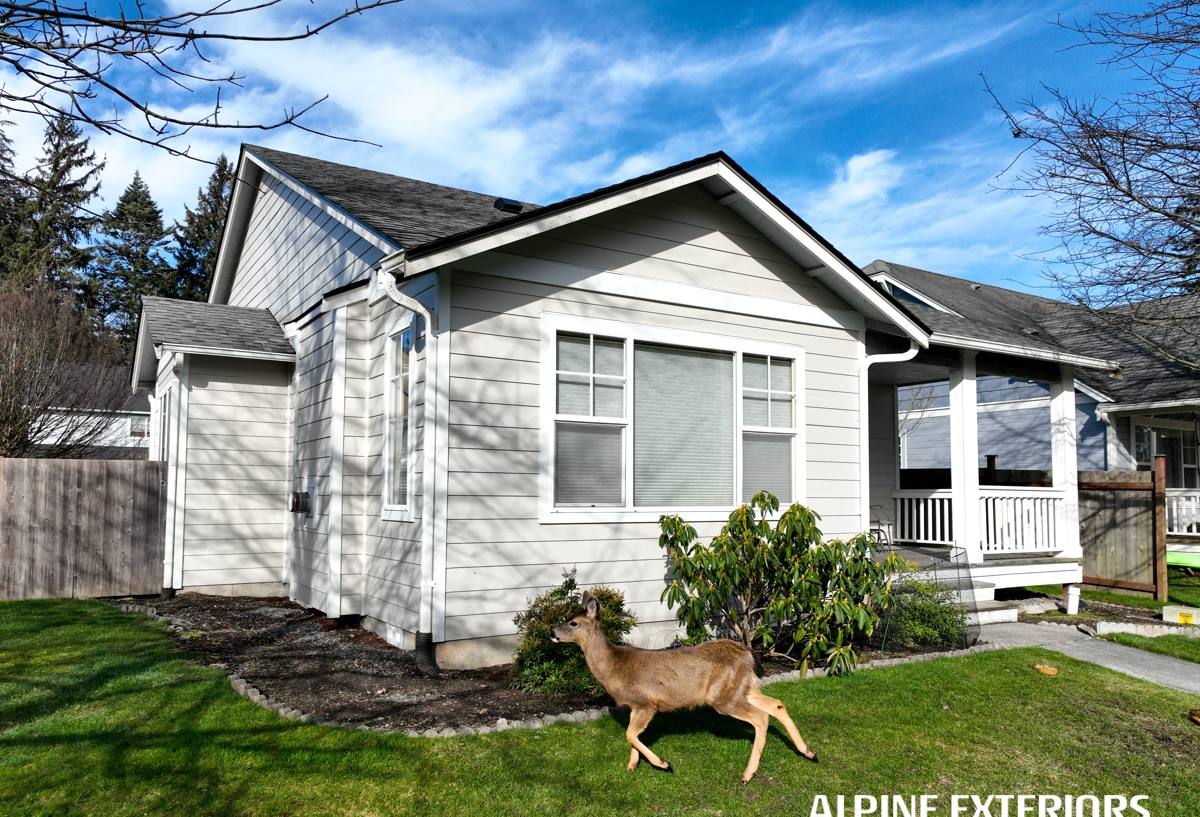
What Bow's Climate Does to a House
Salt Air and Corrosion
Proximity to Samish Bay means airborne salt is a real factor for siding, fasteners, trim, and paint film — not just for waterfront lots, but for homes set back a mile or more inland when prevailing winds carry moisture off the water. Salt exposure accelerates the breakdown of cheaper coatings, corrodes unprotected metal fasteners and flashing, and speeds up the fading and chalking of lower-grade paint jobs.
Driving Rain
Skagit County gets a lot of rain, but it's the wind-driven rain that does the real damage — the kind that gets pushed sideways under laps, around window trim, and into seams that were never meant to see standing water. Bow's more open, less-sheltered lots see this more than tucked-in neighborhoods further into town. Over years, wind-driven moisture finds every weak point in a siding installation: poor flashing, caulked-only seams, tight-to-grade siding, and undersized overhangs.
Moss, Algae, and a Long Wet Season
Between fall and late spring, much of Skagit County stays damp enough for moss and algae to take hold on north-facing walls, shaded siding, and anywhere airflow is limited by landscaping or tree cover. Bow's rural character means a lot of homes sit close to trees, hedgerows, or open fields that hold moisture in the air longer into the day. Materials that absorb water — untreated wood, some engineered wood products, and porous lower-grade siding — give moss and mildew something to grow on. Materials that shed water cleanly hold up far better.
Why We Only Install James Hardie Fiber Cement
We get asked regularly why we don't offer vinyl siding, LP SmartSide, cedar, or other fiber cement brands. It's a fair question, and the honest answer is that after years of doing exterior work in exactly this kind of climate, we standardized on one product because it holds up better in Skagit County conditions than the alternatives — not because it's the cheapest or the easiest to install.
Non-Combustible
James Hardie siding is fiber cement — it doesn't burn, warp, or feed a fire the way wood-based products can. That matters for insurance conversations and for long-term peace of mind, even in a marine climate where wildfire isn't the daily concern it is elsewhere in the state.
Engineered for Wet, Coastal Climates
Hardie's HZ10 product line is specifically engineered for wetter, colder climate zones like ours — the Pacific Northwest falls squarely into that category. That's a meaningful difference from generic siding formulated for a national average climate rather than for salt air and sustained rain.
Factory-Applied ColorPlus Finish
Rather than relying on field-applied paint that has to cure correctly on-site and hold up to salt air and UV from day one, Hardie's ColorPlus finish is baked on in a factory-controlled process. It resists fading and chipping far longer than most job-site paint applications, and it comes backed by its own finish warranty separate from the product warranty.
Moisture Behavior
Fiber cement doesn't absorb and swell the way wood or wood-composite siding can. In a climate where wall assemblies stay damp for months at a stretch, that resistance to moisture-driven swelling, cupping, and rot is one of the main reasons we trust it on Bow homes.
How Our Siding Installation Process Works
- On-site assessment — we look at your home's exposure (waterfront-adjacent vs. tree-sheltered), existing siding condition, and any moisture or rot already present behind the current cladding.
- Moisture barrier and flashing check — this is where most siding failures in this region actually start. We verify or install proper house wrap, window and door flashing, and kick-out flashing at rooflines before a single piece of siding goes up.
- Hardie panel or lap installation — installed to manufacturer spec, including correct fastener spacing, clearance from grade and hardscape, and proper caulking at seams and penetrations.
- Trim and finish work — including attention to areas most exposed to wind-driven rain, like gable ends and corners facing open exposure.
- Final walkthrough — so you understand what was done and what warranty coverage applies.
Siding Options: What We Install vs. What We Don't
| Product | Do We Install It | Why |
|---|---|---|
| James Hardie Fiber Cement | Yes | Non-combustible, factory finish, engineered for wet coastal climates, strong transferable warranty |
| Vinyl Siding | No | Can warp/fade under UV and temperature swings; seams and moisture management are less forgiving over time |
| LP SmartSide | No | Wood-strand composite; more sensitive to sustained moisture exposure than fiber cement |
| Cedar / Primed Spruce | No | Natural wood requires ongoing maintenance and is more vulnerable to rot and moss in a wet climate |
| Cemplank / Allura (other fiber cement brands) | No | We standardized on Hardie's specific product line, warranty structure, and factory finish system |
Beyond Siding: Roofing, Windows, and Decks in Bow
Siding rarely fails on its own — it's usually part of a bigger picture involving the roof, window flashing, and any attached deck or porch structure. We handle all four because they interact directly:
- Roofing — a roof that's shedding water improperly, or missing kick-out flashing where it meets a wall, is one of the most common causes of hidden siding rot we find when we open up a wall in this area.
- Windows — poorly flashed window openings let wind-driven rain behind new siding no matter how good the siding itself is. Window replacement or re-flashing is often bundled into a siding project for exactly this reason.
- Decks — attached decks create ledger connections and moisture traps against the house; if that intersection isn't detailed correctly, it becomes a chronic wet spot regardless of what siding is above it.
Looking at the whole exterior envelope together, rather than treating siding as an isolated cosmetic project, is how you actually solve moisture problems instead of just covering them up.
What to Look for When Hiring a Siding Contractor in Bow
- Manufacturer training/certification on the specific siding product being installed, not just general carpentry experience
- A clear explanation of the moisture barrier and flashing plan before installation starts — not just "we'll match what's there"
- Local references or work history in Skagit County specifically, since coastal and inland installs face different demands
- A written scope that separates material warranty from workmanship warranty, so you know who stands behind what
- Straight answers about why they use the products they use — vague marketing language is a red flag
Cost Factors for Siding Projects in Bow
| Factor | Why It Matters Here |
|---|---|
| Home size and wall complexity | More corners, gables, and dormers mean more flashing detail and labor |
| Existing wall condition | Hidden moisture damage behind old siding, common in shaded or exposed Bow lots, adds repair scope |
| Siding profile chosen | Lap siding, panel siding, and shingle-style Hardie products differ in material and labor cost |
| Trim and accessory work | Corner boards, window trim, and fascia detailing add to the finished look and cost |
| Site access | Rural lots with limited driveway or staging space can affect scheduling and labor time |
We don't publish fixed price lists because every home's exposure and condition is different — but we'll walk your property with you and give you a straight, itemized estimate before any work starts.
Why a Local Crew Matters
A contractor who only works in drier, inland markets doesn't always think about kick-out flashing, salt-air fastener corrosion, or moss-prone north walls the same way a crew that works this specific stretch of Skagit County does. We've seen what happens to siding that was installed correctly for a different climate and installed wrong for this one. Knowing Bow's particular mix of coastal exposure, rural tree cover, and sustained winter wet season shapes how we detail every install, not just which product we hand you a brochure for.
If you're seeing moss buildup, soft spots, fading, or gaps in your current siding, or you're planning ahead for a home in Bow, we're happy to take a look. Reach out for a free, no-pressure estimate using the form below.