 Skagit County
 Siding Work in Hamilton, Washington
Hamilton sits along the Skagit River in the eastern part of Skagit County, tucked between the valley floor and the foothills that rise toward the Cascades. It's a small town with a lot of older housing stock, a fair number of manufactured and modular homes, and a climate that doesn't cut anyone a break. If you own a home here, you already know that the exterior of your house works hard every single year — and that not every siding product is built for the job.
We're a Skagit County-based exterior contractor doing siding, roofing, windows, and decks. We install one siding product: James Hardie fiber cement. That's not a marketing angle — it's a standard we hold because of what we've seen happen to other materials in this exact climate, on homes not far from Hamilton.
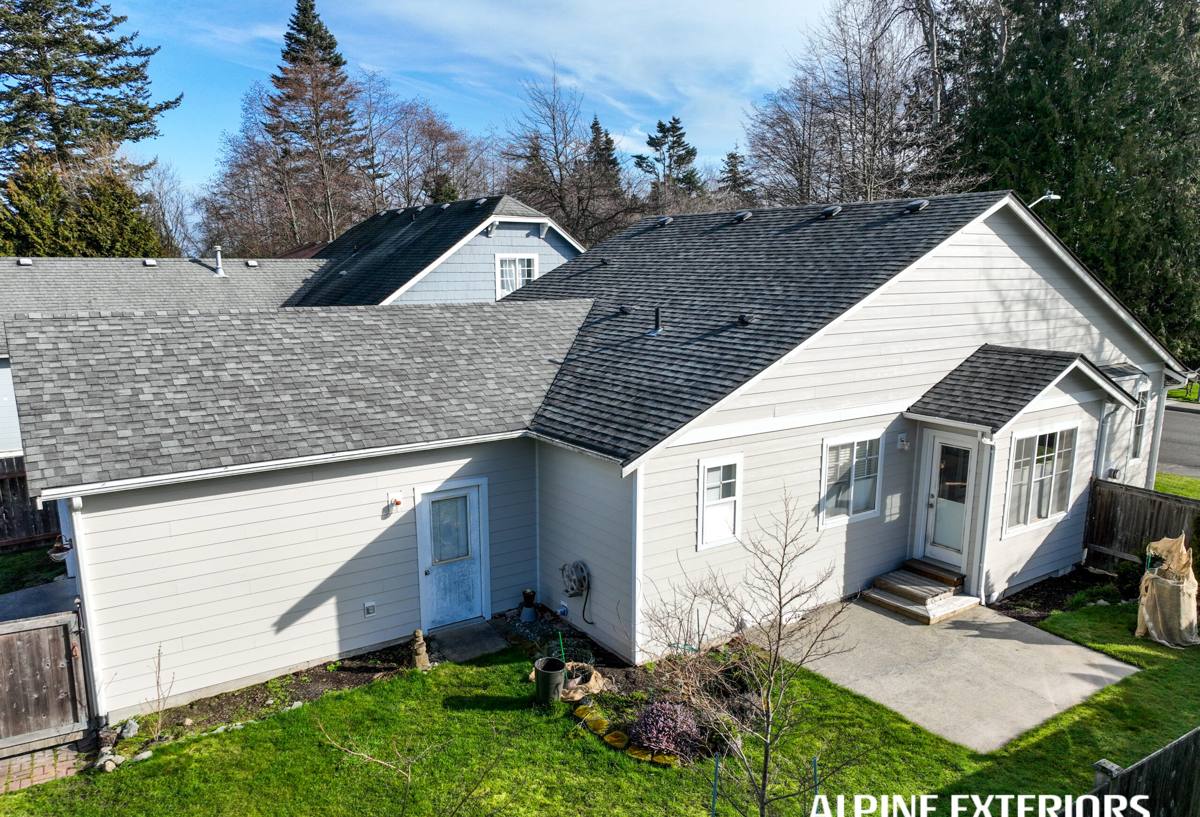
What the Skagit Valley Climate Does to a House
Skagit County sits in the Puget Sound lowland climate zone, and even away from the immediate coastline, the marine air pushing in off the Salish Sea reaches into the valley. Combine that with the Skagit River corridor running right through Hamilton, and you get a location that stays damp for a large part of the year — heavy fall and winter rain, low winter sun angles that leave north- and east-facing walls shaded and slow to dry, and a mild, wet spring that keeps humidity up long after the rain lets up.
That combination shows up on houses in a few predictable ways:
- Driving rain gets pushed sideways by wind funneling through the valley, hitting wall assemblies that a straight-down rain would never reach.
- Moss and algae growth gets a long season to establish itself — shaded siding, fences, and roofs can stay damp for weeks at a stretch, especially under trees or on the north side of a house.
- Moisture cycling — wet, then dry, then wet again — stresses any siding material that isn't dimensionally stable, showing up as swelling, cupping, or finish failure over time.
- Salt-influenced air moving inland from the Sound adds to the corrosion and finish-breakdown load on fasteners, trim, and paint film.
None of this is unique to Hamilton — it's Skagit County weather in general — but river-corridor towns tend to feel the humidity and shade issues a bit more acutely than open, sun-exposed lots.
Why This Matters for Siding Choice
A siding product that performs fine in a dry climate can struggle here. Wood-based products absorb moisture at cut edges and fastener penetrations; if that moisture doesn't get a chance to fully dry before the next rain, you get swelling, delamination, or rot starting from the inside out — often before it's visible from the ground. That's the core reason we standardized on fiber cement and stopped installing engineered wood and vinyl siding products.
Why We Only Install James Hardie
James Hardie fiber cement is made from cement, sand, and cellulose fiber — there's no wood fiber in the board itself, so it doesn't absorb and swell the way wood-based sidings do. It's also non-combustible, which matters more every year as wildfire smoke and dry-season fire risk become a bigger part of Pacific Northwest summers, even in a normally wet county like this one.
A few specifics that matter for a house in this climate:
- ColorPlus factory finish — baked-on finish applied and cured in a controlled plant environment, which holds up better against UV and moisture cycling than field-applied paint, and comes with its own finish warranty.
- HZ5 / HZ10 engineered product lines — Hardie makes climate-specific formulations for different regions; the products we install are matched to Pacific Northwest moisture exposure rather than a generic national spec.
- Rigid, dimensionally stable board — it doesn't expand and contract with humidity the way wood-based products do, so caulk lines and paint joints hold up longer.
- Long transferable warranty — backed by the manufacturer, not just our own workmanship guarantee.
We won't pretend fiber cement is the cheapest siding on the market — it isn't, and it's heavier and more labor-intensive to install correctly, which is reflected in the install cost. But on a home that's going to sit through thirty or more Skagit County winters, we think it's the material that actually earns its keep.
What We Won't Install, and Why
We get asked fairly often about LP SmartSide, vinyl, and cedar. All three have legitimate uses and each has real advantages — we're not going to tell you otherwise. But here's our honest read on why we don't put them on Hamilton homes:
| Product | What it does well | Why we pass on it here |
|---|---|---|
| LP SmartSide | Lower material cost, easier to work with, good impact resistance | Engineered wood strand core; cut edges and fastener points are vulnerable to moisture intrusion in a wet, low-sun-exposure climate |
| Vinyl siding | Low upfront cost, low maintenance in mild climates | Can warp or crack in temperature swings, doesn't stop moisture from reaching the wall behind it, and isn't repairable in the way fiber cement panels are |
| Cedar / primed spruce | Natural look, real wood character | Requires ongoing refinishing and vigilant caulking to survive our rain and moss season; high long-term maintenance burden |
If you already have one of these products on your home and it's performing fine, we're not going to tell you to rip it off before it needs it. But when it's time to replace, this is the reasoning behind what we recommend instead.
Roofing, Windows, and Decks — the Rest of the Exterior
Siding doesn't work in isolation. On a lot of the older homes and manufactured housing we see in Hamilton and around the county, the roof, windows, and siding all need to work together to actually keep water out. We handle all four:
- Roofing — a roof that's shedding water properly, with correct flashing at valleys and wall intersections, is half the battle against the kind of wind-driven rain the valley sees.
- Windows — old, poorly flashed windows are one of the most common sources of hidden wall moisture we find when we open up a house. Window replacement and re-flashing often go hand in hand with a siding job.
- Decks — exposed to the same rain and moss cycle as siding, decks need materials and fastening details that can handle standing water and repeated wet-dry cycling.
When we're on-site for a siding estimate, we'll flag anything we see on the roof, windows, or deck that's contributing to moisture problems — even if it's not part of the job you called about.
Signs It's Time to Look at Your Siding
- Visible swelling, bubbling, or soft spots, especially near the bottom of walls or around window trim
- Persistent moss or algae staining that pressure washing doesn't keep off for long
- Paint that's failing faster than it should, or chalking heavily
- Gaps opening up at seams, corners, or trim boards
- Noticeable draftiness or a damp smell along exterior walls
Working With a Local Crew
Hamilton is a small town, and it's easy for it to fall into the gap between bigger contractors who focus on Mount Vernon, Burlington, and Sedro-Woolley. We work throughout Skagit County, and that includes the river-corridor towns — we know the moisture patterns, the older housing stock, and the practical realities of scheduling around this area's weather windows.
A local crew also means someone who'll actually come back if a warranty issue comes up, rather than a company that did one job in the area and moved on. Installation quality matters as much as the product itself — even James Hardie siding, installed with the wrong flashing details or nailing pattern, won't perform the way it's designed to. We install to the manufacturer's spec, not around it.
What to Expect From an Estimate
Our process is straightforward:
- A walkthrough of your home's exterior, checking current siding condition, trim, flashing, and any trouble spots
- An honest conversation about what's actually needed versus what can wait
- A written estimate covering material, labor, and scope — no vague allowances
- If you move forward, a realistic timeline that accounts for Skagit County's weather windows
There's no pressure and no sales script — just a straight look at your house and what it needs.
Get an Estimate for Your Hamilton Home
If you're dealing with aging siding, a leaky window, a tired roof, or a deck that's seen better winters, we'd rather look at it in person than guess over the phone. Reach out for a free, no-pressure estimate — we'll tell you honestly what your home needs and what it doesn't.