 Skagit County
 Siding Built for Conway's Corner of Skagit County
Conway sits low in the Skagit River delta, close enough to Skagit Bay and Puget Sound that salt-tinged air is just part of daily life, and close enough to the river and surrounding wetlands that moisture is never far away either. Homes here take a different kind of beating than houses twenty miles inland — it's not one big storm that does the damage, it's the constant low-grade exposure. Damp air moving off the water, rain that comes sideways more often than straight down, and a green-growing-season that barely pauses. If you've owned a home in Conway for more than a few years, you've probably already noticed how quickly anything painted or wood-based starts looking tired on the north and west-facing walls.
We're a Skagit County siding, roofing, window, and deck contractor, and Conway is squarely inside our regular service area. We're not driving in from Seattle or subcontracting the work out — our crews know this stretch of the valley, from the flood-prone lowlands near the river to the slightly higher ground toward Stanwood and La Conner.
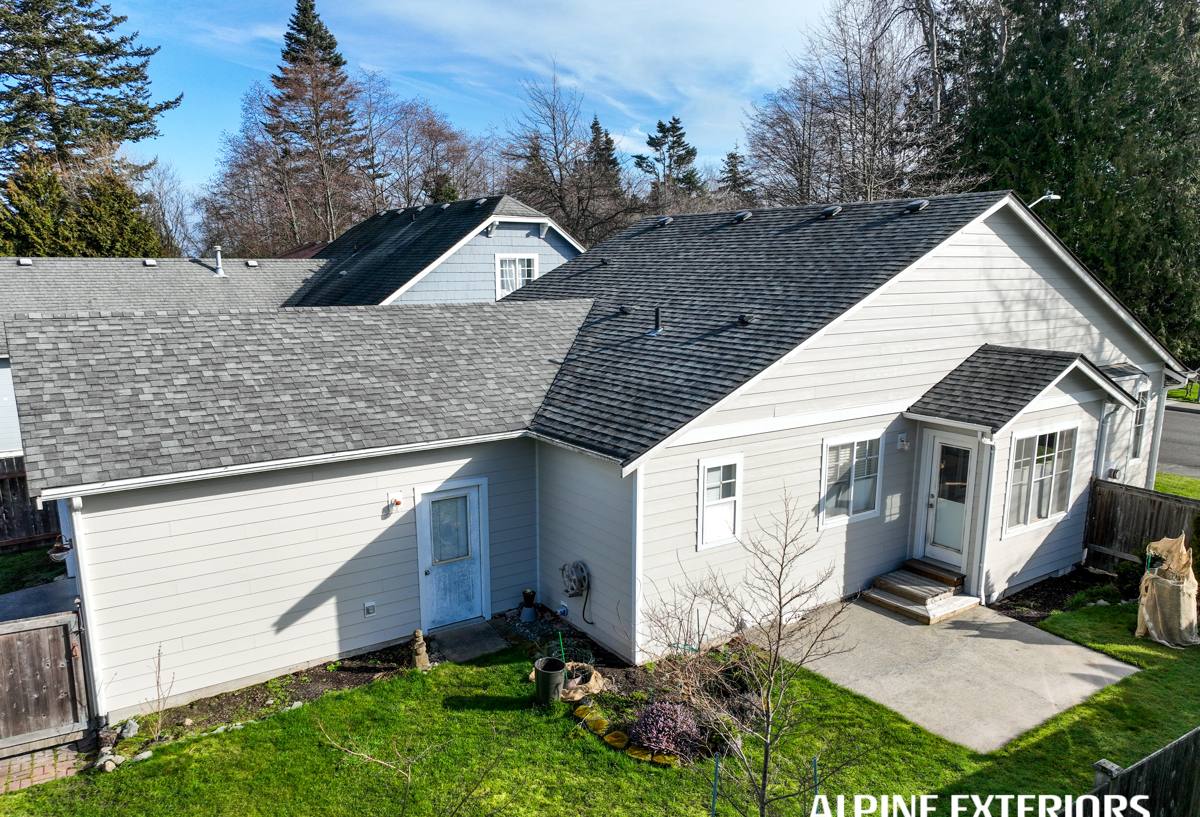
What the Conway Climate Actually Does to a House
Salt Air and Metal Fatigue
Proximity to Skagit Bay means airborne salt is a real factor here, even if it's less intense than a true oceanfront property would face. Salt-laden moisture accelerates corrosion on fasteners, flashing, and any exposed metal trim. It also breaks down cheap paint films faster than inland exposure would, which is one reason painted wood and low-grade composite siding tend to look chalky and faded sooner in this part of the county.
Driving Rain
Storms moving in off the Sound and up the delta don't always fall straight down — wind-driven rain gets pushed sideways into wall assemblies, especially on west and southwest exposures. That means water intrusion risk isn't just about the field of the siding, it's about every seam, joint, butt edge, and penetration. Siding that isn't installed with correct flashing, gapping, and drainage behind it will eventually let water in, no matter how good the material looks on day one.
Moss, Algae, and a Long Growing Season
Skagit County's mild, wet winters and the humidity that comes with river-bottom and coastal proximity add up to a moss and algae season that runs much longer than in drier parts of Washington. North-facing walls, shaded siding under eaves, and anything near mature trees or landscaping stays damp for extended stretches. Organic growth on siding isn't just cosmetic — it holds moisture against the substrate and, over years, that matters for whatever material is underneath.
Why We Only Install James Hardie Fiber Cement
We don't install vinyl siding, LP SmartSide, Cemplank, Allura, primed spruce, or cedar. That's a deliberate standard, not a lack of options — we've simply made the call, based on what actually holds up in this climate over the long haul, to install one product system: James Hardie fiber cement.
Why We Stepped Away from the Alternatives
- Wood-based composite (LP SmartSide): engineered wood products depend entirely on edges, seams, and cut ends staying sealed. In a climate with this much sustained moisture and a long moss season, any lapse in maintenance or a missed touch-up at a cut edge creates an entry point for swelling and deterioration.
- Vinyl siding: it's inexpensive and low-maintenance in the sense that it doesn't need painting, but it's a thin plastic product that expands and contracts with temperature, can crack in impacts, and simply doesn't hold color or rigidity the way fiber cement does over a 20-30 year horizon.
- Primed spruce and cedar: real wood siding can look excellent, but it is the most maintenance-intensive option in a wet, salt-influenced climate. Repainting cycles come faster, and any gap in upkeep invites rot, especially on shaded or north-facing walls.
- Other fiber cement brands (Cemplank, Allura): these are legitimate fiber cement products, but we've standardized on Hardie specifically for its factory-applied ColorPlus finish, its climate-specific HZ5 engineering, and the depth of its installer network and warranty backing in the Pacific Northwest.
What Hardie Gets Right for This Address
James Hardie fiber cement is non-combustible, doesn't swell or rot from moisture the way wood-based products can, and its ColorPlus factory finish is baked on and backed by its own finish warranty — meaning it isn't relying on a field-applied paint job to survive Skagit County's rain and salt air. Hardie's HZ5 product line is engineered specifically for climates like ours: freeze-thaw cycles, sustained moisture, and coastal-adjacent air. It won't stop moss from landing on a shaded wall, but it won't feed moisture into a rotting substrate either, and it holds up to pressure-washing and routine cleaning far better than composite or painted wood.
How We Approach a Siding Project in Conway
Assessment Before Anything Else
Every project starts with a real look at the existing siding and the wall assembly behind it — not just the visible surface. In a river-delta, near-coastal environment, we're specifically checking for moisture trapped behind siding, compromised flashing around windows and doors, and any soft spots where water has already found a way in. This matters more here than it would on a drier, inland property.
Installation Details That Matter in This Climate
- Correct fastener spacing and type — corrosion-resistant fasteners matter more with salt air in the mix
- Proper flashing and weather barrier integration at every window, door, and penetration
- Manufacturer-specified gapping and clearances so the assembly can drain and dry
- Attention to grade clearance, especially relevant on lower-lying Conway lots near the river and wetlands
- Caulking and sealant only where Hardie's installation guidelines actually call for it — not as a substitute for correct flashing
Beyond Siding: Roofing, Windows, and Decks
Siding doesn't work in isolation. A roof that's shedding water poorly, windows with failed seals, or a deck that's trapping moisture against the house all undercut whatever you invest in new siding. Since we handle roofing, windows, and decks as well, we look at the whole exterior envelope during an estimate rather than treating siding as a standalone fix — which matters in a climate where water finds the weakest point in the system, not just the wall.
Comparing Siding Options for a Conway Home
| Material | Moisture Resistance in This Climate | Maintenance Burden | Typical Lifespan |
|---|---|---|---|
| James Hardie Fiber Cement | Strong — non-combustible, engineered HZ5 line for PNW conditions | Low — periodic cleaning, no repainting needed with ColorPlus | 30+ years |
| Vinyl Siding | Moderate — doesn't rot, but seams and panels can allow water behind the assembly | Low, but limited repair options if damaged | 15-25 years |
| LP SmartSide / Engineered Wood | Moderate — vulnerable at cut edges and seams if not properly sealed | Moderate — edge sealing and inspection needed | 20-30 years with upkeep |
| Cedar / Primed Spruce | Lower in sustained wet climates without diligent upkeep | High — repainting and sealing on a recurring cycle | 15-25 years, shorter if maintenance lapses |
What to Check Before You Hire Anyone for Exterior Work
Skagit County has plenty of contractors, and not all of them specialize in exterior envelope work or understand what this specific climate does to a house over time. Before hiring anyone for siding, roofing, windows, or decks, a few things are worth confirming:
- Active Washington State contractor license and current liability insurance
- Manufacturer certification if the product (like James Hardie) requires specific installation training
- A written scope of work that details flashing, weather barrier, and fastening approach — not just "siding replacement"
- References or completed local work in Skagit County, not just photos from a website
- A clear warranty explanation — both the material warranty and the workmanship warranty, since they're not the same thing
Why a Local Crew Matters in Conway
Conway is a small community, and its exposure isn't identical to Mount Vernon, Burlington, or the more sheltered parts of the county. A crew that works this specific area regularly understands the practical realities — low-lying lots, proximity to the river and bay, the particular rhythm of when moss and algae take hold, and which wall exposures on a typical Conway lot take the worst of the driving rain. That local familiarity shows up in the details: where extra attention to flashing matters most, and which products are actually worth installing here versus which ones just look good in a showroom.
If your Conway home's siding is showing its age — fading, soft spots, moss that keeps coming back no matter how often it's cleaned — we're happy to come take a look. We offer free, no-pressure estimates for siding, roofing, windows, and decks, and we'll give you an honest read on what your home actually needs, not just an upsell.