 Skagit County
 Exterior Work Built Around Mount Vernon's Weather, Not Just Its Homes
Mount Vernon sits in the heart of the Skagit Valley, where the exterior of a house works harder than most homeowners realize. Between the marine-influenced air moving in from Puget Sound, the steady rainfall that defines a Skagit County winter, and the shade and moisture that let moss and algae take hold on north-facing walls and rooflines, this region asks more of siding, roofing, windows, and decks than drier parts of Washington do. We work on homes throughout the valley and understand the specific ways local weather shows up on a house over time — not as a sales pitch, but because it changes what we recommend and how we install it.
This page walks through what Skagit weather does to a home's exterior, how our services are built to handle it, and why we've made deliberate choices about the materials we use — starting with siding.
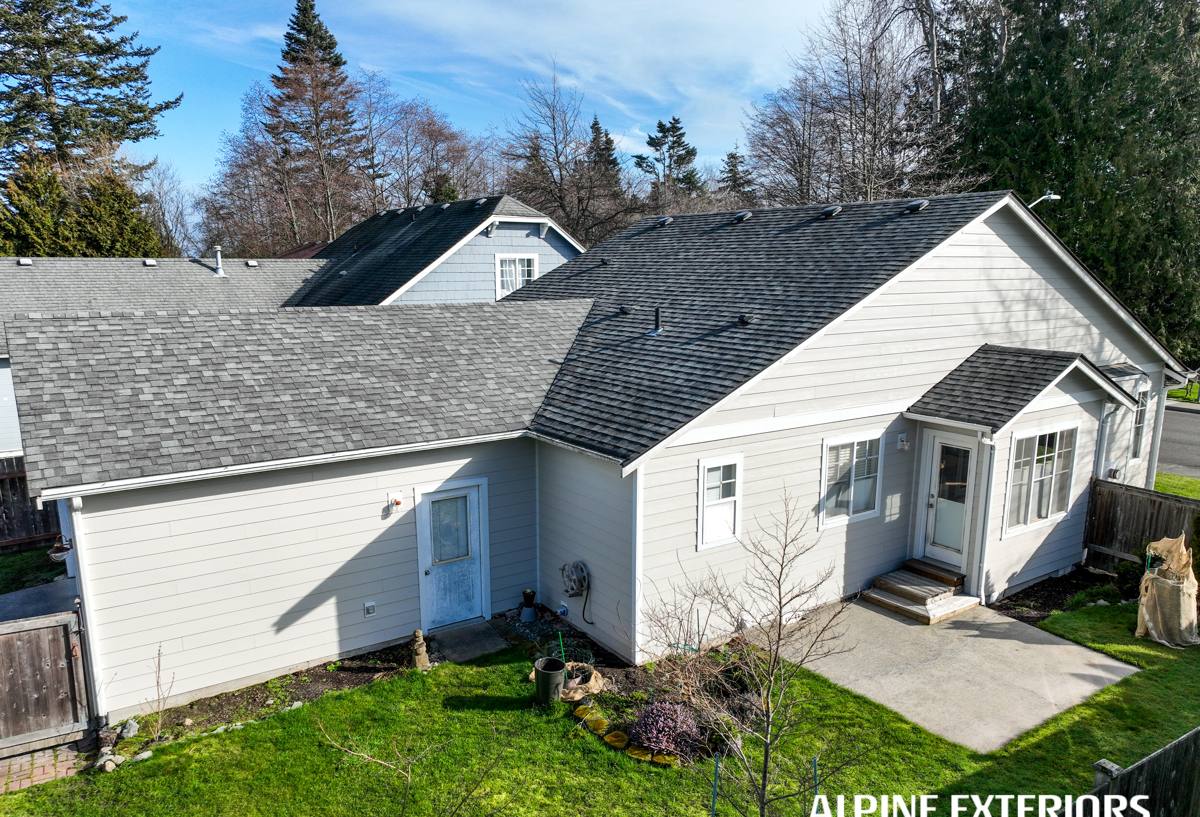
What Skagit County Weather Actually Does to a House
Driving Rain and Prolonged Dampness
Skagit County gets a lot of rain, and much of it doesn't fall straight down — wind off the water and through the valley pushes it sideways into wall surfaces, window trim, and door thresholds. Materials that handle a light shower fine can still take on moisture at seams, laps, and fastener points when rain hits at an angle for hours at a time. Over years, that repeated wetting and drying cycle is what breaks down poorly sealed or moisture-sensitive materials faster than manufacturers' marketing suggests.
Salt Air and Corrosion
Proximity to Puget Sound means homes in this part of Skagit County are exposed to some degree of salt-laden air, especially with westerly winds. Salt air accelerates corrosion on fasteners, flashing, and metal trim, and it can be tougher on certain paint and coating systems than inland climates. It's a slower, quieter form of wear than storm damage, but it adds up.
Moss, Algae, and Shade
Between tree cover, cloudy stretches, and consistent moisture, Skagit Valley homes deal with a long moss and algae season — sometimes nearly year-round on shaded or north-facing surfaces. Moss holds moisture against whatever it's growing on, and on a roof or siding surface that isn't built to shed water and resist organic growth, that trapped dampness is where real problems start.
Siding: Why We Install Only James Hardie Fiber Cement
We made a decision early on to install one siding system: James Hardie fiber cement. We don't install vinyl, LP SmartSide, Cemplank, Allura, primed spruce, or cedar. That's not because those products have no merit — vinyl is inexpensive and low-maintenance in mild climates, engineered wood has a warmer look some homeowners want, and cedar has genuine natural beauty. But each of those products has a real-world trade-off that shows up specifically in a climate like ours.
The Trade-Offs We Weighed
- Vinyl siding expands and contracts with temperature swings and can warp or buckle under prolonged moisture exposure at seams; it's also a combustible plastic product, which matters more to some homeowners than others.
- Engineered wood products (like LP SmartSide) use wood strand cores that are more moisture-sensitive than fiber cement — if caulking, flashing, or paint maintenance lapses even briefly in a wet climate, moisture intrusion can cause swelling at edges and panel faces.
- Cedar requires ongoing staining or sealing to resist the exact moisture and moss conditions Skagit County produces, and it's a combustible, higher-maintenance material over a 20-30 year horizon.
- Other fiber cement brands (Cemplank, Allura) are legitimate fiber cement products, but we standardized on one manufacturer, one factory finish system, and one warranty structure so we can install to spec every time and stand behind the result.
Why Hardie Fits This Climate
James Hardie fiber cement is non-combustible, dimensionally stable in wet-dry cycling, and resistant to moss and mildew in a way that raw or painted wood products aren't. Its ColorPlus factory finish is baked on under controlled conditions rather than field-painted, which matters in a region where you can't count on a long dry stretch to cure paint properly. Hardie also engineers specific product lines (HZ5, HZ10) for different climate zones, and Skagit County's marine, high-moisture conditions are exactly what those lines are designed around. The warranty is transferable, which adds real value if the home ever sells.
Siding Material Comparison for Skagit County Conditions
| Material | Moisture Behavior Here | Maintenance Need | Combustibility |
|---|---|---|---|
| James Hardie fiber cement | Dimensionally stable, resists moss/algae growth | Low — occasional wash | Non-combustible |
| Vinyl | Can warp/buckle at seams with heat and moisture cycling | Low, but limited repair options | Combustible plastic |
| Engineered wood (LP SmartSide) | Wood-strand core sensitive to sustained moisture | Moderate — caulk/paint upkeep matters | Combustible |
| Cedar | Absorbs moisture, prone to moss without upkeep | High — regular staining/sealing | Combustible |
Roofing: The First Line of Defense Against Moss and Rain
A roof in this part of Skagit County deals with the same driving rain and moss pressure as the siding below it, but with more direct sun and shade exposure depending on the roof plane. We handle roof installation and repair with attention to the details that matter most here: proper flashing at valleys and penetrations, underlayment that can handle sustained wet weather during installation season, and ventilation that reduces the trapped moisture moss needs to establish itself. A roof that sheds water cleanly and dries out between storms is doing far more for the house than the shingles alone suggest.
Windows: Sealing Out Wind-Driven Rain
Because Skagit Valley storms often push rain sideways rather than straight down, window installation quality matters as much as the window product itself. Poor flashing or sealant work around a window unit is one of the more common ways water finds its way into wall cavities in this region — and it's often invisible until interior damage shows up. We pay close attention to flashing integration with the surrounding siding and weather-resistive barrier, not just the window unit itself, since that's where failures actually start.
Decks: Built for a Long Wet Season
Decks in Skagit County spend a large part of the year damp, shaded, or both, which makes drainage, gapping, and material choice more important than in drier climates. Ledger board flashing, proper fastening, and surface materials that resist moisture and slip when wet all matter more here than they would somewhere with a short, dry summer season. We build and repair decks with those conditions in mind rather than treating every deck the same regardless of region.
Why a Local Crew Matters in Mount Vernon
Exterior work done by a crew that understands Skagit County's specific weather pattern — not a generic Pacific Northwest assumption — tends to hold up better over time. Flashing details, product selection, and even scheduling around the region's wet season all benefit from local, hands-on experience with how this valley's weather actually behaves, rather than a one-size-fits-all approach brought in from a drier or milder region.
Warning Signs Worth a Second Look
- Moss or dark streaking building up on north-facing siding or roof slopes
- Soft or spongy spots on wood trim, fascia, or deck boards
- Paint that's peeling, bubbling, or chalking faster than expected
- Water staining on interior walls or ceilings near windows or roof valleys
- Visible gaps, warping, or separation at siding seams and corners
- Rust streaking from fasteners or metal flashing
What to Expect When You Reach Out
We start with an on-site look at the home's current exterior condition, discuss what's driving any issues we find, and walk through realistic options rather than a single hard sell. For siding, that conversation is always about James Hardie fiber cement — the specific product line, color, and profile that fits the home — since that's the only system we install and stand behind. For roofing, windows, and decks, we look at the whole exterior as a system, since water that gets past one component often ends up affecting another.
Rough Cost Factors Homeowners Should Expect to Discuss
| Factor | Why It Affects Scope |
|---|---|
| Home size and story count | More surface area and access complexity |
| Existing exterior condition | Moisture damage or rot found during tear-off adds repair scope |
| Product line and color selection | HZ5 vs. HZ10 and factory finish options vary in price |
| Trim, window, and detail complexity | More corners, dormers, and openings mean more labor |
| Seasonal scheduling | Dry-window availability can affect timeline in a wet climate |
If your Mount Vernon home is due for new siding, a roof repair, replacement windows, or deck work, we're happy to take a look and give you an honest, no-pressure estimate — just fill out the form below to get started.