 Skagit County
 Siding Built for Big Lake's Weather, Not Against It
Big Lake sits in a corner of Skagit County where the weather does its own thing. You've got the lake itself pulling in moisture, tree cover holding shade and damp air close to the house, and a location far enough from town that a lot of homeowners here get less attention from crews focused on Mount Vernon or Burlington. Add in the region's broader climate pattern — salt-tinged air pushing in from Puget Sound, long stretches of driving rain from fall through spring, and a moss season that seems to start earlier every year — and you've got a set of conditions that will find every weakness in a home's exterior. We install siding, roofing, windows, and decks throughout Skagit County, and Big Lake is squarely in that territory.
What makes Big Lake distinct isn't just rainfall totals. It's the combination of persistent dampness, filtered sun under tree canopy, and homes that often sit close to water or wooded lots where airflow is limited. That combination is exactly what accelerates rot in wood-based siding and keeps moss and algae established on north- and east-facing walls year-round.
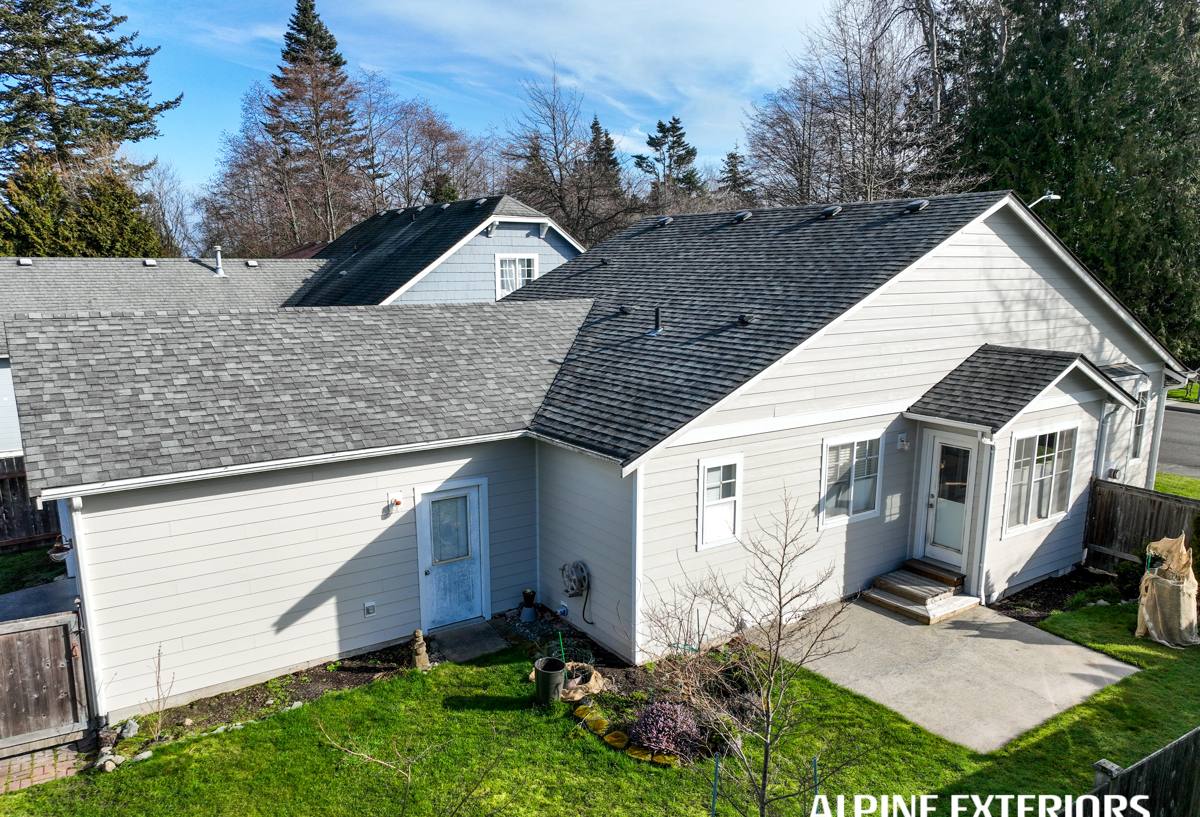
What Big Lake Homes Are Up Against
Moisture That Doesn't Let Up
Skagit County gets a real wet season, and homes near Big Lake feel it more than most because of the lake-effect humidity and tree cover that slows drying time after a storm. Siding that can't shed water efficiently, or that absorbs moisture into its core, stays damp longer here than it would on an open, sunny lot in town. That extended dampness is what drives paint failure, swelling, and eventually rot in vulnerable siding materials.
Moss, Algae, and Shade
Wooded and lakeside properties around Big Lake tend to have more shade than the average Skagit County home, and shade plus moisture equals moss and algae growth on siding, trim, and roofing. Once organic growth gets a foothold on porous or unsealed siding, it holds even more moisture against the wall — a cycle that's hard to break without the right material and finish.
Salt Air, Even Inland
Big Lake isn't on saltwater, but Skagit County as a whole sits close enough to Puget Sound that airborne salt is a factor for fasteners, flashing, and any exposed metal on a home's exterior. Corrosion-resistant hardware and proper flashing details matter here, even a few miles inland.
Temperature Swings and Wood Movement
Our winters aren't brutal, but the swing between summer dry spells and winter saturation puts real stress on any siding material that expands and contracts with moisture content. Repeated swelling and shrinking is one of the main reasons caulk joints fail and paint cracks years before a homeowner expects it to.
Why We Only Install James Hardie Fiber Cement
We made a decision as a company to install one siding system: James Hardie fiber cement. Not vinyl, not LP SmartSide, not Cemplank or Allura, not primed spruce or cedar. That's not a marketing angle — it's a standard we hold because of what we've seen these products do, and not do, in Skagit County's climate over time.
Why Not the Alternatives
- Vinyl siding is affordable and low-maintenance in mild, dry climates, but it can warp in temperature extremes, fade unevenly under UV exposure, and its seams and J-channels give moisture a path inward if installation isn't precise. It doesn't hold paint, so your color options are locked in from day one.
- LP SmartSide is an engineered wood product with real strengths, but it's still wood-based at its core — meaning it's more vulnerable to prolonged moisture exposure and edge swelling than fiber cement if any part of the water-management detailing fails over the years.
- Cemplank and Allura are fiber cement competitors to Hardie, and fiber cement as a category is sound. Our issue isn't the material chemistry — it's that we've standardized on one manufacturer's engineering, factory finish, and warranty structure so our crews, our detailing, and our accountability all point to the same system.
- Primed spruce and cedar are traditional, attractive options, but solid wood siding demands a maintenance commitment — regular repainting, caulking, and moisture monitoring — that most homeowners underestimate. In a damp, shaded environment like Big Lake, that maintenance clock runs faster.
What Hardie Gets Right
James Hardie fiber cement is non-combustible, dimensionally stable across our wet-to-dry seasonal swings, and resistant to moss and algae staining in a way raw wood products aren't. The ColorPlus factory-applied finish is baked on under controlled conditions, which holds up better against UV and moisture than field-applied paint, and it comes with a meaningful, transferable warranty. Hardie also engineers specific product lines (HZ5, HZ10) for different climate zones, so the plank itself is built for regions like ours rather than a one-size-fits-all approach.
How We Approach a Big Lake Project
Every home we work on starts with an honest look at what's actually happening behind the existing siding, not just what it looks like from the curb. For lakeside and wooded lots especially, that means checking for trapped moisture, inspecting sheathing condition where old siding comes off, and paying close attention to flashing at windows, doors, and roof-to-wall transitions — the spots where water intrusion actually starts.
Our Process
- On-site inspection and honest assessment of your current siding, trim, and any moisture damage
- A written estimate that spells out product lines, colors, and scope — no vague allowances
- Removal of old siding and inspection of the sheathing and framing underneath
- Correction of any water-managed barrier or flashing issues found before new siding goes on
- Installation to James Hardie's fastening and clearance specifications, not shortcuts
- Final walkthrough so you understand what was done and what to expect going forward
Roofing, Windows, and Decks — The Rest of the Envelope
Siding doesn't work in isolation. A roof that's shedding granules or has failing flashing will send water down behind even the best siding job, and windows with worn seals or poor flashing integration are one of the most common leak points on older Skagit County homes. We handle roofing, window replacement, and decks alongside siding because on a home near Big Lake's tree cover and moisture load, these systems all need to work together. A deck built with the wrong materials or fastener spacing will show rot years before it should, for the same underlying reasons siding does.
Cost Factors for a Big Lake Siding Project
Every home is different, but the factors that move the price on a fiber cement siding job are consistent. We won't quote a number without seeing the house, but here's what typically drives cost up or down.
| Factor | Why It Matters |
|---|---|
| Home size and wall complexity | More square footage and more corners, gables, and trim details mean more material and labor |
| Condition of existing sheathing | Rot or moisture damage found during tear-off adds repair scope before new siding can go on |
| Siding profile and plank width | Lap width, shingle-style panels, and trim options carry different material costs |
| Color and finish selection | Factory ColorPlus finishes vary in cost by line; primed-for-paint is a lower-cost option |
| Site access | Lakeside lots, steep grades, or dense tree cover can slow staging and add labor time |
| Scope beyond siding | Bundling roofing, window, or trim work into one project affects overall timeline and price |
What to Check Before You Hire Anyone
Skagit County has plenty of exterior contractors, but not all of them specialize in fiber cement installation, and installation quality is what determines whether siding lasts 10 years or 40. Before you sign anything, it's worth confirming a few basics.
- Are they a certified or specifically experienced James Hardie installer, not just "familiar" with fiber cement?
- Do they carry current liability insurance and workers' compensation coverage?
- Will they put the product line, color, and full scope of work in writing before starting?
- Do they inspect and address sheathing and flashing issues, or just cover over what's there?
- Are they local to Skagit County, with a track record you can actually verify nearby?
Why a Local Crew Matters Here
A crew that works throughout Skagit County knows how Big Lake's microclimate differs from Mount Vernon's open valley floor or Anacortes's direct saltwater exposure. That local knowledge shapes real decisions — where extra flashing attention pays off, which walls need it most based on sun and wind exposure, and how to sequence a project around our wet season instead of fighting it. It also means when a warranty question or a follow-up concern comes up years down the road, you're calling a company that's still working in your area, not chasing down someone who did one job in the neighborhood and moved on.
If you're weighing a siding project for your Big Lake home — or want a second opinion on a bid you've already received — we're happy to take a look and give you a straight, no-pressure estimate. There's a form below to get that conversation started.