 Skagit County
 Big Lake's Climate and What It Does to a Roof
Big Lake sits in a pocket of Skagit County where tall fir and cedar canopy meets a wet, mild marine climate. That combination is tougher on a roof than most homeowners realize. Moist air moves inland off Puget Sound through the Skagit Valley for much of the year, and when it settles under a tree line around a lake, it doesn't dry out as fast as it would on an open, sun-exposed lot. The result is a longer moss season, more standing moisture on shaded roof planes, and shingles that stay damp days after a storm has passed.
Add in driving rain that comes sideways during winter storms, and you've got a roof that has to handle water from more directions than a typical installation manual assumes. A roof that looks fine from the ground can be losing granules, growing moss in the valleys, and letting moisture creep under the shingle mat for months before anyone notices a leak inside.
Why Shade Changes the Math
North-facing slopes and roof sections under mature trees dry slower after every rain. Over a Big Lake winter, that section of roof might stay damp two or three times longer than a sun-exposed slope on the same house. That extra moisture time is exactly what moss, algae, and moss-related shingle degradation need to take hold.
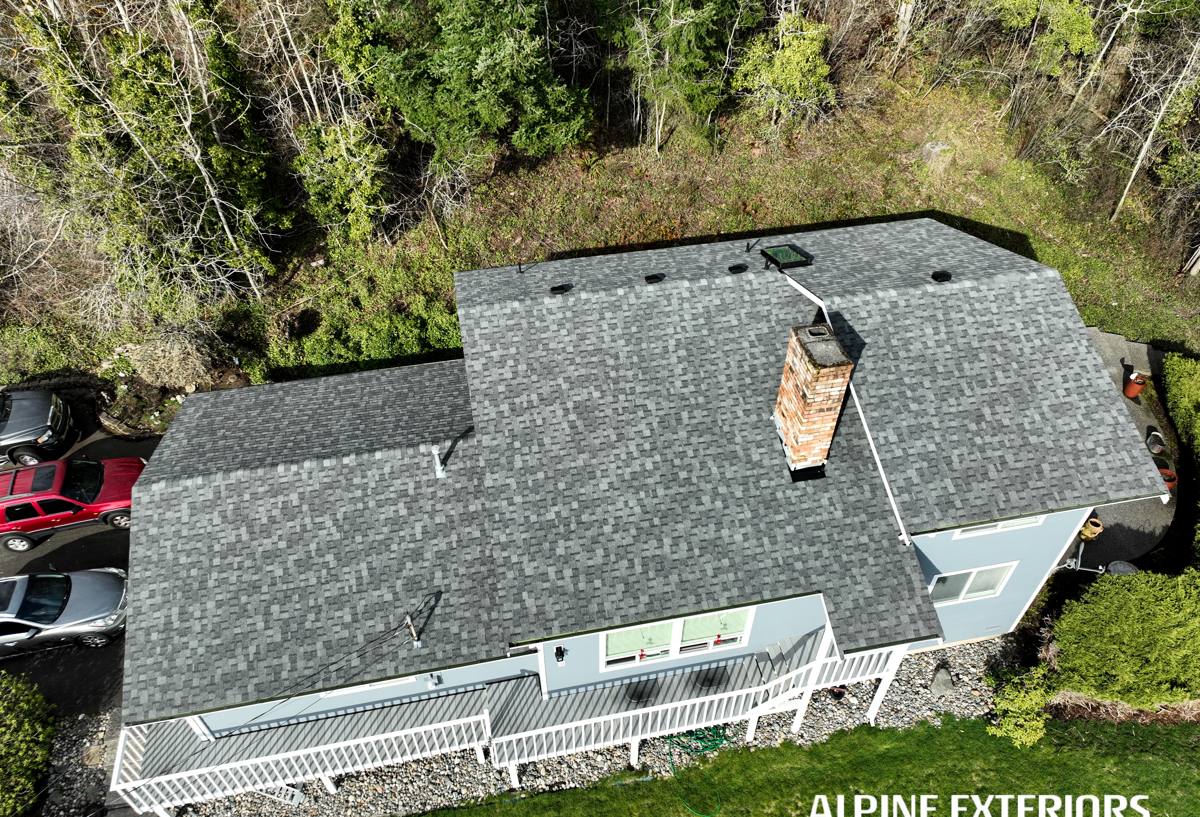
What a Correct Asphalt Shingle Roof Looks Like Here
A roof built for this climate isn't just "shingles nailed down correctly" — it's a system, and every layer matters more here than it would in a drier part of the state.
Ventilation and Moisture Control
Balanced intake and exhaust ventilation keeps the attic space close to outside temperature and humidity, which reduces condensation on the underside of the roof deck. In a shaded, moisture-heavy area like Big Lake, poor ventilation shows up faster — as sheathing rot, mildew smell in the attic, or premature shingle aging from the underside out.
Flashing Details That Matter Here
Valleys, chimneys, skylights, and roof-to-wall transitions are where driving rain finds its way in. We use properly lapped step flashing, sealed valley metal, and ice-and-water shield membrane at eaves and valleys — not just at the bare minimum code requires, but everywhere water realistically pools or is pushed by wind-driven rain.
Underlayment and Nailing
Synthetic underlayment resists the prolonged dampness better than old-style felt, and correct nailing pattern (not staples, not over- or under-driven nails) is what keeps shingles locked down through Skagit County's windstorms instead of lifting at the tab edges where water then gets underneath.
Choosing the Right Shingle for a Shaded, Moss-Prone Property
Standard asphalt shingles will grow moss and algae streaking faster under Big Lake's tree canopy than the same shingle on an open lot across the valley. We steer most shaded, lake-adjacent properties toward algae-resistant (AR) shingles, which use copper- or zinc-infused granules that discourage algae and moss growth over the life of the roof. It's a small cost difference upfront that pays off in fewer moss treatments and a roof that keeps its color longer.
We also weigh wind rating more heavily here than a contractor working inland would. Lake-adjacent properties can see stronger gusts off open water during winter storms, so a shingle rated for higher wind uplift is worth the modest cost difference over a builder-grade product.
- Algae-resistant (AR) granules for shaded and lake-adjacent roof planes
- Higher wind-rated shingle lines for open or lake-facing exposures
- Architectural (dimensional) shingles where roof pitch and visibility make appearance worth the upgrade
- Manufacturer-matched hip, ridge, and starter products — not generic substitutes that void warranty coverage
What Affects Your Roofing Cost
Every Big Lake property is a little different, and cost depends on more than just roof size. Here's what actually moves the number, in honest terms:
| Factor | Why It Matters |
|---|---|
| Roof pitch and access | Steep roofs and limited driveway or dock access around lake properties take longer and require more safety equipment |
| Tear-off layers | Removing an existing roof (especially a second layer) adds labor and disposal cost versus a single-layer tear-off |
| Deck condition | Rotted or moisture-damaged sheathing found during tear-off has to be replaced before new shingles go down — this is common on shaded, moss-affected roofs |
| Shingle tier | Standard 3-tab, architectural, and premium algae-resistant lines carry different material costs and warranty lengths |
| Ventilation upgrades | Adding or correcting intake/exhaust venting protects the new roof but adds to the scope |
| Valley and flashing complexity | Multiple valleys, chimneys, or skylights mean more flashing labor and material |
We walk every property and give a written estimate based on what we actually find — not a phone-quote guess. If we find deck damage once we open the roof up, we show you before any repair work happens.
Our Process for Big Lake Roofing Projects
- Inspection and estimate. We walk the roof, check the attic for ventilation and moisture signs, and note any moss, valley wear, or flashing issues specific to your property's shade and exposure.
- Tear-off and deck check. Old roofing comes off down to the deck, and we inspect the sheathing for rot or soft spots — common where moss has held moisture against the roof for years.
- Deck repair as needed. Any damaged sheathing is replaced before underlayment goes down. We won't cover up a bad deck with new shingles.
- Underlayment and flashing. Synthetic underlayment, ice-and-water membrane at vulnerable areas, and properly lapped flashing at every valley, chimney, and wall transition.
- Shingle installation. Manufacturer-specified nailing pattern, matched ridge and hip components, and attention to exposure and alignment.
- Ventilation check. We confirm intake and exhaust venting are balanced for the attic space, correcting it if the existing setup is undersized.
- Cleanup and walkthrough. Magnetic sweep for nails, full site cleanup, and a walkthrough so you know exactly what was done and what to watch for.
Signs Your Big Lake Roof Needs Attention
Because shaded roof sections age differently than sun-exposed ones, it's worth checking your roof for these signs at least once a year, especially after the wet season:
- Moss or algae streaking, particularly on north-facing slopes or under tree cover
- Granules collecting in gutters or at downspout outlets
- Curling, cupping, or lifted shingle edges
- Dark staining or soft spots in roof valleys
- Daylight visible through the attic roof deck
- Musty smell or visible mildew in the attic space
- Sagging sections, which can indicate deck moisture damage underneath
Maintenance That Actually Extends Roof Life Here
Most of what shortens a roof's life at Big Lake isn't the shingle itself — it's what's allowed to sit on top of it. A little regular attention goes a long way in this climate.
Keep Moss From Establishing
Light moss growth is far easier to manage than moss that's had a full wet season to root into the shingle mat. Gentle, low-pressure treatment (never pressure-washing, which strips granules) keeps it from spreading.
Clear Gutters and Valleys
Needles and leaf debris from surrounding trees collect in valleys and gutters, holding moisture against the roof and blocking proper drainage during heavy rain. Clearing them each fall and spring matters more here than on an open lot.
Manage Overhanging Limbs
Trimming branches back from the roofline reduces both shade (helping the roof dry faster) and the risk of limb damage during Skagit County windstorms.
Get an Annual Look
A yearly check catches small flashing gaps or granule loss before they turn into a deck repair.
Why a Crew That Already Works Big Lake Makes a Difference
A roofing crew that only occasionally works this area might install a technically correct roof and still miss the details that matter for a lake-adjacent, tree-shaded property — the extra ice-and-water coverage a shaded valley needs, the algae-resistant shingle upgrade that saves years of moss treatment, or the ventilation correction that prevents attic condensation. We work throughout Skagit County and see how roofs actually perform here year after year, not just how they look on installation day.
That local track record also means straightforward, realistic timelines — we know how weather windows in this area affect scheduling, and we won't promise a tear-off date we can't hold to once the fall rains set in.
If your Big Lake home is due for a new roof, showing early wear, or you're just not sure whether it's got a few good years left, we're happy to take a look. Reach out for a free, no-pressure estimate using the form below — we'll give you a straight answer about what your roof actually needs.