 Skagit County
 Why Mount Vernon Homes Need Siding Built for This Climate
Mount Vernon sits in the Skagit River valley, close enough to Skagit Bay and the Salish Sea that homes here deal with a mix of weather most siding products were never designed to handle for long. Damp air moves up the valley on a regular basis, driving rain comes in sideways during fall and winter storms, and the combination of shade, humidity, and standing moisture on north-facing walls creates a moss season that can run most of the year. Add in the salt-tinged air that reaches inland from the Sound, and you have a slow, steady environment for wood rot, paint failure, and hidden moisture damage behind the wall.
None of this is dramatic on any single day. That's the problem. Siding failure in Skagit County rarely comes from one big storm — it comes from years of small exposures that add up: swelling and shrinking wood fibers, moss holding moisture against a wall, caulk lines that dried out and cracked, or a nail pattern that let water find a path behind the cladding. A siding installation done for this climate has to plan for that slow accumulation from day one, not just look good on the day it's finished.
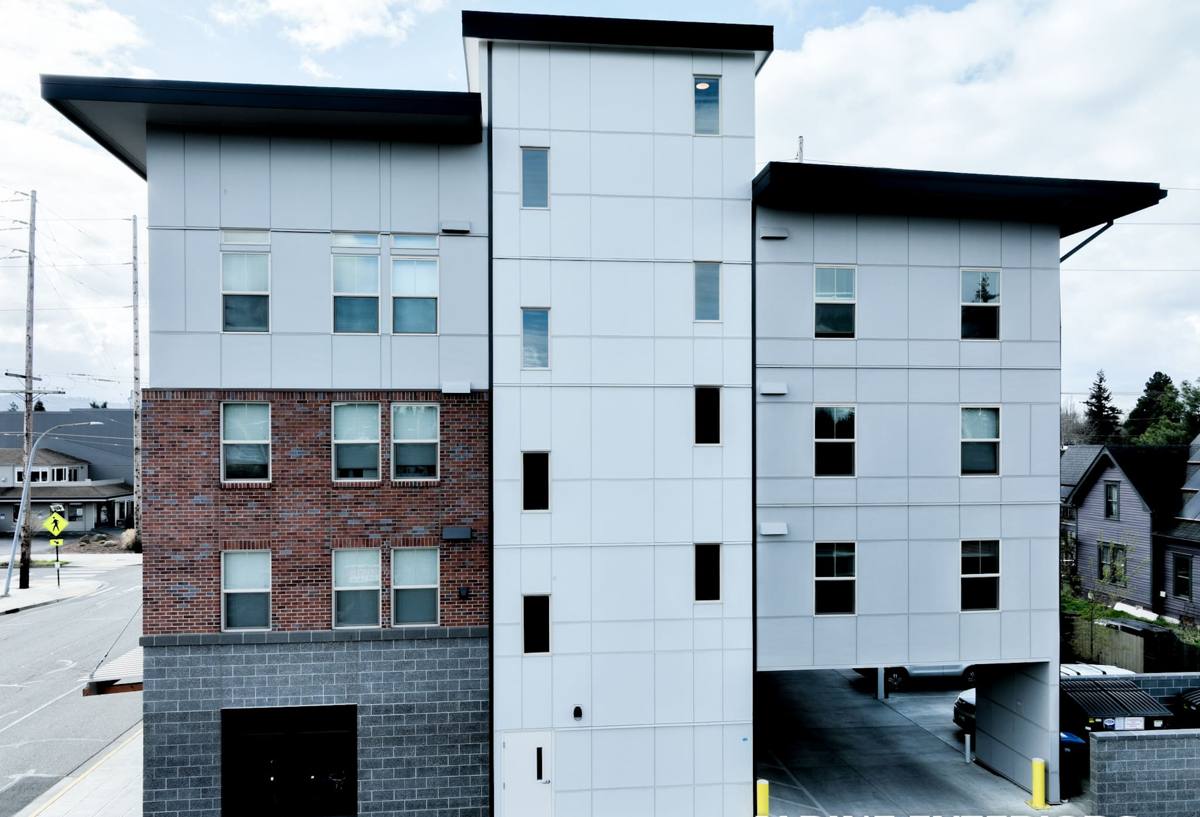
What "Correct" Siding Installation Actually Means Here
A siding job is a water management system first and a finished look second. In Mount Vernon's climate, that means every layer behind the visible siding matters as much as the siding itself.
The Water-Management Layers
- A continuous weather-resistant barrier (house wrap) installed with proper laps and no gaps
- Correctly integrated flashing at every window, door, and roofline intersection — this is where most moisture intrusion actually starts
- A drainage plane or rainscreen gap where conditions call for it, so any water that does get behind the siding has somewhere to go
- Sealed penetrations for vents, hose bibs, electrical, and anything else that punches through the wall
- Correct fastener type, spacing, and depth for the specific siding product being installed
Skip any one of these and the siding on top can look perfect for a couple of years while damage builds behind it. This is the part of the job that never shows up in a photo but determines whether the wall is still sound in fifteen years.
Why We Only Install James Hardie Fiber Cement
We made the decision to install James Hardie fiber cement siding exclusively, and we don't install vinyl, LP SmartSide, cedar, primed spruce, or other fiber cement brands. That's not a marketing position — it's what we've settled on after weighing how each option actually holds up in a wet, humid, moss-prone climate like Skagit County's. Wood-based products need consistent maintenance to keep water out of the fiber; vinyl can warp and doesn't stand up to impact or fire the way fiber cement does; and other fiber cement brands don't offer the same factory-cured ColorPlus finish or climate-specific engineering that Hardie's HZ5 products bring to the Pacific Northwest. Hardie's fiber cement is non-combustible, resists moisture-driven swelling and rot because it isn't wood, and holds its factory finish far longer than field-applied paint on wood siding. For a house that's going to sit in Mount Vernon's damp air for decades, that combination is what we're willing to put our name on.
Our Installation Process for Mount Vernon Homes
- Assessment and moisture check. We look at the existing siding, sheathing, and any visible signs of past water intrusion — soft spots, staining, or moss buildup at grade level and under eaves.
- Tear-off and sheathing inspection. Once the old siding is off, we can actually see the sheathing condition and address any rot or damage before anything new goes on. Covering up a compromised wall is how small problems become expensive ones.
- Weather barrier and flashing. House wrap goes on with correct overlaps, and flashing is integrated at every window, door, and transition — not just caulked over the top of the old detailing.
- Hardie installation. Panels or lap siding go up to manufacturer spec: correct fastener spacing, proper clearance from grade and roof lines, and factory-finished ColorPlus edges maintained wherever cuts are made.
- Detail work. Trim, corners, and joints are finished so water sheds away from the wall rather than collecting at seams — the detail work is often what separates a job that lasts from one that doesn't.
- Final walkthrough. We review the finished work with the homeowner and point out anything worth knowing for long-term upkeep.
Problem Areas We Watch For on Skagit Valley Homes
Certain spots on a house take the brunt of this region's weather, and they're where we spend extra attention:
- North and west-facing walls — least sun exposure, slowest to dry out, most prone to moss and mildew buildup
- Areas near grade — splashback from driving rain and irrigation keeps the bottom courses of siding wetter than the rest of the wall
- Under eaves and roof-wall intersections — poor flashing here is one of the most common sources of hidden water damage
- Around windows and doors — old caulk-only detailing fails quietly over time and lets water track behind the siding
- Shaded, low-airflow sections — where moss and algae get a foothold and hold moisture against the surface longer than anywhere else on the house
Choosing the Right Hardie Product Line for This Area
James Hardie makes climate-engineered product lines, and for the Pacific Northwest that means HZ5 formulations designed for higher moisture and freeze-thaw cycling. Within that, homeowners in Mount Vernon typically choose between a few common formats:
| Product | Best For | Notes |
|---|---|---|
| HardiePlank lap siding | Traditional home styles, most common choice | Available in multiple exposures and textures; widest color range |
| HardiePanel vertical siding | Modern or mixed-material facades, accent walls | Often paired with trim battens for a board-and-batten look |
| HardieShingle siding | Craftsman or cottage-style homes | Gives a shingle look without the maintenance of real wood shingles |
| HardieTrim boards | Window and door surrounds, fascia, corners | Matches the siding's durability at the detail points that fail first |
ColorPlus factory finish is worth prioritizing over field-applied paint whenever budget allows — it's baked on under controlled conditions, resists fading and chipping better, and holds up longer against this region's UV and moisture cycle than paint applied on site.
What Affects Cost on a Mount Vernon Siding Job
| Factor | Why It Matters |
|---|---|
| Tear-off and sheathing condition | Rot repair discovered underneath the old siding adds time and material |
| Home size and wall complexity | More corners, dormers, and transitions mean more cutting, flashing, and labor |
| Product line and texture | Shingle profiles and vertical panel systems generally run higher than standard lap siding |
| Finish choice | Factory ColorPlus finish costs more upfront than primed board but avoids repeat repainting |
| Access and site conditions | Tight lots, multi-story sections, and landscaping can affect labor time |
We won't quote a number without seeing the house, but we'll walk through these factors honestly during the estimate so there aren't surprises later.
A Simple Checklist Before You Hire
- Ask whether the crew installs a full water-management system (house wrap, flashing, drainage) or just fastens siding to the existing wall
- Confirm they're familiar with James Hardie's installation specifications, not just siding in general
- Ask how they handle sheathing repair if rot is found once tear-off begins
- Get clarity on warranty coverage — both the manufacturer's product warranty and the contractor's workmanship warranty
- Ask for a written scope that specifies product line, texture, and finish, not just "siding replacement"
Why Local Experience in Skagit County Matters
A crew that works Mount Vernon regularly already knows which walls on a typical local home take the worst of the moss and moisture, how the valley's humidity behaves differently than a drier inland town, and how driving rain off the Sound finds its way into poorly detailed flashing. That's not something a crew visiting from outside the area picks up on a single job. It shows up in the small decisions — where to add a rainscreen gap, how tight to seal a penetration, which corners need extra attention — that determine whether a siding job is still performing well a decade from now.
If you're weighing a siding replacement or a new installation on a Mount Vernon home, we're happy to take a look and give you a straightforward, no-pressure estimate. There's no obligation — just an honest assessment of what your home needs and what correct James Hardie installation would involve.