 Skagit County
 Windows in Bow Take a Different Kind of Beating
Bow sits close to the water, and that proximity shapes everything about how windows age here. Salt-laden air off Samish Bay works its way into aluminum hardware and steel fasteners faster than it does twenty miles inland. Add Skagit County's long stretch of driving rain each fall and winter, plus the shaded, damp conditions that let moss and algae take hold on north-facing walls, and you've got a climate that punishes weak window installations. A window that's merely "good enough" in a drier part of the state can start failing within a few years out here.
Most of the window problems we see in Bow aren't really about the glass or even the frame material — they're about how the window was set into the wall. Water finds the weak point, whether that's a gap in the flashing, a bead of caulk asked to do a waterproofing membrane's job, or a nailing fin that was never properly lapped with the house wrap. Get that part wrong and it doesn't matter how good the window itself is.
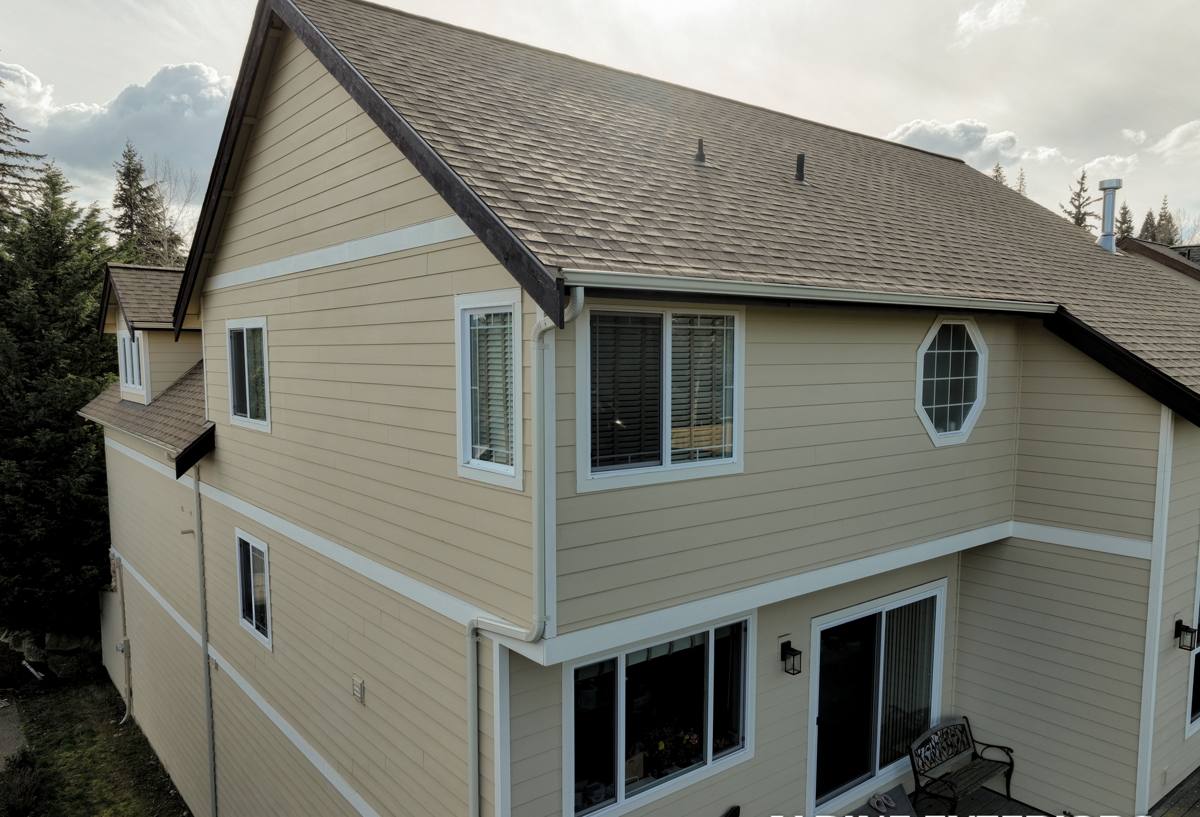
What a Correct Replacement Actually Involves
Swapping out a window sounds simple, but the difference between a window that lasts 25+ years and one that causes rot inside the wall cavity comes down to a handful of steps that are easy to skip and hard to inspect once the trim is back on.
The parts that matter most
- Removing old sealant and inspecting the rough opening for hidden water damage before anything new goes in
- Installing sill pan flashing so any water that does get past the window has a way out, not a way in
- Integrating new flashing tape with the existing house wrap in the correct shingle-lap order (top piece over the one below it, always)
- Setting the window level, plumb, and square, then shimming and fastening per the manufacturer's schedule — not just "close enough"
- Insulating the gap around the frame with a low-expansion foam or backer rod, never packed rigid
- Sealing the exterior with a quality sealant rated for our wet, low-UV winters, and finishing interior trim so no gaps are left for moisture or air
Skip the flashing integration and the window can look perfect for a year or two while water quietly works into the sheathing behind it. By the time it shows up as a soft spot or peeling paint, the damage is usually already done.
Choosing the Right Window for a Bow Home
There's no single "best" window — the right choice depends on the home's age, exposure, and how much upkeep you want to take on. We'll walk through the honest trade-offs rather than push whatever's easiest for us to install.
| Frame Material | How It Handles Salt Air & Moisture | Upkeep | Typical Fit |
|---|---|---|---|
| Vinyl | Won't corrode or rust; performs well near the water | Low — occasional cleaning | Most homes, best value |
| Fiberglass | Excellent — very stable in temperature swings and damp conditions | Low | Larger openings, homes wanting a longer-term investment |
| Wood-clad | Good if the cladding is intact, but any breach exposes wood to rot risk in a wet climate | Higher — needs monitoring at joints and sills | Homes prioritizing a traditional interior wood look |
| Bare aluminum | Poor in salt air — prone to pitting and hardware corrosion over time | High | We generally steer clients away from this near the bay |
We don't install bare aluminum-frame replacements for homes this close to the water — not because the product is inherently bad everywhere, but because the corrosion pattern we see in salt-exposed installations doesn't match the warranty or maintenance expectations most homeowners want. That's a judgment call based on what holds up out here, and we're upfront about it.
Glass packages worth considering
Double-pane, low-E glass is the standard starting point and handles our climate well. For homes with more direct exposure to wind-driven rain or road noise, an upgraded gas fill or a slightly thicker insulated glass unit can be worth the difference — we'll tell you honestly whether it's worth it for your specific window, rather than upselling every job the same way.
Moss, Algae, and the Maintenance Side of Window Replacement
A long moss season doesn't just affect roofs and siding — it affects window sills, tracks, and the trim around openings, especially on shaded or north-facing walls. Organic growth holds moisture against the frame and trim longer than it would otherwise sit there, which accelerates wear on caulk joints and finishes. Part of doing this job right in Bow is thinking about how the finished installation will shed water and dry out, not just how it looks the day we finish.
A few things that help after installation:
- Keeping gutters and downspouts clear so runoff isn't sheeting directly across upper-story windows
- Rinsing sills and tracks periodically on shaded sides of the house where moss and algae collect
- Re-checking exterior caulk lines every year or two, since sealant is a wear item even when everything else is done correctly
- Trimming back vegetation that keeps a wall or window in constant shade and dampness
Our Process, Start to Finish
- On-site assessment. We look at the existing windows, the wall assembly where visible, and any signs of past water intrusion before quoting anything.
- Honest recommendation. We'll tell you which frame material and glass package fit your home and budget, and why — including if we think your current windows have a few more years left.
- Measurement and ordering. Exact measurements matter more than people expect; an ill-fitting window creates the same flashing and sealing problems as a poor installation.
- Removal and inspection. Old windows come out carefully so we can check the rough opening for rot or damage before anything new goes in — and address it if we find it.
- Flashing and installation. Sill pan, house wrap integration, leveling, insulating, and sealing, done in the correct order every time.
- Interior and exterior finish. Trim, caulk, and cleanup so the job looks as good as it performs.
- Walkthrough. We show you the finished work and answer questions before we consider the job done.
How long it takes
A typical single-window replacement is usually a one-day job once materials are on site. Whole-house window replacements depend on count and wall type, but we'll give you a realistic schedule up front — not an optimistic one we can't hit.
Why a Crew That Already Works Bow Matters
Bow isn't a big place, and a crew that's spent real time working in this specific stretch of Skagit County — homes near the water, homes tucked into shaded, damp lots, older farmhouses alongside newer builds — has already seen how these variables play out locally. That matters for practical reasons: knowing which wall assemblies are common in older Bow homes, understanding how far salt exposure typically reaches inland from the bay, and having a realistic sense of how weather windows work here for scheduling exterior work.
It also matters for accountability. A local crew is around after the job is finished — for questions, for warranty follow-up, for the rare issue that only shows up after a hard winter storm has tested the installation. That's a different relationship than hiring a crew that's just passing through the area for a job.
Cost Factors Worth Understanding
We don't publish blanket pricing because window replacement costs swing widely based on real variables — but knowing what drives the number helps you evaluate any quote you get, from us or anyone else.
| Factor | Why It Affects Cost |
|---|---|
| Frame material | Vinyl is typically the most budget-friendly; fiberglass and wood-clad cost more upfront |
| Window size and count | Larger openings and whole-house jobs have more material and labor per project, but often better cost-per-window |
| Condition of the rough opening | Hidden rot or damage found during removal adds repair work before the new window can go in |
| Access and wall height | Second-story or hard-to-reach windows take more time and equipment |
| Glass package | Upgraded low-E coatings or gas fills add cost but can improve comfort and efficiency |
The only way to get an accurate number is a real look at your specific windows and walls — ballpark figures based on square footage alone tend to be unreliable in either direction.
Signs It's Time to Replace, Not Repair
Not every window needs full replacement. But a few signs point toward replacement being the more sensible investment rather than continued repair:
- Visible fogging or moisture between glass panes, meaning the seal has failed
- Soft or discolored trim and sill areas, which can indicate water has been getting past the frame
- Windows that are difficult to open, close, or lock, especially if hardware shows corrosion
- Noticeable drafts or cold spots near the frame even with the window fully closed
- Single-pane glass in a home you're planning to keep long-term
If your windows are showing one or two of these signs but the frames and surrounding structure are otherwise sound, a straightforward replacement is usually enough — you don't need to be talked into a bigger project than the situation calls for.
If you're weighing window replacement for a home in Bow or elsewhere in Skagit County, we're happy to take a look and give you a straightforward, no-pressure estimate. Use the form below to get started.