 Skagit County
 Edison's Roofs Take a Different Kind of Beating
Edison sits close enough to Samish Bay and the surrounding tidal flats that salt-laden air is a daily fact of life, not an occasional nuisance. Add in the wind-driven rain that rolls off Puget Sound through the fall and winter, plus a moss season that can run eight months or longer in the shaded, damp pockets around the valley, and you have a roofing climate that punishes shortcuts. A shingle or flashing detail that would last two decades in a drier inland town can fail in half that time here if it wasn't installed with this exposure in mind.
Storm damage repair in Edison isn't just about patching what a windstorm tore loose. It's about understanding why that particular spot failed first, and making sure the repair doesn't just get you through the next storm but actually holds up to the next ten years of Skagit County weather.
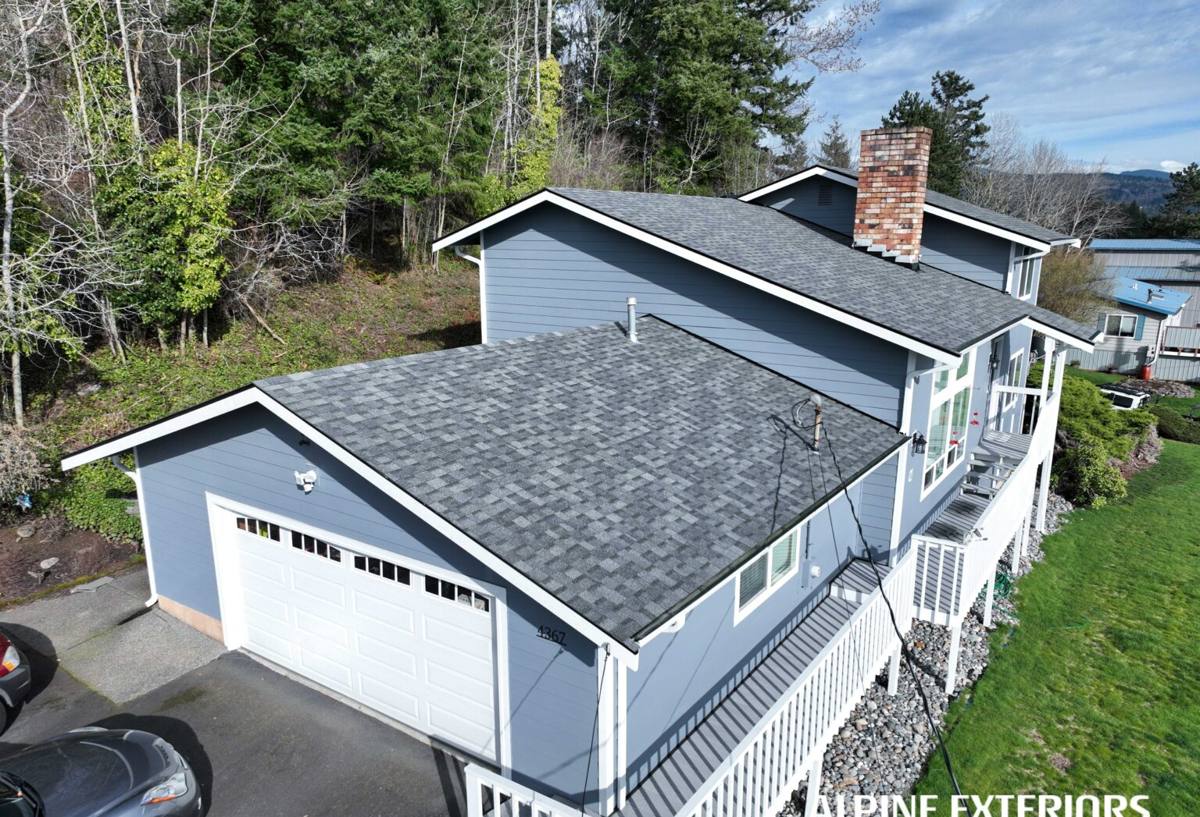
What Storm Damage Actually Looks Like Here
Wind-Lifted and Creased Shingles
Gusts off the water don't need to be hurricane-force to do damage. Repeated moderate wind events loosen shingle tabs at the edges, ridges, and rakes first, since those are the areas with the least surrounding shingle to hold them down. Once a tab lifts and creases, its seal is broken for good — it won't reseal on its own even after the wind dies down, and it becomes the entry point for the next round of rain.
Wind-Driven Rain Intrusion
A lot of what gets reported as a "leak" on Edison roofs isn't a hole at all — it's wind pushing rain sideways and upward under shingle edges, around vent boots, and through marginal flashing at chimneys and wall intersections. This kind of intrusion can travel several feet from the actual entry point before it shows up as a stain on a ceiling, which is why an accurate diagnosis matters more than a quick patch over the visible stain.
Debris Impact
Fir and cedar limbs are common around Edison's more wooded lots, and falling branches during a storm can bruise or puncture shingles, crack ridge caps, and dent metal flashing or gutters. Even when the debris doesn't punch through, the impact can fracture the shingle mat in a way that isn't obvious from the ground but leaks the next time it rains.
Moss-Weakened Roofing
Storms don't create moss problems, but they expose them. A roof with a season or two of unchecked moss growth already has lifted shingle edges and trapped moisture before the wind ever shows up. When a storm hits a roof in that condition, damage that would have been minor on a clean roof becomes a real leak, because the moss has already broken the shingles' natural water-shedding lap.
Why Fast, Correct Repair Matters More Than Fast, Rough Repair
We understand the instinct to get a tarp up and call it handled. A tarp is the right emergency step, but it's not a repair — it's a stopgap that buys time to do the work correctly. The mistake we see most often after storms in this area isn't neglect, it's a rushed repair that solves the visible symptom without addressing the underlying cause. A patched shingle over a damaged deck, or new caulk over a flashing that was never properly lapped, will fail again — often in the very next storm season.
Correct storm damage repair means tracing the water path back to its actual source, checking the roof deck underneath for rot or softness once shingles are pulled back, and rebuilding the flashing and shingle courses so water sheds the way it's supposed to. That takes more time on the roof than a surface patch, but it's the only way to actually stop the problem instead of postponing it.
Our Storm Damage Repair Process
1. Emergency Response and Temporary Protection
If a storm has left your roof actively leaking, our first priority is stopping water from getting further into your home — tarping exposed areas, clearing debris off the roof surface, and making sure gutters and downspouts aren't backing up water onto damaged sections.
2. Full Roof Inspection
We walk the entire roof, not just the area you noticed damage on. Storms rarely damage just one spot, and an inspection that stops at the obvious problem often misses a second, quieter leak that shows up weeks later. We check shingles, flashing, vents, ridge caps, and the roof deck itself where accessible.
3. Documentation for Insurance
We photograph and note the damage in a way that's usable if you're filing an insurance claim, including the likely cause (wind, impact, or pre-existing wear) since that distinction matters to adjusters.
4. Repair Plan and Honest Recommendation
We tell you plainly whether the roof needs a targeted repair, a larger section replacement, or if the damage is a sign the roof is nearing the end of its useful life and repair would just be a stopgap. We'd rather give you that assessment upfront than sell you a repair we don't believe in.
5. The Repair Itself
Damaged shingles, decking, and flashing are removed back to solid material — not just the visibly broken pieces, but far enough to make sure the new work ties into sound roofing. New underlayment, flashing, and shingles are installed to match the existing roof's pattern and weather-lapping as closely as possible.
6. Cleanup and Final Walkthrough
We clear debris and old materials from the property and walk the completed repair with you so you know exactly what was done and why.
Repair vs. Replace: How We Help You Decide
| Factor | Favors Repair | Favors Replacement |
|---|---|---|
| Extent of storm damage | Isolated to one section or slope | Scattered across multiple slopes |
| Roof age | Under roughly 12-15 years | Nearing or past expected shingle lifespan |
| Underlying deck condition | Solid, dry decking found under damage | Soft or rotted decking discovered |
| Moss/algae history | Minimal, well-maintained roof | Long-term moss damage across the roof |
| Insurance coverage | Claim covers targeted repair scope | Adjuster approves full slope or roof replacement |
Most storm damage on a roof under 15 years old with no prior moss neglect can be repaired soundly. Once a roof is older or has multiple areas of concern, a repair can end up costing nearly as much as replacement while leaving you with a roof that still has other weak points waiting to fail in the next storm.
Moss, Algae, and Long-Term Roof Health in This Climate
Because Edison's tree cover and damp air create near-ideal moss conditions for much of the year, storm repair work here often includes a conversation about prevention, not just the fix at hand. Moss holds moisture against the shingle surface, works its way under tabs as it grows, and accelerates the granule loss that leaves shingles brittle and more likely to crack or tear in wind. A roof that's kept clear of moss buildup simply holds up better to the next windstorm than one that isn't.
We don't push aggressive pressure washing, which can strip granules and shorten shingle life on its own. Gentle removal methods and zinc or copper control strips along the ridge are a more sustainable approach for this region's moss pressure, and we're happy to talk through options during a repair visit.
What Drives the Cost of Storm Damage Repair
| Cost Factor | Why It Matters |
|---|---|
| Roof pitch and access | Steeper or harder-to-access roofs take longer and require more safety setup |
| Deck condition underneath | Rotted decking found during tear-off adds material and labor |
| Shingle matching | Older or discontinued shingle colors/styles can be harder to match exactly |
| Flashing complexity | Chimneys, skylights, and wall intersections require more detailed flashing work |
| Scope of damage | A single section repair costs far less than damage spread across the roof |
We give straightforward, honest estimates after seeing the actual damage in person — we don't believe in phone-quoted numbers for storm repair, since the true scope usually isn't clear until shingles are pulled back.
Why a Crew That Already Works Edison Makes a Difference
Storm damage repair isn't a one-size-fits-all job. A crew that regularly works roofs around Skagit County's coastal edge already knows which flashing details tend to fail first in this exposure, which shingle lines hold up to the salt air and moss pressure, and how local permitting and inspection expectations work if the repair is significant enough to need a permit. That familiarity shows up in fewer surprises and a repair that's built for the conditions your roof actually faces, not generic textbook conditions.
It also means faster response. After a regional storm, roofing crews get busy fast, and a contractor who already has routes and relationships in the Edison area can often get to smaller emergency needs — tarping, debris clearing — more quickly than a crew driving in from farther away.
Signs You Should Have Your Roof Checked After a Storm
- Granules collecting in gutters or at downspout outlets
- Shingles that look lifted, curled, or out of alignment from the ground
- Visible dents or cracks in metal flashing, vents, or gutters
- Any new ceiling stain, even a small one, after a windy or wet stretch
- Branches or debris resting on the roof surface
- Daylight visible through the attic where there shouldn't be any
- Moss or dark streaking that's expanded noticeably since last season
None of these guarantee major damage, but any one of them is worth a look before the next storm system comes through.
Get an Honest Look at Your Roof
If a recent storm has left you with a leak, missing shingles, or just a nagging feeling something's not right up there, we're glad to come take a look. We'll give you a clear, no-pressure assessment of what happened, what it'll take to fix it correctly, and whether a repair or something more is the right call for your home. Reach out below for a free estimate.