 Skagit County
 Board & Batten Siding in Skyline's Marine Climate
Skyline sits close enough to the water that homes here take a different kind of weathering than houses further inland in Skagit County. Salt-laden air corrodes fasteners and finishes faster than dry-climate exposure. Driving rain, pushed sideways by wind off the water, finds every gap in a wall assembly that wasn't built to shed it. And the long moss season that defines a Pacific Northwest fall and winter turns any siding with texture, seams, or shaded north faces into a place for spores to take hold. Board and batten siding is one of the more demanding profiles to get right under these conditions, because its vertical boards and raised battens create more seams, more shadow lines, and more opportunities for water to get behind the cladding than a standard lap profile.
None of that means board and batten is a bad choice for a Skyline home — it's a classic look that suits a lot of the architecture in this part of the county, from modern farmhouse builds to more traditional Northwest homes. It just means the material and the installation details matter more here than they would in a milder, drier region.
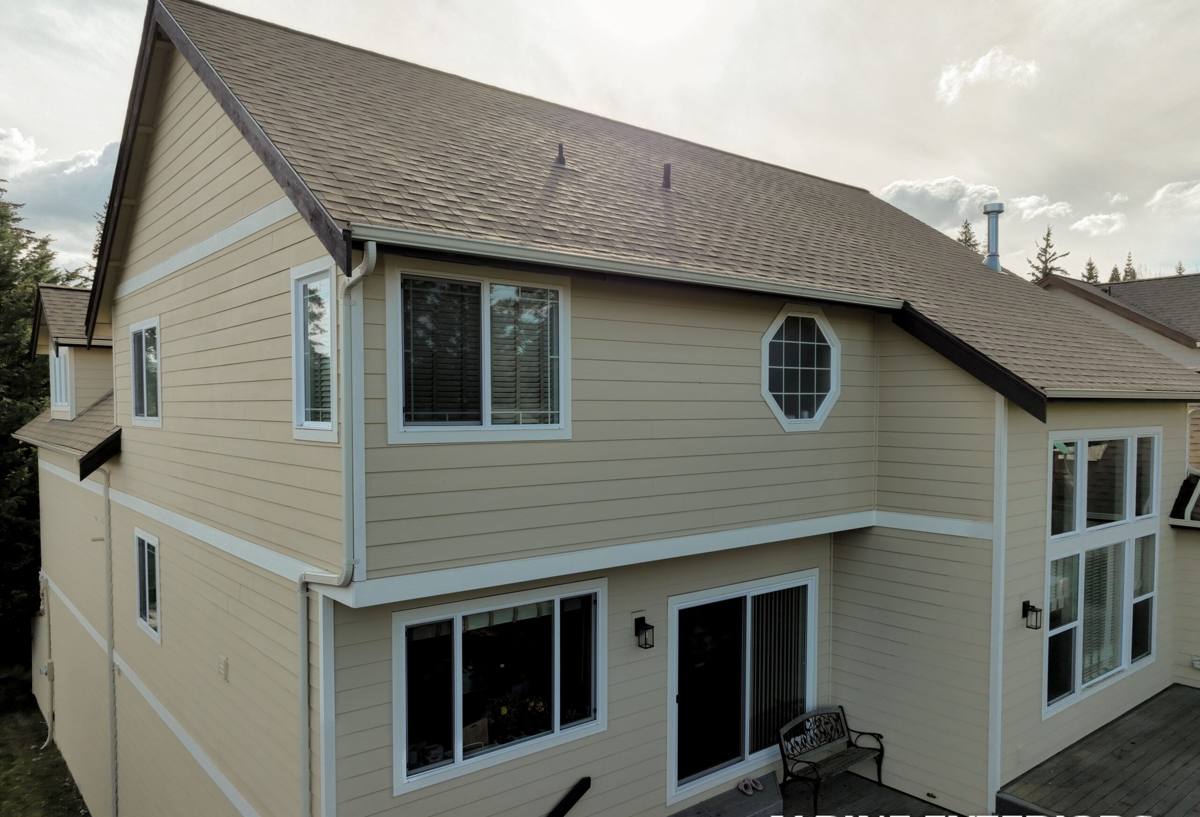
What Correct Board & Batten Construction Actually Requires
Board and batten is often sold as a simple profile — wide boards or panels with a narrower batten covering each seam. In practice, a correct installation in a wet marine climate involves several layers most homeowners never see:
A Drainage Plane, Not Just a Weather-Resistive Barrier
Every wall needs a code-minimum weather-resistive barrier behind the siding. In a high-moisture area like Skagit County, we go further and build in a drainage gap — typically with a rainscreen or vertical furring strip — so that any water that does get past the cladding has somewhere to go besides sitting against the sheathing. This is the single biggest factor in whether board and batten siding lasts twenty years or starts showing rot and staining in five.
Batten Placement and Fastening
Battens have to land on solid backing, not just cover a seam cosmetically. Fastener spacing, batten width, and gap sizing all affect how the assembly handles the wood or fiber cement expanding and contracting with seasonal moisture swings — which, on the water, happen more often and more dramatically than inland.
Flashing at Every Transition
Window and door heads, roof-to-wall intersections, and outside corners are where board and batten siding fails first when it's installed wrong. Correct step flashing, head flashing, and kick-out flashing at rooflines aren't optional extras — they're what keeps driving rain from working its way behind the boards during a real Skagit County storm.
Why We Install James Hardie Fiber Cement for Board & Batten — and Nothing Else
This company installs James Hardie fiber cement siding exclusively. We don't install vinyl, LP SmartSide, primed spruce, cedar, Cemplank, or Allura, and board and batten is actually one of the clearest examples of why.
Traditional wood board and batten looks great new, but wood is organic material sitting in a climate that grows moss on roofs and driveways. It needs regular repainting, and any gap in that paint film is an entry point for moisture and, eventually, rot — especially at the exposed edges of battens, which take the brunt of driving rain. Engineered wood products like LP SmartSide use a resin-treated substrate that resists moisture better than raw wood, but the material is still wood-based, and its performance depends heavily on keeping every cut edge sealed and every panel installed to spec — a standard that's hard to guarantee across every job, every crew, every year. Vinyl board and batten is low-maintenance in one sense, but it's a thin plastic profile that can warp, fade, and crack in UV and temperature swings, and it doesn't hold paint if a homeowner ever wants to change the color down the road.
James Hardie fiber cement is cement, sand, and cellulose fiber — it doesn't rot, it isn't a food source for moss and mildew the way wood is, and it's non-combustible. For board and batten specifically, Hardie's engineered panel and trim battens hold their dimension in wet climates far better than wood, which means the reveals and shadow lines stay straight instead of cupping or splitting after a few wet winters. The ColorPlus factory finish is baked on under controlled conditions — not brushed on in the field where weather and technique both introduce variables — and it carries a substantially longer color warranty than field-applied paint. Hardie's HZ5 product line is engineered specifically for the wet, freeze-thaw-adjacent Pacific Northwest climate zone Skagit County sits in.
How the Common Board & Batten Options Compare
| Material | Moisture Behavior | Maintenance | Typical Lifespan (PNW marine climate) |
|---|---|---|---|
| James Hardie fiber cement | Does not rot; won't swell or delaminate | Occasional wash; no repainting for the warranty term | 30+ years to structure, factory finish warrantied separately |
| Cedar / primed spruce | Absorbs moisture; prone to rot at battens and cuts | Repaint or restain every 3-7 years | 15-25 years with diligent upkeep |
| LP SmartSide | Resin-treated but still wood-based; edge sealing is critical | Repainting on a longer cycle than raw wood, edges need monitoring | 20-30 years if installed and maintained to spec |
| Vinyl board and batten | Does not rot but can warp/crack in heat and cold cycling | Low, but color can't be changed and damaged panels are hard to match | 20-30 years, shorter in direct salt-air exposure |
Our Installation Process for Skyline Homes
Assessment and Wall Inspection
Before we quote board and batten siding, we look at what's currently on the wall and why it's being replaced. If there's existing rot, moisture damage, or evidence of a missing drainage plane, that gets addressed as part of the scope — not discovered as a surprise mid-project.
Drainage and Weather Barrier Build-Out
We install a code-compliant weather-resistive barrier and a rainscreen gap appropriate for this climate, then flash every window, door, and roof transition before a single board goes up.
Panel and Batten Installation
Hardie panels and battens go up per manufacturer spec — correct fastener type and spacing, correct gaps for expansion, and battens landing on solid backing. This is where a lot of board and batten jobs go wrong when the crew is used to lap siding and treats the profile as an afterthought rather than a system.
Final Detailing
Corners, trim, and any transitions to other siding profiles or materials get finished last, with attention to how water will actually move across the wall during the wet months.
What to Check Before You Hire Anyone for Board & Batten Siding
Board and batten hides installation shortcuts well — for the first year or two. Problems from skipped flashing or a missing drainage gap often don't show up until the wall has taken a couple of wet Skagit County winters. Before hiring a crew, it's worth asking:
- Do they install a drainage gap or rainscreen behind board and batten, or nail it directly to the weather barrier?
- Who manufactures the batten material, and is it engineered for this climate zone specifically?
- How do they flash window and door heads and roof-to-wall transitions on a board and batten wall?
- Can they explain their fastener spacing and gap sizing, or is it "however the crew usually does it"?
- Do they carry manufacturer certification for the siding system they're installing?
- Is the warranty from the manufacturer, the installer, or both — and what does each actually cover?
Living With Board & Batten Siding on the Water
Even correctly installed, board and batten siding in a marine environment benefits from a little routine attention. North-facing and shaded walls are where moss and mildew take hold first — an occasional gentle rinse keeps growth from establishing on the factory finish. Salt air accelerates corrosion on any exposed metal fasteners or flashing, so it's worth a visual check after major storms to confirm nothing has worked loose. Because Hardie panels and battens don't absorb water the way wood does, this maintenance is mostly cosmetic rather than structural — but the drainage plane and flashing work done at installation is what actually protects the wall behind the siding, year after year.
Why Hiring a Crew That Already Works Skyline Matters
Skyline's exposure to wind and water isn't identical to a job three miles inland in Skagit County, and it's a different animal than a project on the dry side of the state. A crew that already works this specific area knows how much drainage detail a wall here actually needs, how aggressive the moss growth gets on shaded elevations, and how the salt air affects fastener and flashing choices over time. That local pattern recognition is hard to replace with a generic install crew working from a manual, and it's the difference between board and batten siding that still looks sharp in ten years and siding that needs early rework.
If you're planning a board and batten project for a home in Skyline, we're happy to walk the property, look at the existing wall assembly, and put together a straightforward, no-pressure estimate. Use the form below to get started.