 Skagit County
 Why Mount Vernon Roofs Wear Differently Than Roofs Inland
Mount Vernon sits low in the Skagit River valley, close enough to Puget Sound and the tidal flats that homes here deal with a mix of moist marine air, river fog, and near-constant winter rain. That combination is tougher on a roof than most homeowners realize. Salt-tinged air accelerates corrosion on exposed metal — flashing, fasteners, vent caps — long before the shingles themselves show their age. Driving rain, especially when it comes in sideways off a southwest wind, finds every weak lap, every under-driven nail, and every place where flashing was cut short to save time. And because the valley holds humidity longer than drier parts of the county, roofs here spend more of the year damp than dry.
That dampness is what feeds Skagit County's long moss season. Moss doesn't just look bad — it holds water against the shingle surface, works its way under tabs, and lifts granules loose over time. A roof that would last two decades in a drier climate can start showing real wear well before that if moss and moisture aren't kept in check. None of this means asphalt shingles are a poor choice for Mount Vernon — they're still the most practical, cost-effective option for the vast majority of homes here. It just means the installation details, product choice, and maintenance habits matter more than they would somewhere with a milder, drier climate.
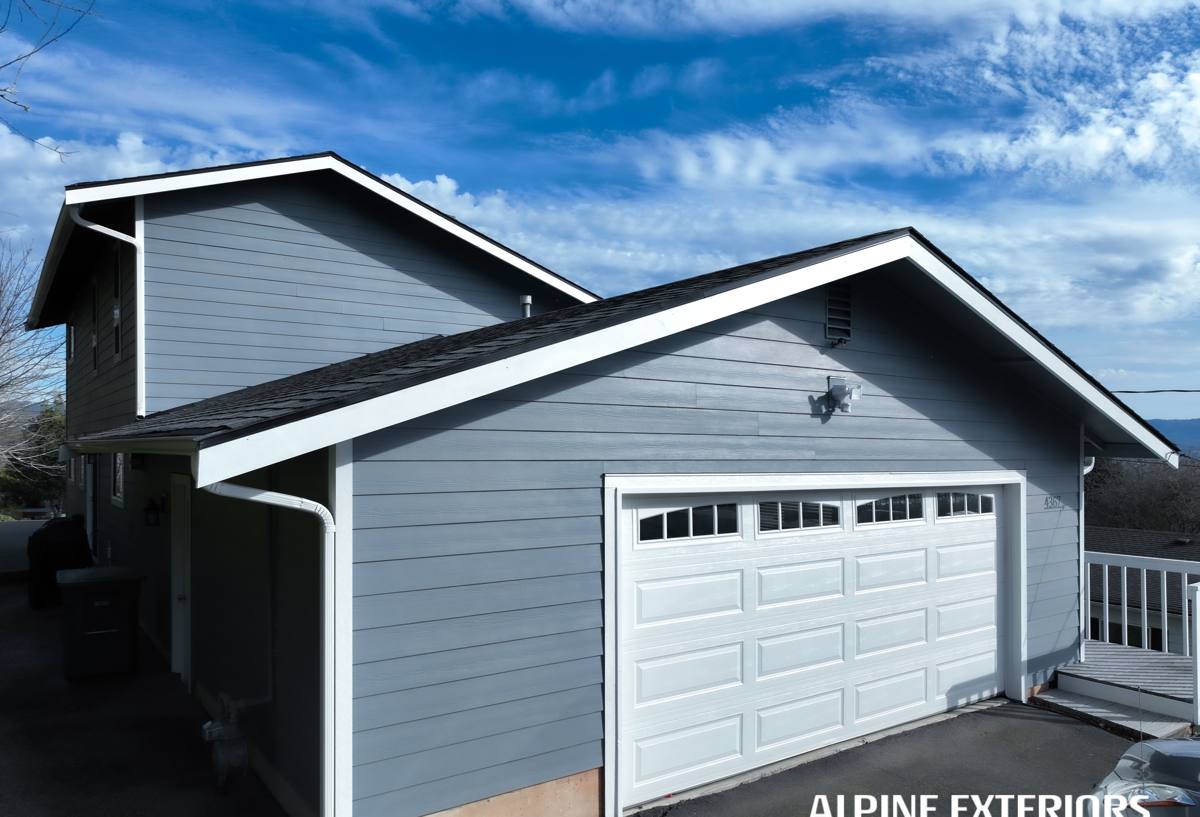
What a Correctly Installed Asphalt Shingle Roof Actually Includes
A shingle roof is a system, not a single product. Homeowners often shop by shingle brand or color and never see the parts underneath that determine whether the roof actually performs in our weather. A correct installation includes:
- Deck inspection and repair — soft, delaminated, or water-stained sheathing gets replaced before anything new goes down, not covered up.
- Ice-and-water shield at vulnerable points — valleys, eaves, and roof-to-wall transitions get a self-adhering waterproof membrane, not just felt.
- Synthetic or felt underlayment across the full field — a second layer of defense if wind ever drives water past the shingle surface.
- Properly lapped, corrosion-resistant flashing — around chimneys, skylights, dormers, and wherever the roof plane changes.
- Correct nailing pattern and fastener count — under-nailed shingles are one of the most common causes of early wind and rain failure, and it's invisible once the roof is finished.
- Balanced intake and exhaust ventilation — so moisture from inside the attic isn't condensing against the underside of the deck.
- Starter strip, hip, and ridge caps matched to the field shingle — these are the first parts of a roof to fail if they're mismatched or skipped to save material.
Any one of these done wrong can undercut an otherwise good shingle. This is where most roof failures in this area actually start — not from a bad shingle, but from a shortcut somewhere in the system underneath it.
Choosing the Right Shingle for Skagit County Conditions
Architectural vs. Three-Tab
Three-tab shingles are lighter, less expensive, and rated for lower wind speeds. Architectural (dimensional) shingles are heavier, laminated in multiple layers, and generally carry higher wind ratings and longer warranty terms. For a valley climate that regularly sees fall and winter windstorms off the Sound, we default to recommending architectural shingles for most Mount Vernon homes — the extra weight and lamination genuinely earn their keep here.
Algae-Resistant Granules
Most quality shingle lines now offer a granule treatment designed to resist the dark streaking caused by algae growth — a related but different issue from moss. In a climate as consistently damp as ours, we treat this as close to a standard feature rather than an upgrade, because untreated shingles in this area tend to show streaking within a few years.
Wind and Impact Ratings
Manufacturers publish wind ratings tied to installation method — the rating on the wrapper only holds if the fastening pattern matches what the manufacturer specifies. This is another reason installation quality and product choice aren't separate conversations; a high-wind-rated shingle installed with the wrong nail pattern doesn't perform any better than a basic one.
| Shingle Type | Typical Lifespan Here | Wind Resistance | Best Fit |
|---|---|---|---|
| 3-Tab | 15–20 years | Lower | Budget-driven projects, secondary structures |
| Architectural / Laminate | 25–30 years | Higher | Most Mount Vernon homes, especially exposed sites |
| Premium / Designer Laminate | 30+ years | Highest | Homes wanting a heavier, dimensional look plus maximum durability |
Actual lifespan depends heavily on slope, exposure to wind and salt air, ventilation, and how consistently moss and debris are cleared — the ranges above assume reasonably regular maintenance.
Moss, Algae, and Debris: Managing the Long Wet Season
Skagit County's moss season runs long compared to drier parts of Washington, and Mount Vernon's tree cover and valley humidity make it worse in shaded or north-facing sections of a roof. Left alone, moss lifts shingle tabs, traps moisture underneath, and accelerates granule loss — which is what actually shortens a roof's life, not the moss itself. Zinc or copper control strips near the ridge, installed during a re-roof, use rainwater runoff to inhibit new moss growth on the field below them. They're not a substitute for occasional cleaning, but they meaningfully reduce how often a homeowner needs to deal with it.
Gutters clogged with fir and cedar needles are a related problem we see constantly in this area — water backs up under the shingle edge at the eave, which is exactly where ice-and-water shield and correct drip edge installation matter most. Keeping gutters clear and keeping overhanging branches trimmed back does more for roof longevity here than almost any single product upgrade.
Ventilation and Moisture: The Part Nobody Sees
Attic ventilation gets overlooked because it's invisible from the ground, but in a humid valley climate it's one of the biggest factors in how long a roof deck and the shingles above it actually last. Without balanced intake (usually at the soffit) and exhaust (ridge or roof vents), warm moist air from the living space condenses against the cold underside of the roof deck in winter. Over years, that trapped moisture can rot sheathing from the inside, void shingle warranties, and create the ideal conditions for mold — all while the shingles on top look perfectly fine. Whenever we open up a roof for replacement, we check the existing ventilation and correct it as part of the job rather than treating it as a separate, optional upsell.
Signs Your Mount Vernon Roof May Be Due for Attention
- Granules collecting in gutters or at downspout outlets
- Shingle edges curling, cupping, or lifting, especially on south- and west-facing slopes
- Visible moss or dark algae streaking across more than a small section of the roof
- Daylight visible through the attic roof deck, or damp insulation after a storm
- Missing or displaced shingles after a windstorm
- Soft spots underfoot when walking the roof, or sagging along the ridge or eave line
- Rusting or lifting flashing around chimneys, vents, or skylights
- Interior ceiling stains, especially near exterior walls or valleys
Any one of these on its own may not mean a full replacement is needed — sometimes a repair, a flashing fix, or a ventilation correction solves it. That's part of what an honest inspection is for.
How Our Process Works
1. Inspection and Honest Assessment
We walk the roof (when it's safe and dry enough to do so), check the attic from the inside, and look at flashing, ventilation, and gutter condition — not just the shingle surface. We'll tell you plainly if a repair is enough, or if replacement is genuinely the better long-term value.
2. Scope and Material Selection
We go over shingle class, color, and any upgrades — algae-resistant granules, moss control strips, ventilation corrections — based on your roof's exposure and your budget, not a one-size-fits-all package.
3. Tear-Off and Deck Inspection
Old material comes off down to the deck so we can actually see what's underneath. Any damaged sheathing gets replaced before new underlayment goes down — never covered over.
4. Underlayment, Flashing, and Shingle Installation
Ice-and-water shield at the vulnerable points, underlayment across the field, new flashing where needed, and shingles installed to the manufacturer's specified nailing pattern to preserve wind warranty coverage.
5. Cleanup and Final Walkthrough
Magnetic sweep for stray fasteners, debris hauled off, and a walkthrough so you know exactly what was done and what to expect from the new roof going forward.
What Affects the Cost of an Asphalt Shingle Roof
| Factor | Why It Matters in This Area |
|---|---|
| Roof pitch and access | Steeper roofs and difficult access add labor time and safety equipment needs |
| Deck condition | Older Mount Vernon homes with hidden moisture damage may need sheathing replacement |
| Shingle class | Architectural and premium lines cost more upfront but hold up better to valley wind and rain |
| Ventilation corrections | Adding or fixing intake/exhaust venting is easiest and most cost-effective during a full re-roof |
| Moss control features | Zinc/copper strips add a small upfront cost but reduce long-term maintenance |
| Number of penetrations | Chimneys, skylights, and multiple vents each require careful, time-consuming flashing work |
Why It Matters to Hire a Crew That Already Works Mount Vernon
A roofer who works Mount Vernon and greater Skagit County regularly already understands things a crew from further away has to learn on your roof: how far moss and algae typically progress in this microclimate, which detailing holds up against wind coming off the Sound and the valley, and what local permitting and inspection expects for a re-roof. That familiarity shows up in small decisions — how much ice-and-water shield to use, where flashing needs extra attention, how ventilation should be balanced for our humidity — that don't show up on a proposal but do show up in how the roof performs five and ten years out. It also means we're not disappearing after the job — if a question comes up down the road, we're still working in the same neighborhoods.
Maintaining Your Roof After Installation
A new roof still needs occasional attention in this climate. A simple annual routine goes a long way:
- Clear gutters and downspouts each fall before the heavy rains set in
- Trim back branches that overhang the roofline to reduce shade, debris, and moss pressure
- Do a visual check after any major windstorm for lifted or missing shingles
- Have moss or algae growth addressed early rather than letting it spread across a full slope
- Schedule a periodic inspection every few years, especially as the roof approaches the midpoint of its expected lifespan
None of this is complicated, but skipping it is one of the most common reasons a roof underperforms its rated lifespan in a climate like ours.
If your Mount Vernon home is due for a new roof, showing signs of moss or wear, or you just want an honest read on what condition it's in, we're happy to take a look. Estimates are free and there's no pressure — fill out the form below and we'll get you scheduled.