 Skagit County
 Mount Vernon's Weather Is Rough on Roofing
Mount Vernon sits in the Skagit Valley, close enough to Puget Sound that salt-laden air reaches roofs on a regular basis, and low enough in the valley that moisture lingers after every storm rolls through. Add in the long stretch of wet months typical of western Washington, and a roof here has to handle driving rain, standing dampness, and months of shade-grown moss and lichen every year. Asphalt shingles were never designed for that combination. They granulate faster in wet-dry cycling, moss roots work into the mat, and algae staining shows up within a few years even on a well-installed roof.
None of that is unique to one house or one street — it's the baseline climate for anyone roofing in Skagit County. The question isn't whether a roof will face salt air, driving rain, and a long moss season. It's whether the roofing system and the installation underneath it are built to shed water fast, resist corrosion, and keep moss from getting a foothold in the first place.
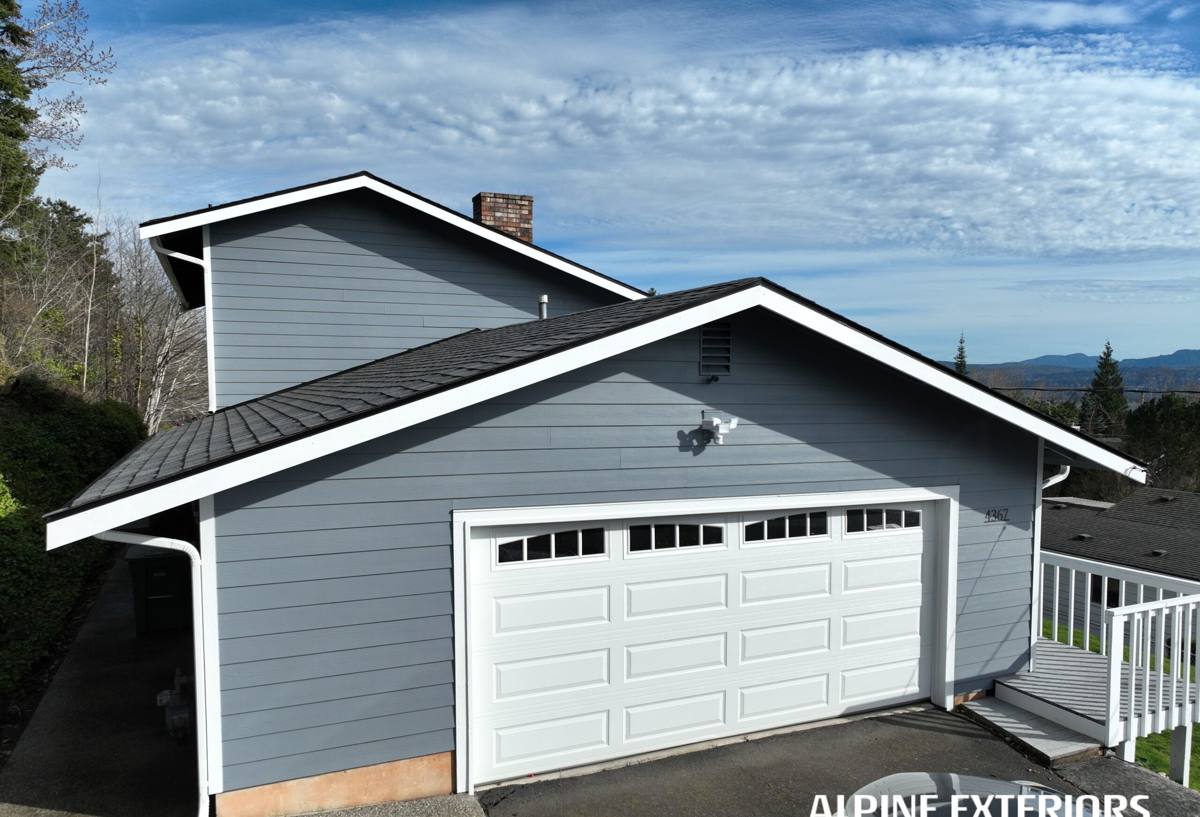
Why Metal Roofing Fits This Climate
Metal roofing earns its reputation in wet coastal climates because of how it sheds water and how little it gives moss to grow on. A properly installed standing seam or metal panel roof has no exposed seams for water to sit in, no shingle mat for moss spores to root into, and a slick, hard surface that sheds rain fast instead of absorbing it. That matters in a valley where roofs can stay damp for days at a time between dry spells.
It's also a long-term material choice. A correctly installed steel or aluminum roof can outlast two or three asphalt roofs on the same house, which matters when you're weighing a higher upfront cost against decades of Skagit County rain, wind, and moss pressure.
Standing Seam vs. Exposed-Fastener Panels
Not all metal roofing is the same, and the difference matters most in a climate like this one:
- Standing seam: Panels are joined with raised, interlocking seams and hidden clips — no exposed fasteners punched through the panel face. This is our default recommendation for Mount Vernon homes because there's nothing for water to work its way into over time.
- Exposed-fastener panels: Lower material cost, but every screw is a potential leak point once the rubber washer under the screw head ages and hardens. In a climate with this much sustained rain, that washer failure tends to show up as ceiling stains sooner than most homeowners expect.
We'll install exposed-fastener panels when a project's budget calls for it, but we tell every homeowner up front what that trade-off means for long-term maintenance — this is a durability and moisture-management decision, not a sales pitch.
What a Correct Metal Roof Installation Actually Involves
Metal panels themselves are only part of the system. Most metal roof failures we get called out to inspect trace back to what's underneath the panels, not the panels themselves.
Underlayment and Ice/Water Protection
A synthetic underlayment rated for metal roofing goes down first, with self-adhered ice-and-water membrane at eaves, valleys, and around every penetration — the spots where wind-driven rain is most likely to find a way in. In a valley climate with regular driving rain, this layer is doing real work, not just satisfying code minimums.
Fasteners and Corrosion Resistance
Salt air accelerates corrosion on the wrong fastener. We match fastener and flashing metal to the panel material to avoid galvanic corrosion — mixing incompatible metals is a slow, quiet way to shorten a roof's service life years before the panels themselves would have failed. Every fastener also gets set to the manufacturer's torque spec; overdriven screws crush the washer seal and are one of the most common causes of small, hard-to-trace leaks.
Ventilation
A metal roof still needs a properly ventilated assembly underneath it. Without adequate intake and exhaust airflow, moisture from inside the home can condense against the underside of cold metal panels during the Skagit Valley's damp winters, leading to deck rot that has nothing to do with the roofing material itself.
Metal Roofing Options for Mount Vernon Homes
The table below compares the systems we install most often, weighed against what this climate demands.
| System | Best For | Moss/Moisture Resistance | Maintenance |
|---|---|---|---|
| Standing seam steel or aluminum | Long-term owners, homes exposed to wind and driving rain | Excellent — no exposed fasteners, smooth water path | Low; periodic debris clearing and gutter checks |
| Exposed-fastener metal panels | Budget-conscious projects, outbuildings, shops | Good, but fastener washers are a wear point | Moderate; washers should be inspected periodically |
| Metal shingles/shakes | Homes wanting a traditional look with metal durability | Good; interlocking profile sheds water well | Low to moderate |
Our Installation Process
Every metal roof we install in Mount Vernon follows the same sequence, adjusted for the roof's slope, penetrations, and exposure:
- On-site inspection of the existing roof deck and structure, including a check for moisture damage from years of moss and trapped water.
- Tear-off and deck repair where needed — we don't install new panels over a compromised deck.
- Synthetic underlayment and ice-and-water membrane at eaves, valleys, and penetrations.
- Panel layout and installation with fasteners and flashing matched to the panel metal.
- Detail work at chimneys, vents, and wall transitions — the majority of leaks trace back to these details, not the field of the roof.
- Final walkthrough covering how the system was built and what to watch for over the years ahead.
Problems We Commonly See on Older or Poorly Installed Metal Roofs Here
A fair number of our metal roofing calls in Skagit County start as repair or inspection requests, not new installs. The patterns repeat often enough to be worth mentioning:
- Rust streaking at fastener heads where the wrong screw or washer was used, or where fasteners were overdriven.
- Moss and organic debris building up in valleys and against roof-to-wall transitions where water and shade linger longest.
- Panel oil-canning (a rippled appearance) from panels fastened too tightly or installed over an uneven deck.
- Leaks at skylights, chimneys, and vent boots where flashing was undersized or improperly lapped.
Most of these are installation issues, not material failures — which is exactly why the crew doing the work matters as much as the panels themselves.
What Affects the Cost of a Metal Roof
| Factor | Why It Matters |
|---|---|
| Panel system | Standing seam costs more upfront than exposed-fastener panels, largely due to labor and detailing time |
| Roof complexity | Valleys, dormers, and multiple roof planes add flashing and labor time |
| Deck condition | Rot or moisture damage found during tear-off adds repair costs before panels go on |
| Metal gauge and coating | Heavier gauge and better coatings cost more but hold up longer against salt air and UV |
| Access and pitch | Steep or hard-to-access roofs take longer and require more safety setup |
We won't quote a number without seeing the roof — but we'll always walk you through which of these factors are driving your estimate, and where there's room to adjust scope without cutting corners on the parts that actually keep water out.
Maintenance Checklist for Metal Roofs in Skagit County
A metal roof is low-maintenance, not no-maintenance. A short annual check goes a long way in this climate:
- Clear moss, needles, and leaf debris from valleys and roof-to-wall junctions before wet weather sets in.
- Check gutters and downspouts for clogs — standing water backed up against eave flashing is a common leak source.
- Look for rust streaking at fasteners, which signals a washer or coating starting to fail.
- Have flashing at chimneys, skylights, and vents checked every few years, since these are the most common leak points.
- Avoid pressure-washing metal panels — it can drive water under laps and strip protective coatings.
Why Hiring a Crew That Already Works Mount Vernon Matters
Roofing code and permitting requirements, wind load expectations, and typical roof pitches vary by jurisdiction, and Skagit County has its own permitting process separate from neighboring counties. A crew that already pulls permits and passes inspection here knows what the inspector will look for before the first panel goes up, which avoids costly rework.
Just as important is knowing the microclimate. A crew that's worked roofs across Mount Vernon and the surrounding Skagit Valley knows which orientations hold moss longest, which older neighborhoods tend to have deck framing that needs a closer look, and how driving rain off Puget Sound tends to hit a roof from a particular direction. That kind of pattern recognition is only built by doing the work here, repeatedly — not by reading a spec sheet.
If you're weighing a new metal roof or replacing one that's underperforming, we're happy to take a look and talk through what your home actually needs. Reach out for a free, no-pressure estimate using the form below.