 Skagit County
 Why Decks in Bow Age Differently Than Decks Inland
A deck in Bow doesn't fail the same way a deck in a drier, inland part of Skagit County does. Sitting close to the water, homes here deal with salt-laden air that speeds up corrosion on anything metal — fasteners, joist hangers, railing brackets — long before the wood itself gives out. Add in months of driving rain that finds its way into every seam and end-grain cut, plus a moss and algae season that can run from fall through spring, and you have three separate aging processes attacking the same structure at once.
Most decks don't fail from one big problem. They fail from small ones stacking up over years: a ledger board that stayed damp too long, fasteners that rusted and lost their grip, framing that never had a chance to dry out between storms. By the time boards feel spongy or railings wiggle, the structure underneath has usually been compromised for a while. Understanding that pattern is the starting point for building something that actually holds up here.
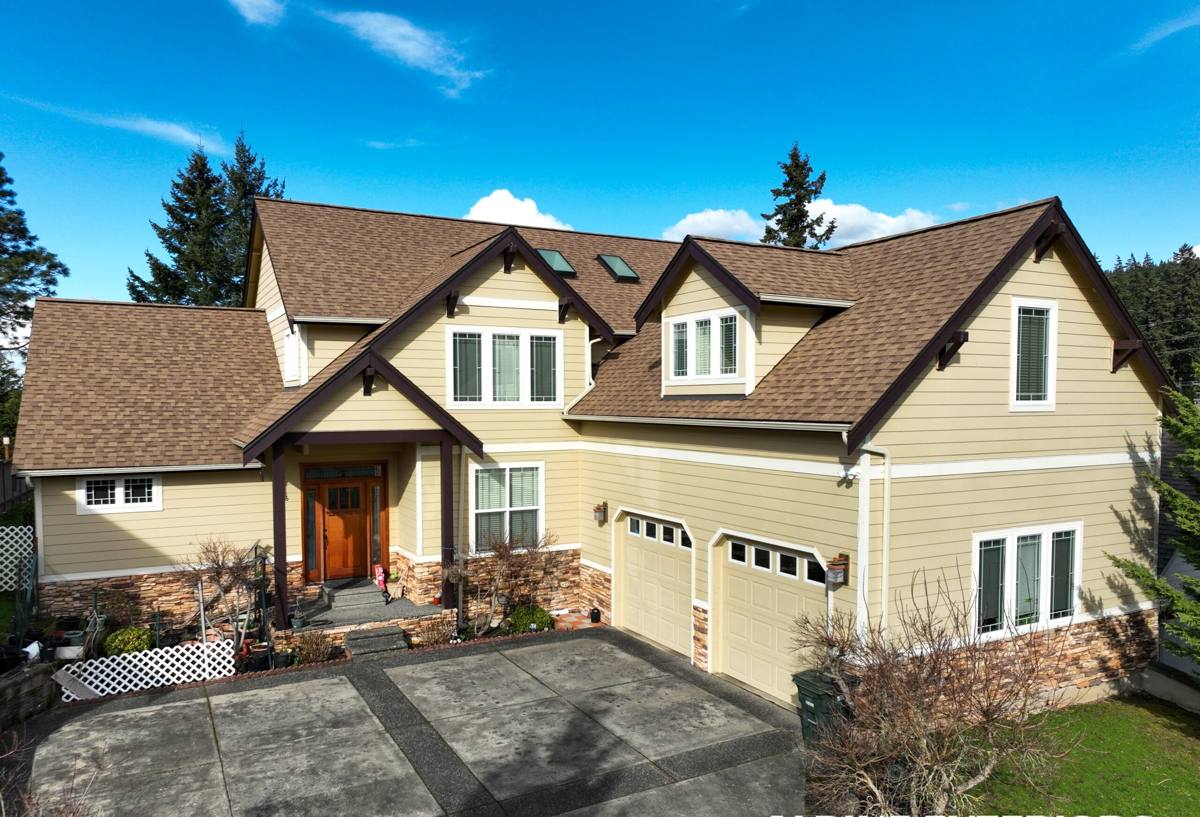
Signs a Bow Deck Needs Replacement, Not Another Patch
Not every tired deck needs a full rebuild. But there's a point where patching individual boards or re-tightening railings just delays a bigger failure — and in a wet, salty environment, that point tends to arrive faster than homeowners expect. Here's what tells us a deck has crossed from "repairable" into "replace it":
- Soft, spongy, or spring-back decking in more than one or two spots, especially near the house or stair landing
- Rust staining or streaking around fasteners, hangers, or railing posts
- A ledger board that's dark, swollen, or separating slightly from the house rim joist
- Posts or footings that feel loose, or a deck that sways noticeably when several people are on it
- Persistent moss or algae growth that comes back within weeks of cleaning, which usually means moisture is trapped underneath, not just sitting on top
- Railings that flex or don't feel solid when leaned on — this is a safety issue, not a cosmetic one
- A deck more than 15–20 years old built to older fastening standards, even if it looks okay on the surface
If a deck is showing two or more of these, it's usually more cost-effective — and safer — to replace it properly than to keep chasing repairs on a structure that's already compromised underneath.
Choosing Decking Material for Salt Air and a Long Wet Season
Pressure-Treated Lumber
Pressure-treated fir or hem-fir is still the most common decking material in this area, and for good reason — it's affordable, widely available, and holds up well when it's installed and finished correctly. The trade-off is maintenance: it needs to be cleaned and resealed on a regular cycle, or moisture and moss will start working into the grain faster than in a drier climate.
Composite and PVC Decking
Capped composite and PVC boards resist moisture absorption and don't feed algae or moss the way bare wood does, which matters a lot given how long the growing season runs here. They cost more up front, but for homeowners who want to spend less time scrubbing and resealing every year, the trade-off often makes sense. Not every composite product performs the same in wet, salty conditions — we only install lines with a track record in coastal Pacific Northwest environments, not whatever happens to be cheapest that week.
Cedar
Cedar has natural rot resistance and a look a lot of homeowners want, but it's softer and more sensitive to installation details than either of the above. Fastener choice and gapping matter more with cedar than with other materials — get those wrong and you'll see premature graying, splitting, or cupping well before the wood should be failing.
| Material | Moisture & Moss Resistance | Maintenance | Typical Lifespan |
|---|---|---|---|
| Pressure-Treated Lumber | Good if sealed regularly | Annual cleaning/resealing | 15–20 years |
| Cedar | Naturally decent, sensitive to install | Regular sealing, more careful upkeep | 15–20 years |
| Capped Composite/PVC | Very good, resists algae buildup | Occasional wash, no sealing | 25–30+ years |
What a Correct Deck Replacement Actually Involves
Ledger Board and Flashing
The ledger board — where the deck attaches to the house — is the single most common failure point on any deck in a climate like this. If it's not flashed correctly to shed water away from the rim joist, moisture gets trapped against the house framing and rot sets in where you can't see it. A correct replacement means new flashing, proper fastening into structural framing, and a clear water path away from the house, every time — not just bolting new boards to whatever ledger is already there.
Footings, Posts, and Framing
Footings need to sit below frost depth and bear on solid, undisturbed soil — cutting corners here is invisible until the deck starts to settle or heave years later. We size posts, beams, and joists to current structural standards, not to whatever the old deck happened to use, since older decks in this area were often built lighter than current code calls for.
Fasteners and Hardware
This is where salt air does the most damage, and it's also where corners get cut most often. Standard coated screws and hangers corrode faster this close to the water. We spec stainless or high-grade coated fasteners and hardware rated for coastal exposure, because replacing a deck's structural connections five years in defeats the point of a replacement.
Our Deck Replacement Process
- On-site assessment — we look at the existing structure, ledger, footings, and framing to see what's actually driving the failure, not just what's visible from the top.
- Design and material selection — we walk through material options and layout based on how you actually use the space, your budget, and how much upkeep you want going forward.
- Permitting — we handle the permit application and coordinate any required inspections through Skagit County so you don't have to chase paperwork.
- Demolition and disposal — the old deck comes out, including any compromised framing, and we haul it away.
- Framing and structural work — new footings, posts, beams, and joists go in to current structural standards, with ledger flashing done correctly from the start.
- Decking, railing, and stairs — final surfaces and railings go on, fastened with hardware rated for this environment.
- Final walkthrough — we go over the finished deck with you, including what maintenance (if any) the material you chose will need.
Permits, Setbacks, and Code Basics
Most deck replacements attached to a house in Skagit County require a permit, particularly if the structure is being rebuilt rather than just re-decked with the same footprint and framing. Guardrails, stair rise-and-run, and baluster spacing all follow building code minimums meant to keep people safe — these aren't optional extras, and a contractor who skips them is putting you at liability risk down the road. We pull the required permits and build to the applicable code rather than treating it as a formality to work around.
What Deck Replacement Costs in Bow
Every deck is different, so we're not going to pretend there's a single number that applies to yours. That said, homeowners should expect the total to move based on a handful of factors:
| Factor | Why It Moves the Price |
|---|---|
| Size and footprint | More square footage means more framing, decking, and labor |
| Material choice | Composite/PVC costs more upfront than treated lumber; cedar sits in between |
| Height and stairs | Elevated decks need more structural framing, footings, and often code-required railings |
| Railing style | Cable, glass, or custom railing systems cost more than standard baluster railing |
| Structural condition | Rot found in the ledger, rim joist, or framing during demo adds repair scope |
| Permit and inspection fees | Set by the county and required for most attached deck rebuilds |
A straightforward, ground-level replacement in pressure-treated lumber or cedar is usually the lower end of the range; adding height, stairs, composite decking, or custom railing moves it up from there. We give a firm, itemized number after seeing the site — not a phone-quote guess.
Why a Crew That Already Works Bow Makes a Difference
Building a deck that holds up here isn't just about picking good materials — it's about knowing how this specific stretch of Skagit County behaves. A crew that regularly works in and around Bow already knows to over-spec fasteners for salt exposure, to detail flashing for a wetter-than-average rain pattern, and to plan for a moss season that outlasts what a lot of generic decking advice assumes. That local pattern recognition is the difference between a deck that needs attention again in five years and one that's still solid in twenty.
Keeping Your New Deck Ahead of the Moss
Whatever material you choose, a little seasonal attention goes a long way in this climate. Clear leaves and debris out of gaps between boards before they trap moisture. Rinse off algae and moss buildup before it gets a foothold rather than after. If you went with pressure-treated lumber or cedar, keep to a sealing schedule rather than waiting until the wood looks weathered — by then the damage is already started underneath the surface.
If your deck is showing its age, or you're just ready for something built properly for Bow's weather, we're happy to take a look and put together a straightforward estimate — no pressure, no upsell. Use the form below to get started.