 Skagit County
 Why Conway Homes Wear Out Their Siding Faster
Conway sits low in the Skagit River delta, close enough to Skagit Bay and the Sound that salt-laden air is a daily fact of life, not an occasional weather event. Add in the long, wet Skagit Valley winters, driving rain that comes sideways off the water, and a moss season that can stretch from October into May, and you have one of the tougher siding environments in the county. Homes here don't fail because owners neglected them — they fail because the siding material wasn't built for this combination of moisture and salt exposure in the first place.
We see the same failure pattern on house after house in this area: wood-based siding that stayed damp too long and started softening at the bottom courses, vinyl that's gone brittle and cracked from years of freeze-thaw cycling, and paint that's failed early because moisture kept working in from behind the panel instead of just the front. Replacing siding in Conway isn't just a cosmetic upgrade — it's a chance to put a material system on the house that actually matches what the climate is doing to it.
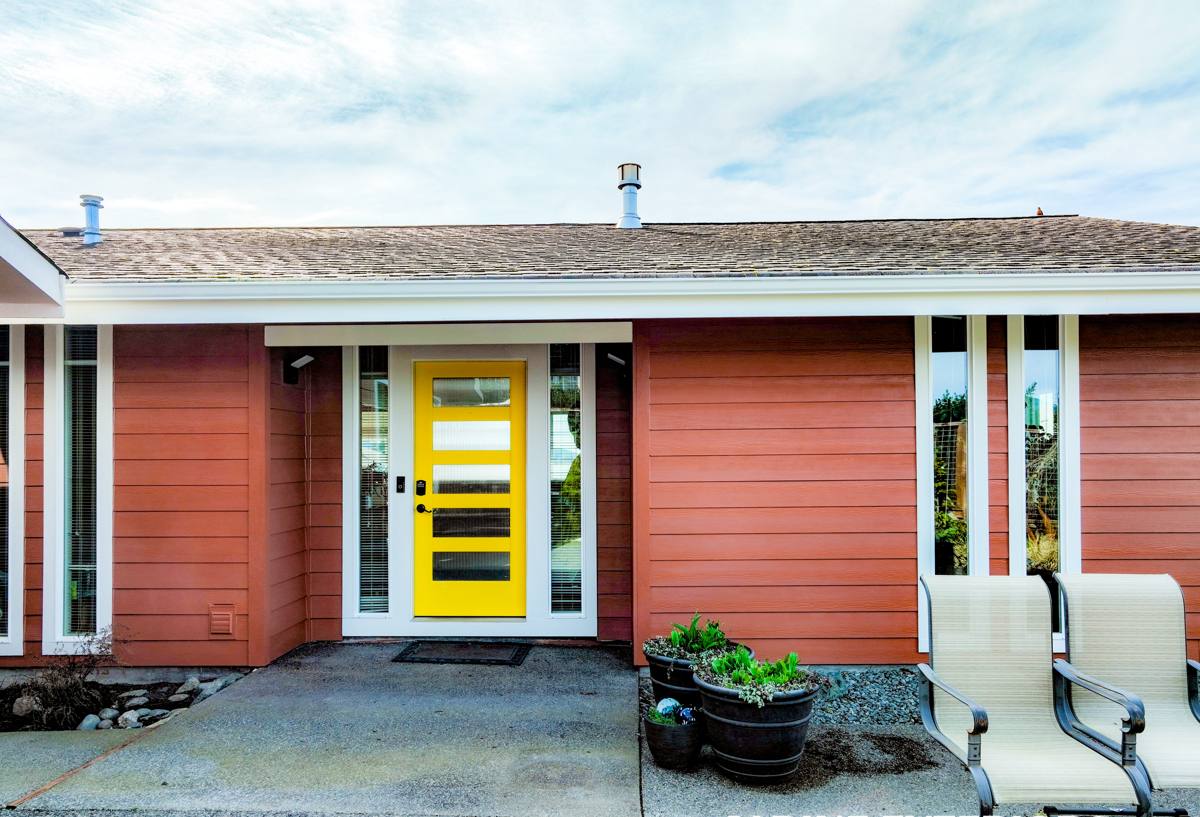
What Salt Air and Moss Actually Do to Siding
Salt Air
Airborne salt from the Sound and the bay settles on exterior surfaces and accelerates corrosion of fasteners, trim, and any metal flashing components. It also draws moisture — salt is hygroscopic, meaning it pulls humidity out of the air and holds it against the siding surface longer than plain rainwater would. That constant low-level dampness is what breaks down wood fiber and lets mold and mildew get a foothold on paint and caulk lines.
Driving Rain
Conway's exposure means wind-driven rain doesn't just fall on siding, it gets pushed into laps, seams, and butt joints. A siding system with weak water management at those joints will let moisture behind the cladding, where it can sit against sheathing and framing for weeks at a time during a wet stretch.
Moss and Organic Growth
Shaded, damp exteriors — especially north- and west-facing walls under tree cover, which is common on Conway lots — grow moss and algae readily. Organic growth holds moisture against the siding surface even longer, and on porous or absorbent materials it can work into surface texture in a way that's hard to fully clean off without damaging the finish.
Why We Only Install James Hardie Fiber Cement
We made a decision a long time ago to standardize on James Hardie fiber cement siding and stop installing everything else — vinyl, LP SmartSide, primed wood, cedar. That's not a marketing position, it's a maintenance and durability call based on what actually holds up in a climate like Skagit County's.
- Non-combustible core: Hardie's fiber cement doesn't burn, which matters for insurance conversations and long-term risk, not just wildfire-prone regions.
- Engineered for moisture, not just painted against it: fiber cement doesn't absorb and swell the way wood-based products can when it stays wet for extended periods.
- ColorPlus factory finish: the color is baked on in a controlled environment rather than field-applied, which gives more consistent coverage and better adhesion than a job-site paint job exposed to wind and moisture during cure.
- HZ5 product engineering: Hardie builds specific formulations for different climate zones; the versions we install are matched to Pacific Northwest moisture exposure rather than a generic, one-size-fits-all board.
- Transferable warranty: a real, documented warranty that follows the house if it sells, backed by a manufacturer that's been in the fiber cement business long enough to stand behind it.
None of this means other products are worthless — vinyl is inexpensive and wood has real curb appeal for the right buyer. But given what Conway's salt air, rain, and moss exposure does to a house over 15-20 years, we don't think those trade-offs make sense for our own installs, so we don't offer them.
What a Correct Siding Replacement Involves
Tearing off old siding and nailing up new boards is the easy part. The work that actually determines whether a Conway home stays dry for the next few decades happens underneath.
1. Full Tear-Off and Sheathing Inspection
We remove the existing siding down to the sheathing and inspect for rot, soft spots, or prior water intrusion — especially around window and door openings, where leaks tend to concentrate first. Any compromised sheathing gets replaced before anything else happens.
2. Weather-Resistive Barrier
A properly lapped, correctly fastened water-resistive barrier goes on next. This is the layer that catches any moisture that gets past the siding itself and directs it back out, and it's frequently installed wrong or skipped entirely on lower-cost jobs.
3. Flashing at Every Penetration
Windows, doors, hose bibs, light fixtures, vents — every penetration through the wall plane is a potential entry point for wind-driven rain. Correct flashing detail here matters more in a driving-rain climate like Conway's than almost anywhere else in the process.
4. Rainscreen or Furring Where Appropriate
On exposures that see heavy moss and prolonged dampness, a rainscreen gap behind the siding lets air circulate and moisture drain and dry out, rather than sitting trapped against the back of the board.
5. Correct Fastening and Clearances
James Hardie specifies fastener type, spacing, and minimum clearances from grade, roof lines, and decks. Skipping these details is the single most common cause of premature failure on fiber cement installs we're asked to look at.
Comparing Siding Options for a Conway Property
| Factor | Vinyl | Primed Wood / Cedar | James Hardie Fiber Cement |
|---|---|---|---|
| Salt air resistance | Fades and becomes brittle over time | Vulnerable without diligent upkeep | Engineered for moisture exposure |
| Moisture behavior | Can trap water behind panels | Absorbs moisture, prone to rot | Doesn't absorb and swell like wood |
| Finish durability | Color molded in, but fades/chalks | Field-applied paint fails first | Factory-baked ColorPlus finish |
| Fire rating | Combustible | Combustible | Non-combustible |
| Typical lifespan before major work | 15-25 years | 10-15 years with upkeep | 30+ years when installed to spec |
| Maintenance | Low, but limited repair options | Regular repainting/sealing needed | Occasional recaulk and inspection |
Cost Factors for a Conway Siding Replacement
Every house is different, and we won't quote a number without seeing the property, but the main drivers of cost on a Conway job are consistent:
- Extent of sheathing repair — homes with hidden moisture damage from years of wet siding often need more sheathing replacement than expected once the old cladding comes off.
- Home size and wall complexity — more corners, dormers, and roof intersections mean more flashing detail and labor time.
- Siding profile chosen — lap width, board texture, and trim details all affect material cost.
- Color selection — standard ColorPlus colors versus custom field-painted options.
- Access and site conditions — tree cover, tight lot lines, and staging space affect labor efficiency.
What to Check Before Hiring a Siding Contractor in Conway
Conway is a small community, and not every contractor working the broader Skagit County market has real experience with sites this close to the water. Before hiring anyone, homeowners here should confirm:
- They carry current WA state contractor licensing and adequate liability insurance
- They can explain, specifically, how they'll handle flashing at windows, doors, and penetrations — not just "we'll seal it up"
- They follow the manufacturer's published installation instructions for fastener spacing and clearances, not just their own habits
- They've worked on homes with similar salt-air or moss exposure, not just inland Skagit Valley properties
- They provide a written scope that separates tear-off, sheathing repair, weather barrier, and siding installation as distinct line items
- They stand behind both workmanship and the manufacturer's material warranty in writing
Why Local Experience in Conway Matters
A crew that's already worked houses in Conway knows which exposures on this stretch of the delta take the worst of the wind-driven rain, which lots hold onto moss longest, and how salt exposure here compares to properties further inland around Mount Vernon or Sedro-Woolley. That's not something you get from a general contractor bio — it comes from having actually pulled old siding off Conway homes and seen firsthand what the climate did to it underneath. That experience shows up in small decisions during the job: where to add extra flashing attention, whether a rainscreen gap is worth the added cost on a particular wall, how tight to run caulk joints given how much rain this area actually sees.
Get a No-Pressure Estimate
If your Conway home's siding is showing moss buildup, soft spots, cracking, or paint that keeps failing no matter how often it's redone, it's worth having someone take a real look at what's happening underneath. We'll walk the exterior, explain what we find, and put together a straightforward estimate for a James Hardie replacement built for this climate — no pressure, no obligation.