 Skagit County
 Siding That Actually Holds Up in Lyman
Lyman sits along the Skagit River in the shadow of the Cascade foothills, and that setting shapes what a house needs from its siding. Unlike the more exposed, wind-driven stretches of western Skagit County, Lyman's challenge isn't salt spray off the water — it's the steady, patient moisture that comes from being tucked into a river valley surrounded by trees. Homes here sit under more tree cover, get less direct sun on north and east walls, and stay damp longer after a storm than a house out in the open. Add in the broader Skagit County pattern of driving rain and a moss season that can run eight or nine months of the year, and you've got an environment that punishes any siding material with weak spots at the seams, the paint, or the substrate itself.
We install James Hardie fiber cement siding exclusively, and Lyman is a good example of why. This page covers what a correct Hardie installation looks like on a Lyman home, what the local climate actually does to siding over time, and how our process is built around getting it right the first time.
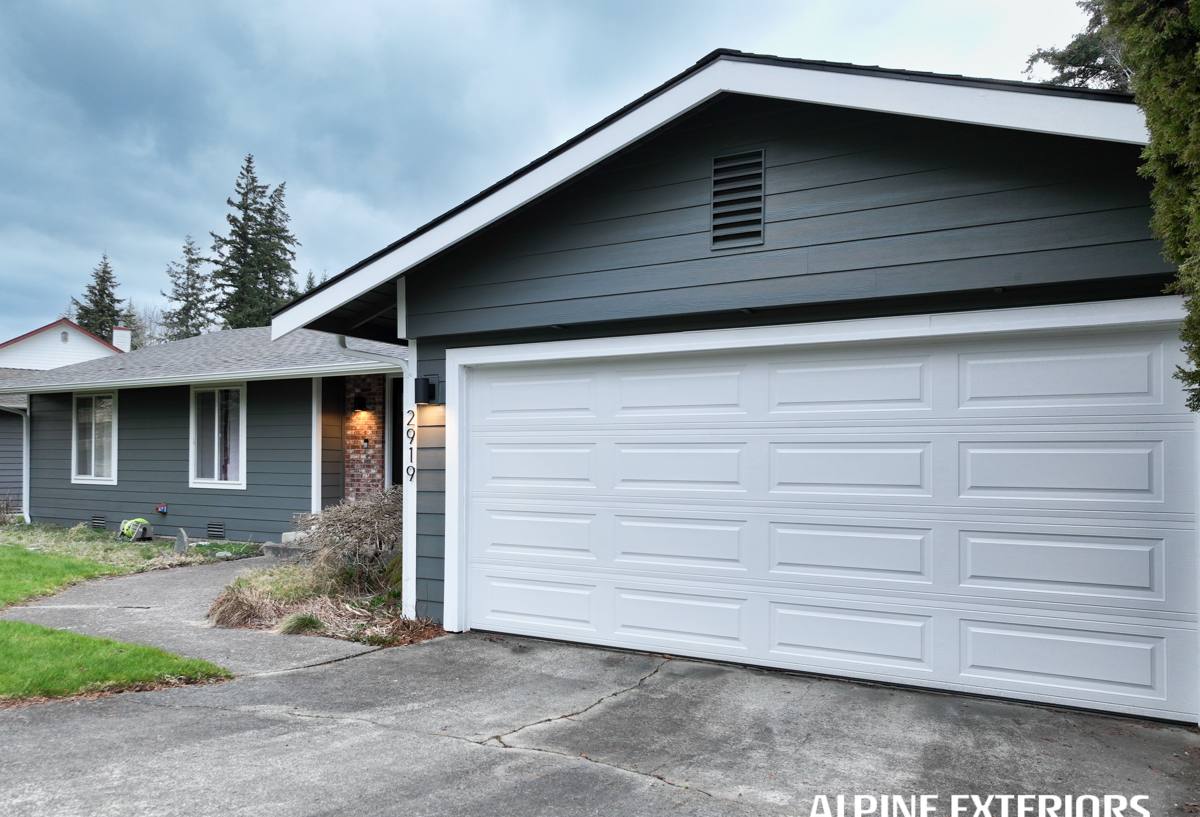
What the Lyman Climate Does to Siding
Constant, Low-Grade Moisture
Skagit County gets plenty of rain, but the bigger issue for a shaded, river-valley property like Lyman is how slowly things dry out. Morning fog off the river, dew that lingers under tree canopy, and shorter periods of direct sun all add up to siding that stays wet longer than it would on an open lot a few miles away. Materials that absorb moisture or trap it behind the surface are the ones that fail first — swelling, delaminating, or feeding rot in the wall assembly behind them.
Moss and Organic Growth
Where there's shade and moisture, there's moss, algae, and mildew. On porous or poorly finished siding, these organisms don't just sit on the surface — they can hold water against the material and accelerate breakdown. A siding product's surface finish and its resistance to moisture absorption both matter a lot more here than they would in a drier climate.
Temperature Swings and Wood-Adjacent Framing
Skagit County's freeze-thaw cycles are milder than inland Washington, but they still happen, and repeated cycles of swelling and contracting are hard on any siding that isn't dimensionally stable. Combine that with the older wood-frame housing stock common in small Skagit towns like Lyman, and you've got wall assemblies that need a siding layer that sheds water reliably rather than one more layer that can trap it.
Why James Hardie Fits This Climate
James Hardie fiber cement is engineered specifically to handle the kind of moisture cycling Lyman deals with. It's non-combustible, doesn't rot, and — critical for this area — doesn't swell or delaminate the way wood-based or wood-adjacent products can when they take on repeated moisture. Hardie's HZ5 product line is engineered for climates with more moisture and freeze-thaw exposure, and it's the line we spec for most Skagit County installs, Lyman included.
Just as important as the substrate is the finish. Hardie's ColorPlus factory-applied finish is baked on under controlled conditions, which gives it better adhesion and UV resistance than field-applied paint — and it holds up better against the mildew and moss growth that shaded, damp walls are prone to. A field-painted product depends on the weather cooperating during application and on repainting on schedule; ColorPlus takes that variable off the table for the life of the finish.
Why We Don't Install Alternatives Here
We get asked about vinyl, LP SmartSide, and other fiber cement brands regularly, and we're upfront about why we don't install them. Vinyl siding can warp and gap over time, and those gaps become entry points for moisture in a climate that's already working against you. Engineered wood products like LP SmartSide use a wood strand substrate that, while treated, is still wood-based — in a shaded, high-moisture setting like Lyman, any breach in the coating exposes that substrate to exactly the kind of sustained dampness that causes swelling and rot. Other fiber cement brands can be reasonable products, but we've standardized on James Hardie because of its track record, its climate-specific engineering, and the strength of its transferable warranty. Standardizing on one product also means our crews install it constantly — there's no learning curve, no guessing on details, on every job.
What a Correct Installation Involves
Fiber cement siding is only as good as the installation behind it. A rushed or generic install can undercut everything the material is engineered to do — and in a moisture-heavy climate like Lyman's, installation mistakes show up faster than they would somewhere drier.
- Water-resistive barrier and flashing first. Correct house wrap, properly lapped, with flashing at every window, door, and penetration — this is the layer that actually keeps bulk water out, and it has to be right before a single piece of siding goes up.
- Rainscreen or proper drainage gap. Given how long surfaces stay damp in a shaded river valley, a drainage gap behind the siding lets any moisture that does get in dry out instead of sitting against the wall.
- Correct fastening pattern. Hardie specifies fastener type, spacing, and placement by product and by exposure — get this wrong and you create stress points or gaps that let water in over time.
- Proper clearances. Siding needs to sit above grade, above roofing, and above decks and patios by the manufacturer's specified minimums — skipping this is one of the most common causes of premature rot at the bottom edge of a wall.
- Caulking and sealant at the right joints only. Hardie's design relies on some joints draining rather than sealing; over-caulking can trap water instead of shedding it.
- Field-cutting dust control. Hardie products contain silica, and cutting them requires proper dust-control practices for crew safety and code compliance.
Choosing the Right Hardie Products for a Lyman Home
James Hardie makes several distinct product lines, and picking the right one depends on the exposure of each wall, not just a blanket choice for the whole house.
| Product | Best Use | Why It Fits Lyman |
|---|---|---|
| HardiePlank lap siding | Primary wall cladding | Traditional lap profile, HZ5 formulation handles moisture cycling well |
| HardieShingle | Accent areas, gables | Adds texture without sacrificing moisture resistance |
| HardiePanel | Modern/board-and-batten looks | Clean vertical lines, good on shop or accessory structures too |
| HardieTrim | Corners, fascia, window trim | Matches durability of the field siding so trim doesn't fail first |
On a shaded, damp lot, we also pay close attention to which walls face the river, which sit under the heaviest tree canopy, and which get the most direct afternoon sun — that assessment can change fastener spacing, flashing detail, and sometimes even which specific product goes where.
Our Process for Lyman Homeowners
- On-site assessment. We walk the property, check the current siding and sheathing condition, note drainage patterns, tree cover, and sun exposure wall by wall.
- Moisture and substrate check. Before quoting a full re-side, we look for existing rot or water intrusion, especially around windows, at the base of walls, and anywhere siding meets a roofline or deck.
- Written estimate. A clear scope covering removal, any sheathing repair, house wrap, flashing, the specific Hardie products and colors, and trim.
- Installation to spec. Our crews follow James Hardie's published installation instructions for this climate zone, not a generic national standard.
- Final walkthrough. We review the finished job with the homeowner and cover basic care going forward.
Cost Factors Specific to This Job
Every home is different, but a few things consistently move the price on a Lyman siding project:
| Factor | Impact |
|---|---|
| Existing sheathing condition | Rot repair from prior moisture intrusion adds cost but is essential to address, not cover up |
| Wall exposure and access | Shaded, tree-close walls sometimes need extra scaffolding or clearance work |
| Trim and detail complexity | Gables, dormers, and multiple roof intersections all add flashing and cutting time |
| Product mix | Combining lap, shingle, and panel products for architectural interest costs more than a single product |
| Color | Standard ColorPlus colors versus custom-matched finishes affect lead time and price |
We give straightforward written numbers with no inflated "worst case" padding, and we'll tell you plainly if we find rot or structural issues once the old siding comes off — before doing any additional work, not after.
Maintenance in a Damp, Shaded Setting
One advantage of Hardie fiber cement in a climate like Lyman's is how little ongoing maintenance it actually needs compared to wood-based alternatives. That said, a few habits extend the life of any siding here:
- Rinse siding annually to remove moss and mildew buildup before it accumulates, especially on shaded north and east walls.
- Keep gutters clear so overflow doesn't run directly down the siding face.
- Trim back vegetation and tree limbs that keep walls in constant shade and restrict airflow.
- Inspect caulking at trim joints every year or two and have any cracked sealant addressed early.
Why Local Experience with Lyman Homes Matters
A crew that already works Skagit County properties knows the difference between a house on an open, sunny lot and one tucked into a river-valley setting like Lyman — and that difference changes real installation decisions, not just cosmetic ones. It affects which walls need extra attention to drainage, how much clearance to leave at grade given local drainage patterns, and which Hardie products and fastening details make sense for the exposure. Hiring a crew with no track record in this specific climate means gambling on whether they'll treat a shaded, damp river-valley home the same way they'd treat a dry, open one — and in a climate like this, that gap shows up in premature failures, not just aesthetics.
If you're weighing a siding project on a Lyman home, we're happy to come take a look, walk the property with you, and put together a clear, honest estimate — no pressure, no inflated scare tactics about your current siding. Just a straight assessment and a written plan for doing it right.