 Skagit County
 Why La Conner's Climate Is Hard on a Roof
La Conner sits close enough to Skagit Bay and the Swinomish Channel that salt-laden air is a constant, low-grade stress on every exterior surface — including the roof. Add in the long stretches of driving rain that come through Skagit County off the Sound, and then the shoulder-season months when everything stays damp long enough for moss and moisture-loving growth to get a foothold, and you have a roofing environment that punishes shortcuts. A roof that would hold up fine forty miles inland, away from salt exposure and with faster drying cycles, can fail early here if it wasn't specified and installed with this exact climate in mind.
Metal roofing, done correctly, handles this combination better than most other roofing materials available to homeowners in this area. It sheds water fast, doesn't provide the same rough surface that moss and lichen use to grip, and — with the right metal, coating, and fastener choices — resists the corrosion that salt air accelerates. "Done correctly" is doing a lot of work in that sentence, though, and that's what this page is really about.
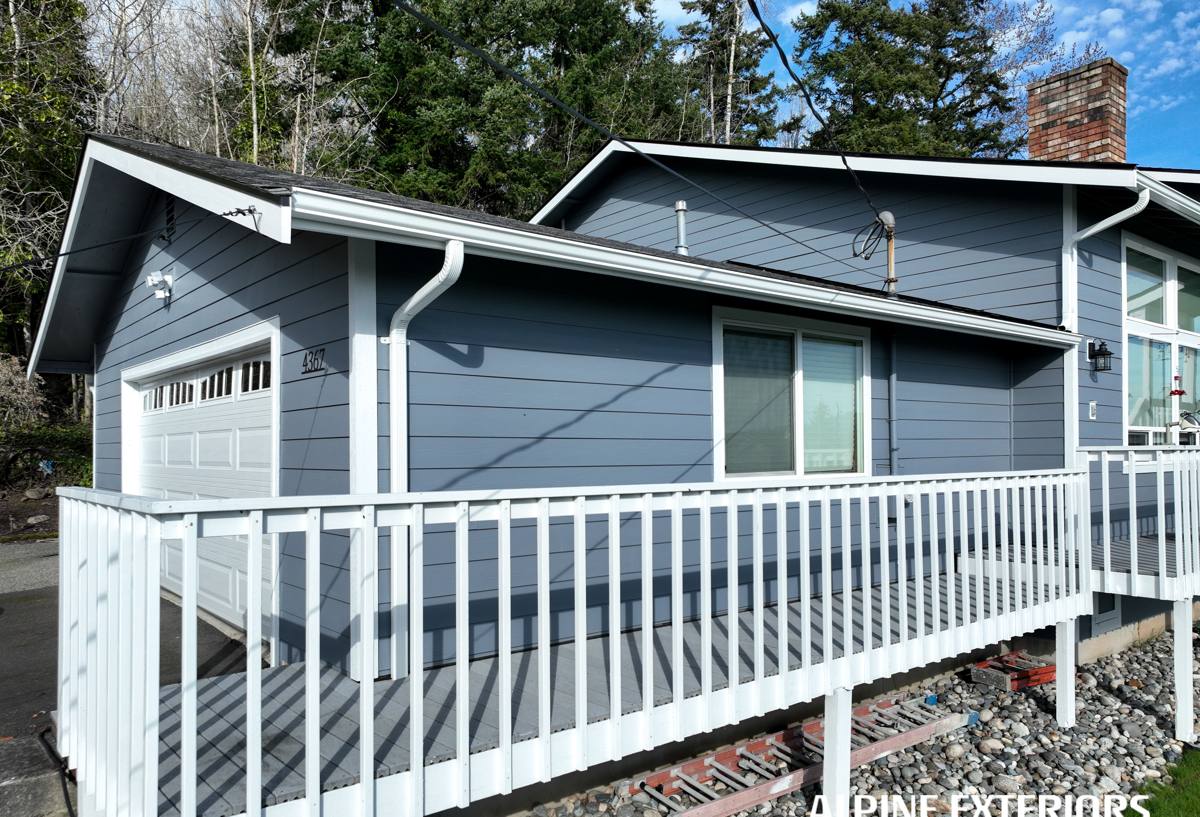
What a Correct Metal Roofing Job Actually Requires Here
Material selection matters more near the water
Not every metal roofing product is built for a coastal-influenced environment. Bare or lightly coated steel, thin-gauge panels, and fasteners without adequate corrosion resistance will show pitting, rust bleed, and premature coating failure faster near La Conner than they would further inland. For homes in this area we lean toward galvanized or Galvalume steel with a quality factory-applied coating system, or aluminum where the site conditions call for it, matched with stainless or coated fasteners rated for coastal exposure.
Coating systems aren't all equal
The paint or coating on a metal panel is what actually stands between the metal substrate and the weather. Standard polyester coatings are fine for a lot of inland applications but tend to chalk and fade faster under UV and salt exposure. PVDF-based coatings (often sold under names like Kynar 500) hold color and gloss longer and resist the chemical breakdown that salt air and moisture accelerate. On a La Conner roof, that coating choice is one of the biggest factors in how the roof looks and performs at year fifteen versus year five.
Gauge and panel profile
Thicker gauge steel (24-gauge versus a lighter 26- or 29-gauge) resists oil-canning, hail, and foot-traffic denting better, and stands up longer to the freeze-thaw and wet-dry cycling common here. Standing seam profiles, with concealed fasteners, give the best long-term water resistance because there's no exposed screw head for water to work at over time — an important detail when a roof is going to see this much rain.
Comparing Metal Roofing Systems for a Coastal Skagit County Home
| System | Water Performance | Fastener Exposure | Best Fit |
|---|---|---|---|
| Standing seam (concealed fastener) | Excellent — panels interlock, no exposed penetrations on the field | Hidden clips, minimal long-term risk | Homes with direct salt air or wind-driven rain exposure |
| Exposed-fastener panel (screw-down) | Good if installed and maintained properly | Exposed screws, gaskets wear over time | Outbuildings, budget-conscious projects, lower-exposure sites |
| Stone-coated steel shingle/shake profile | Very good, sheds water like standing seam on a shingle-style roof | Mostly concealed under coating/granules | Homeowners wanting a traditional shingle or shake look with metal durability |
None of these is universally "best" — the right choice depends on the roof's exposure, the home's style, and the budget. Part of our job during the estimate is walking the roof and the site with you and being straight about which system actually fits your situation, rather than defaulting to whatever is easiest to install.
Detailing That Matters More Here Than Elsewhere
Metal roofing fails less often because the panel itself gave out and more often because a detail around it was done wrong. In a climate with this much rain and salt exposure, the details carry even more weight.
- Flashing at valleys, walls, and penetrations: Every place water can find a seam needs metal flashing sized and lapped correctly — not just sealant, which degrades and is not a substitute for proper flashing.
- Underlayment: A high-temperature, self-adhering synthetic underlayment gives a second line of defense under the metal, which matters when wind-driven rain can push water sideways under panel edges.
- Ventilation: Metal roofs need proper attic and roof-deck ventilation to manage condensation, especially in a marine climate where humidity stays high for long stretches.
- Fastener corrosion resistance: Mismatched or under-rated fasteners are one of the most common causes of rust streaking on an otherwise sound metal roof near salt air.
- Cut edges and exposed steel: Every field cut exposes raw steel unless it's properly sealed or coated; near the water, an untreated cut edge is where rust starts first.
Moss, Debris, and Coastal Growth: What's Different With Metal
Skagit County's long wet season gives moss and organic growth plenty of time to establish on a roof, and asphalt shingles give it a rough, granular surface to grab onto. Metal's smooth, slick surface makes it much harder for moss to take hold in the first place, which is one of the real practical advantages of metal roofing for La Conner homes surrounded by trees or shaded by neighboring structures. That said, "moss-resistant" doesn't mean "moss-proof" — debris that collects in valleys, at panel laps, or against transitions can hold moisture long enough for growth to start even on metal. Keeping those areas clear is a small maintenance habit that goes a long way on a coastal roof.
Our Process, Start to Finish
1. On-site assessment
We walk the roof and the property, note the exposure direction, existing drainage patterns, ventilation, and any signs of past moisture problems. This is where we figure out which metal system actually fits the home rather than guessing from a photo.
2. Honest estimate and material selection
You get a written estimate that spells out the system, gauge, coating, and fastener package — not just a single price line. If a lighter-duty option would save money but come with real trade-offs given your site's exposure, we tell you that upfront.
3. Tear-off and deck inspection
When we remove the existing roofing, we inspect the deck for rot or moisture damage before anything new goes down. Covering up a damaged deck is one of the fastest ways to shorten the life of a new roof, and we won't do it without telling you first.
4. Underlayment, flashing, and panel installation
Underlayment goes down first, then flashing at every valley, wall, and penetration, then the panels themselves — installed to the manufacturer's fastening and spacing specs, not shortcuts to save labor time.
5. Final walkthrough and cleanup
We walk the finished roof with you, cover care and maintenance basics specific to your system, and make sure the site is cleaned up — magnetic sweep for stray fasteners included, since those are easy to miss and hard on bare feet or tires.
Common Problems We Find on Existing Metal Roofs in This Area
- Exposed fasteners that were never re-torqued or replaced as gaskets aged, leading to slow leaks at the screw holes
- Sealant used in place of proper flashing at wall-to-roof transitions, which fails well before the panels do
- Cut panel edges left unsealed, showing rust streaks down the face of the roof
- Debris buildup in valleys that trapped moisture and allowed moss or lichen to establish despite the metal surface
- Mismatched fasteners (wrong coating or material) causing galvanic corrosion at the panel
- Inadequate attic ventilation leading to condensation on the underside of the panels
What Drives the Cost of a Metal Roof Here
| Factor | Why It Matters in Skagit County |
|---|---|
| Panel system (standing seam vs. exposed fastener vs. stone-coated) | Standing seam costs more upfront but needs less long-term fastener maintenance in salt air |
| Coating type (PVDF vs. standard polyester) | PVDF coatings cost more but hold color and resist coastal weathering significantly longer |
| Roof complexity (valleys, dormers, penetrations) | More transitions mean more flashing detail work, which is labor-intensive but critical here |
| Deck condition | Moisture-damaged decking found during tear-off adds repair cost but prevents a much bigger problem later |
| Ventilation upgrades | Older homes often need added intake or exhaust ventilation to perform well under a metal roof in a humid marine climate |
We don't quote a job without walking the roof, but broadly, expect metal roofing to cost more upfront than asphalt shingles — the trade-off is a service life that's typically two to three times longer when the system is matched to the site and installed correctly, along with lower long-term maintenance in a climate this hard on roofing materials.
Why Local Experience in La Conner and Skagit County Matters
A roofing crew that mostly works drier, inland areas can install a technically correct metal roof and still get burned by details that only matter near the water — coating choice, fastener corrosion resistance, flashing at a wall exposed to driving rain off the bay. We work in Skagit County day in and day out, which means we've seen how roofs actually perform here over years, not just on installation day. That experience shapes which systems we recommend, how we detail flashing and ventilation, and where we tell homeowners not to cut corners even if it costs a little more upfront.
If you're weighing a metal roof for a La Conner home — whether it's new construction, a full replacement, or you're comparing metal against another material — we're happy to walk the roof with you, talk through what your specific site needs given its exposure, and give you a straight, no-pressure estimate. There's a form below to get that started whenever you're ready.