 Skagit County
 Why Bow's Coastal Climate Is Hard on Siding
Bow sits close to the water in coastal Skagit County, and that location comes with a specific set of exterior problems most inland siding jobs never have to solve. Salt-laden air moves in off the Sound and settles on every exterior surface, where it accelerates corrosion in fasteners, trim, and any material that isn't built to shrug it off. Add driving rain that comes in sideways during fall and winter storms, and you get moisture pushed into seams and laps that would stay dry in a calmer climate.
Then there's the moss. Skagit County's long wet season, combined with tree cover and shaded north-facing walls common on Bow properties, creates months of conditions where moss and algae can get a foothold and stay there. On the wrong siding material, that turns into trapped moisture, staining, and slow material breakdown. On the right material, installed correctly, it's a surface issue you wash off — not a structural one.
None of this is unique to any one house. It's the baseline every home in this part of Skagit County is working against, year after year, and it's the reason we treat siding selection and installation here differently than we would in a drier, inland climate.
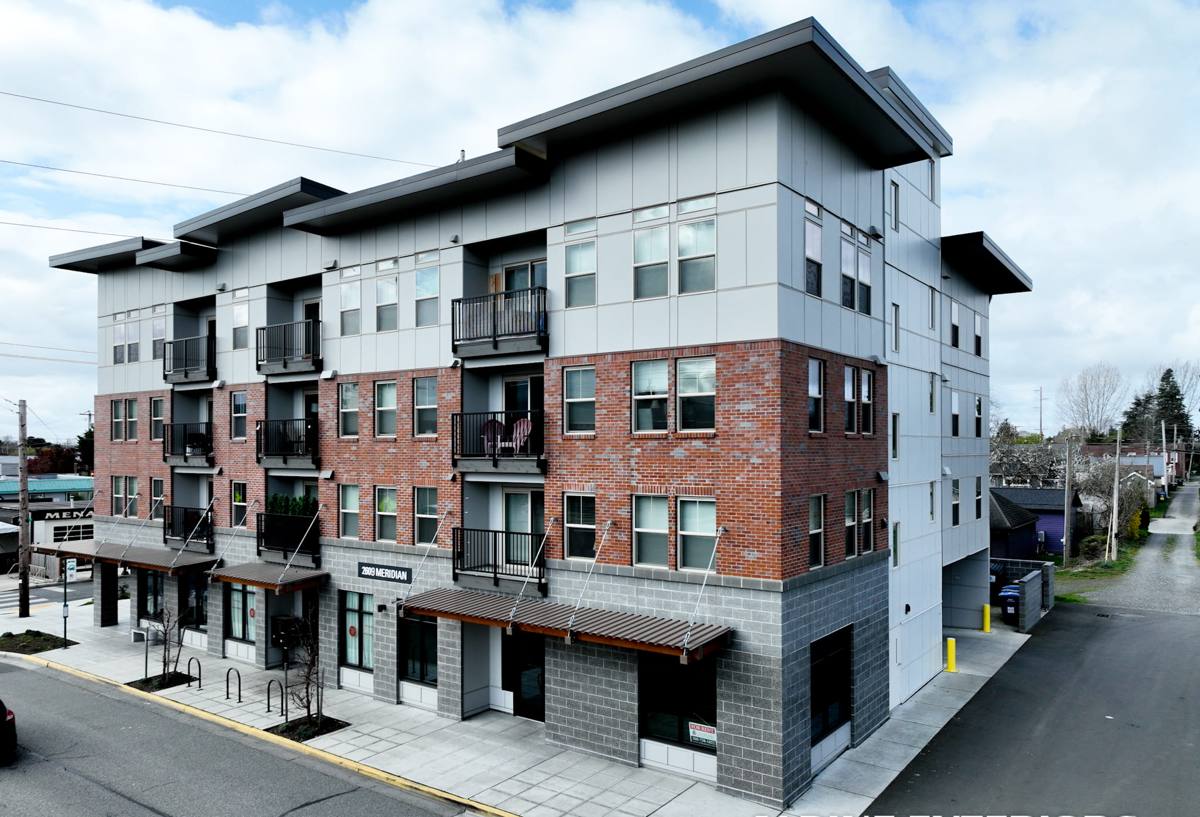
What Bow Homes Actually Need From Their Siding
Given that climate, a siding system for a Bow home needs to do four things well, not just one:
- Resist moisture absorption — the material itself shouldn't wick or hold water from driving rain
- Hold a factory finish — paint applied on-site tends to fail faster under constant salt and UV exposure than a factory-cured finish
- Stay dimensionally stable — materials that swell and shrink with moisture cycles open gaps at the joints where water gets in
- Tolerate cleaning — moss and algae need to be washable without damaging the surface underneath
This is the exact set of requirements James Hardie fiber cement siding was engineered to meet, which is why it's the only product we put on homes in this area. It's not a marketing preference — it's a match between the material's actual properties and what this specific climate does to a house.
The James Hardie System We Install
HardieZone HZ5
James Hardie engineers its siding by climate zone, not as a one-size-fits-all product. Western Washington, including Skagit County, falls in the HZ5 zone, which is formulated for high-moisture, freeze-capable climates. That matters more than most homeowners realize — an HZ10 product built for hot, dry southern climates doesn't perform the same way here, and installing the wrong zone product is a mistake we won't make.
ColorPlus Technology
Rather than field-painting siding after installation, ColorPlus finishes are baked on at the factory in multiple coats under controlled conditions. In a salt-air, high-UV coastal environment, that factory bond holds color and resists fading, chipping, and peeling far longer than a site-applied paint job — which is exactly the surface stress Bow homes deal with year-round.
Product Lines
Depending on the home's style, we typically work with HardiePlank lap siding for traditional and craftsman-style homes, HardiePanel for board-and-batten or modern looks, and HardieShingle where a shake-style accent fits the architecture. All three are available in the HZ5 formulation with ColorPlus finishes.
What a Correct Installation Involves
James Hardie siding is only as good as the installation behind it. In a climate like this one, a handful of details separate a system that lasts decades from one that fails early — and they're the same details that get skipped when a crew doesn't regularly work this coastline.
- Proper starter strip and flashing at the base of every wall, so water is directed out and away rather than behind the siding
- A drainage plane or rainscreen gap behind the siding, which gives any moisture that does get past the surface a path to escape instead of sitting against the sheathing
- Correct fastener placement and spacing per James Hardie's published fastening schedule — over-driven or misplaced nails crack panels and create entry points for water
- Proper caulking and sealant only where Hardie's specifications call for it, not everywhere, since over-caulking traps moisture instead of shedding it
- Field-cut edges primed and sealed before installation, since exposed cut edges are the fastest way for a factory-finished board to absorb water
- Correct clearance from grade, decks, and roof lines so the bottom edge of the siding never sits in standing water or snow
Skip any one of these and the material's built-in advantages stop mattering. This is why we treat installation as half the value of the job, not a formality after the product is chosen.
Our Process for a Bow Siding Project
| Step | What Happens |
|---|---|
| Assessment | We inspect the existing siding, sheathing, and trim for moisture damage, rot, or movement before quoting anything |
| Product selection | We match the HZ5 product line, profile, and ColorPlus color to the home's style and exposure |
| Tear-off and prep | Old siding comes off, sheathing is checked and repaired as needed, and a proper weather-resistant barrier goes down |
| Drainage plane install | We build in the rainscreen gap that lets any incidental moisture drain and dry |
| Siding installation | Installed to James Hardie's fastening and clearance specifications, not shortcuts |
| Final inspection | We walk the job checking seams, flashing, and finish before calling it done |
Why a Bow-Familiar Crew Matters
Siding installation isn't identical everywhere in Skagit County. A crew that mostly works drier inland projects can install a technically correct system that still underperforms on a property exposed to salt air and driving rain, simply because the margin for error is smaller here. Knowing which walls in a given micro-area take the worst weather, how much drainage capacity to build in, and which HZ5 products hold up best against this specific combination of salt, rain, and moss comes from doing this work in this area repeatedly — not from a general siding background.
There's also a practical side: permitting and inspection expectations can vary by jurisdiction within Skagit County, and a crew that already knows the local requirements moves through that process without surprises that stall a project.
James Hardie vs. Other Siding Options in This Climate
| Factor | James Hardie Fiber Cement | Vinyl | Cedar / Primed Wood |
|---|---|---|---|
| Moisture resistance | Engineered for it; won't rot | Doesn't absorb water, but seams can let it behind the panel | Absorbs moisture; prone to rot without diligent upkeep |
| Finish durability | Factory ColorPlus finish holds color for years | Color molded in but can fade and chalk with UV/salt exposure | Needs repainting or restaining on a recurring cycle |
| Moss/algae resistance | Cleanable surface, doesn't feed growth | Cleanable, but can crack when pressure-washed aggressively | Porous surface holds moisture that feeds moss and mildew |
| Dimensional stability | Very stable; minimal swelling | Expands/contracts with temperature swings | Swells and shrinks with moisture, opening joints |
| Fire resistance | Non-combustible | Combustible | Combustible |
This isn't a knock on any manufacturer — vinyl and cedar both have legitimate uses in the right context. It's why, specifically for the moisture and salt exposure that Bow and the rest of coastal Skagit County deal with, we standardized on James Hardie and don't install the alternatives.
Signs Your Bow Home May Need New Siding
- Visible warping, buckling, or gaps opening up between siding boards
- Paint that's peeling, bubbling, or chalking faster than a normal repaint cycle would explain
- Soft or spongy spots when you press on the siding, which usually means moisture has reached the substrate
- Persistent moss or dark staining that comes back quickly after cleaning
- Rising energy bills that don't match any other change to the home, which can point to compromised siding and insulation
- Visible cracking at panel edges or around fasteners
Any one of these on its own isn't necessarily an emergency, but a combination is usually a sign the siding is past the point where patching makes sense.
Maintenance and Long-Term Performance
One of the practical advantages of James Hardie siding in this climate is how little it asks of a homeowner afterward. An occasional rinse to keep salt residue and moss spores from building up, a visual check of caulking and trim after major storms, and prompt attention to any impact damage are really the extent of it. There's no repainting cycle to plan around and no annual sealing routine. That lower maintenance burden is part of why the upfront cost difference compared to vinyl narrows out over the life of the siding — and why the material still looks like it did on day one well past the point where painted wood or aging vinyl would show its age.
If you'd like a straightforward look at what your home's exterior needs and what a correctly installed James Hardie system would cost, we're happy to walk the property with you and give you a free, no-pressure estimate using the form below.