 Skagit County
 Why Edison's Climate Is Hard on Siding
Edison sits close to the tidal flats and farmland of western Skagit County, which means homes here take on a specific combination of punishment that siding in drier, more inland parts of the county doesn't see nearly as much. Salt-laden air drifts in off the bay on a regular basis, and over years that salt film settles on exterior surfaces, working into seams, fastener heads, and any spot where paint or finish has started to thin. Add in wind-driven rain that comes across open farmland with nothing to slow it down, and you get water pressure against walls that inland siding rarely has to handle.
Then there's shade and moisture. Low winter sun angles, tree cover, and the general dampness of a coastal Skagit County property stretch moss and algae season out for much of the year. Moss doesn't just look bad — it holds water against a wall surface long after the rain has stopped, which is exactly the condition that causes rot, paint failure, and fastener corrosion to show up years earlier than they should. A siding replacement done for an Edison home needs to be built with all three of these factors — salt air, driving rain, and extended moss exposure — in mind from the start, not treated as an afterthought.
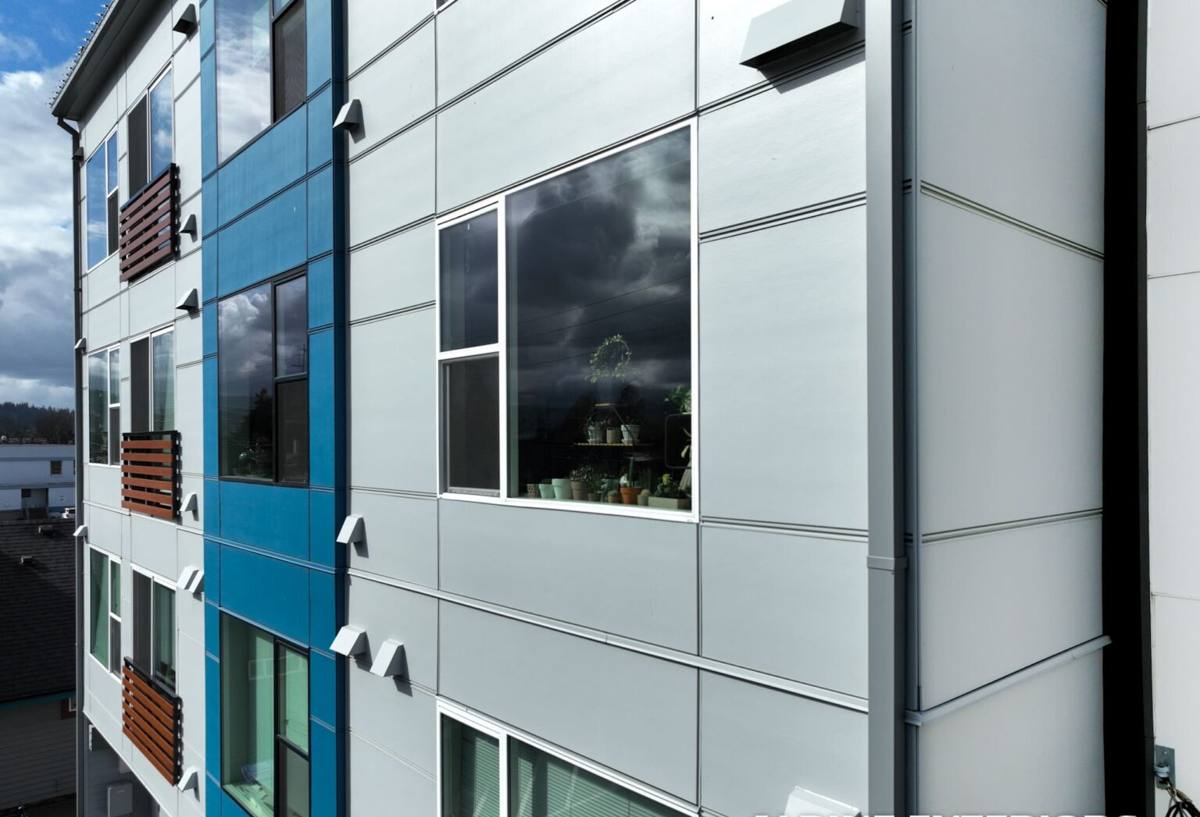
What "Correct" Siding Replacement Actually Involves
Siding replacement is not just pulling off old boards and nailing up new ones. The materials you can see are only half the job — the other half is the water management system underneath, and that's where most long-term failures actually start.
Tear-Off and Sheathing Inspection
Once the old siding is off, the sheathing underneath gets inspected before anything new goes up. In a wet coastal environment like Edison's, it's common to find soft spots around old penetrations, window corners, or low wall sections where water has been getting in unnoticed for years. Replacing siding without checking what's behind it just seals the same problem back up.
Weather-Resistive Barrier and Flashing
A properly lapped weather-resistive barrier, correctly integrated flashing at windows, doors, and roof-to-wall transitions, and careful attention to any penetration (vents, hose bibs, light fixtures) is what actually keeps wind-driven rain out of the wall assembly. This detail work matters more here than in drier inland areas because Edison's rain doesn't just fall — it gets pushed sideways.
Drainage Gap Behind the Siding
Any moisture that does get past the outer surface needs somewhere to go. A drainage gap between the siding and the water-resistive barrier lets incidental moisture drain and lets the wall assembly dry out, rather than trapping water against the sheathing where it can sit and cause damage.
Fastening Schedule and Clearances
Correct fastener spacing, proper clearance from the ground and from roof lines, and following manufacturer-specified gaps at butt joints all affect how well the siding performs over time. Skipping or shortcutting these steps is one of the most common reasons a siding job fails early — the material gets blamed when the installation was actually the problem.
Why We Install Only James Hardie Fiber Cement
We don't install vinyl siding, LP SmartSide, primed spruce, cedar, or other fiber cement brands. That's a deliberate standard, not a marketing line, and it comes down to how those products hold up under the exact conditions Edison homes deal with. Vinyl expands and contracts with temperature swings and can warp or crack under sustained UV and moisture exposure; wood products, even engineered ones, require ongoing maintenance to keep moisture out of the substrate, and a long moss season makes that maintenance harder to keep up with. These aren't bad products in every setting — but they're not what we're willing to put our name behind here.
James Hardie fiber cement is non-combustible, engineered in different formulations for different climate zones, and finished with ColorPlus Technology — a factory-applied, baked-on finish that holds color and resists fading far better than field-applied paint, which matters when a home is fighting salt air and UV exposure year-round. It doesn't rot, it doesn't attract the moisture-loving pests that wood siding can, and it comes with a strong transferable warranty when installed to spec. For a property in a coastal Skagit County setting, that combination is what actually holds up — not just what looks good on install day.
Our Process for Edison Siding Projects
- On-site assessment — we look at current siding condition, moisture damage, trim and flashing condition, and sun/wind exposure specific to the property.
- Tear-off and sheathing check — old material comes off and the sheathing gets inspected before we move forward.
- Moisture barrier and flashing installation — the water management layer goes in first, correctly lapped and integrated at every penetration.
- Hardie installation to manufacturer spec — correct fastening, clearances, and joint treatment, not shortcuts.
- Trim, caulking, and finish detail — the small details that determine how the job looks and performs five and ten years out.
- Final walkthrough — we go over the finished work with the homeowner before calling the job done.
Signs Your Edison Home May Need Siding Replacement
Some warning signs are obvious; others are easy to miss until they've caused real damage. Worth checking for:
- Soft or spongy spots when you press on the siding, especially near the bottom of walls or below windows
- Paint that's bubbling, peeling, or failing faster than it should on a repainted surface
- Persistent moss or algae growth that comes back quickly after cleaning
- Visible gaps, warping, or cracking at panel joints and corners
- A musty smell or visible staining on interior walls near exterior corners
- Rusting or corroded fasteners and trim pieces
- Siding that's more than 20-25 years old and hasn't been reassessed recently
What Drives the Cost of a Siding Replacement Project
Every property is different, and we don't quote numbers without seeing the job, but the factors below are what actually move a project's cost up or down.
| Factor | Why It Matters |
|---|---|
| Extent of sheathing damage found at tear-off | Rot or moisture damage behind old siding needs to be repaired before new siding goes up, which adds labor and material |
| Home size and wall complexity | More corners, dormers, and roof-to-wall transitions mean more flashing and detail work |
| Siding profile and trim selection | Lap width, trim style, and accessory choices affect both material cost and install time |
| Current siding removal | Multiple layers of old siding or difficult removal (asbestos-era products, for example) add time |
| Access and site conditions | Landscaping, slope, or tight clearances around the home affect scaffolding and staging needs |
Why a Crew That Already Works in Skagit County Matters
A crew that regularly works this part of Skagit County has already seen how salt air, coastal wind patterns, and shaded, moss-prone exposures play out on real homes — not just in a training manual. That experience shows up in small decisions during a project: where extra flashing attention pays off, which wall exposures need closer inspection at tear-off, and how to sequence a job around the area's weather windows so materials aren't sitting exposed longer than necessary. It also means familiarity with county permitting requirements, so a project doesn't stall out on paperwork that a crew unfamiliar with the area might miss.
Beyond the technical side, a local crew is accountable in a way an out-of-area contractor isn't. If a question comes up two years after installation, we're still working in the same communities and easy to reach — not a name from a job that moved on to another region.
Caring for Your New Siding
James Hardie siding is low-maintenance, but "low-maintenance" doesn't mean "no maintenance," especially in a salt-air, high-moisture setting like Edison. A periodic rinse-down helps remove salt film and organic buildup before it has a chance to hold moisture against the surface. Keeping vegetation trimmed back a few inches from exterior walls improves airflow and cuts down on the shaded, damp conditions that encourage moss. Clean gutters and downspouts that direct water well away from the foundation also go a long way toward protecting both the siding and what's behind it, year after year.
If you're weighing a siding replacement for a home in Edison or elsewhere in Skagit County, we're glad to walk the property with you, point out what we see, and put together a straightforward, no-pressure estimate — no obligation, just a clear look at what the job actually involves.