 Skagit County
 Hamilton's Climate Is Harder on Siding Than It Looks
Hamilton sits in the Skagit River valley, tucked between forested foothills that funnel moisture up from Puget Sound and hold it there. Homeowners here deal with a different set of pressures than folks on a dry east-side lot: long stretches of damp air, driving rain that comes sideways off the valley, and shaded, tree-covered yards that never quite dry out between storms. Add in the broader Skagit County pattern of salt-tinged marine air pushing inland, and you've got a climate that's steadily working against whatever is nailed to the outside of a house.
None of this is dramatic on any given day. It's cumulative. Siding in Hamilton doesn't usually fail from one bad storm — it fails from years of moisture sitting against a wall that can't shed it fast enough, moss and mildew taking hold in shaded corners, and paint or finish breaking down faster than it would in a drier part of the state. By the time damage is visible from the driveway, it's often been developing behind the surface for a while.
What a Long Moss Season Actually Does to a Wall
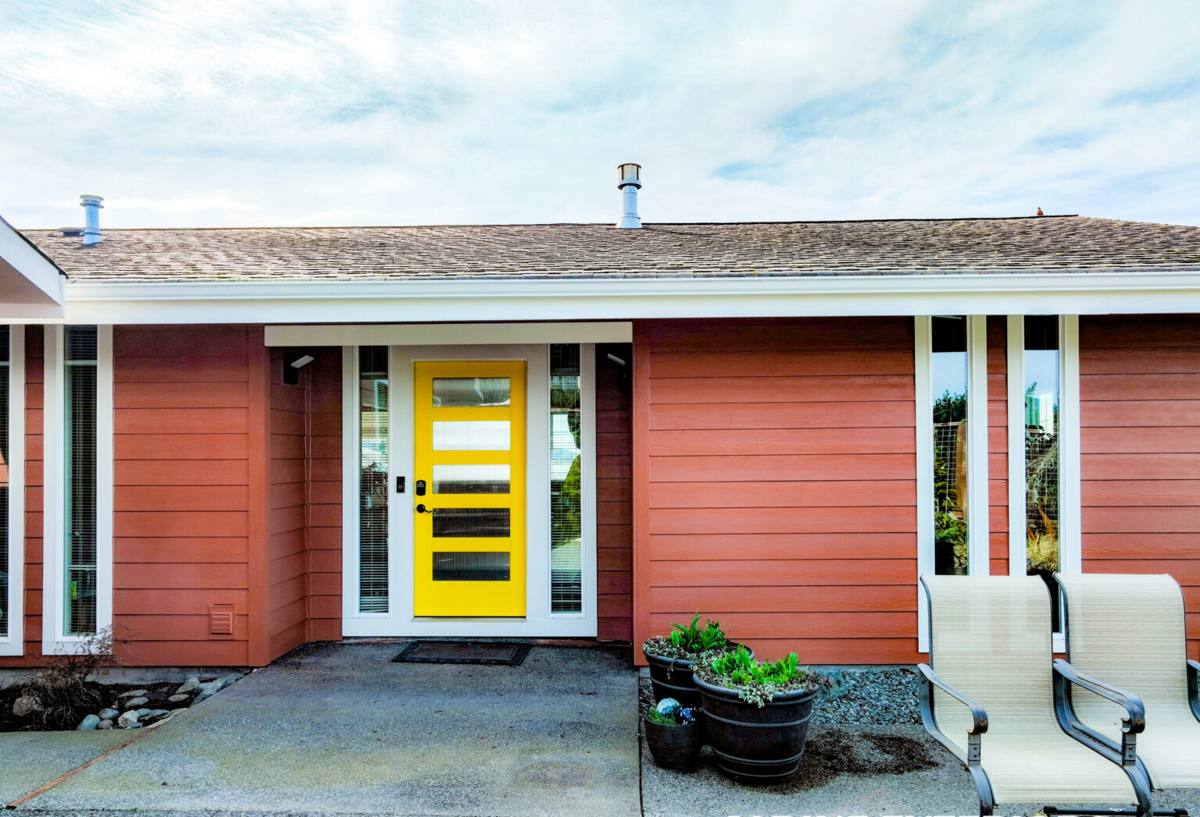
Skagit County's moss season isn't a cosmetic problem — it's a moisture problem wearing a green coat. Moss holds water against a surface long after a storm has passed, and on north-facing walls or anywhere shaded by trees, that dampness rarely gets a real chance to dry out between fall and late spring. Over time this:
- Breaks down paint and factory finishes faster than sun-exposed walls
- Feeds rot in any wood-based siding, trim, or sheathing it sits against
- Traps grime and organic buildup in seams, laps, and butt joints
- Makes pressure-washing a recurring maintenance chore instead of a once-a-decade job
Driving rain compounds it. Rain that hits a wall at an angle, rather than falling straight down, gets forced into laps, seams, and fastener penetrations that a calmer climate would never test. A siding system that isn't detailed correctly for that kind of exposure will show it first at the bottom courses, around window heads, and at inside corners — exactly the spots we check first on an inspection.
Signs a Hamilton Home Needs Siding Replacement
Repainting or patching can buy time, but some signs mean the siding itself — not just the finish — has reached the end of its service life.
- Soft, spongy, or crumbling spots when you press on the siding, especially near the bottom of walls
- Persistent moss or black streaking that comes back within a season of cleaning
- Paint that's peeling, bubbling, or won't hold for more than a couple of years
- Visible cupping, warping, or delamination in wood-based or engineered wood panels
- Gaps opening at seams, corners, or trim boards
- Rising energy bills with no other explanation, suggesting a compromised weather barrier
- Interior signs — musty smell, staining on interior walls near exterior corners — that point to moisture getting past the siding
Any one of these on its own might just need attention. Several together, especially on a home more than 20-25 years old, usually mean it's time to talk about full replacement rather than another round of patching.
Why We Don't Reach for Vinyl or Wood-Based Panels Here
Vinyl siding is inexpensive and low-maintenance in the sense that it doesn't need paint, but it isn't rigid, and in a climate with real temperature swings and driving rain it can warp, crack in cold snaps, and fade unevenly over time. It also isn't fire-resistant, which matters more each year in this region.
Wood-based engineered siding and traditional cedar can look excellent, but they're organic materials in a climate built to break organic materials down. They need consistent paint maintenance, careful moisture management at every seam, and they're the products most vulnerable to exactly what Hamilton's moss season and driving rain deliver year after year. We're not saying these products fail on every home — plenty of owners maintain them diligently for years. We're saying the maintenance burden and moisture risk they carry isn't one we're willing to install and stand behind on homes in this climate.
Why We Install Only James Hardie Fiber Cement
James Hardie fiber cement is cement, sand, and cellulose fiber — it doesn't rot, it doesn't feed moss the way wood fiber does, and it's non-combustible. Hardie also engineers specific product lines (HZ5, HZ10) for different climate zones, so the board specified for the Pacific Northwest is built with this region's moisture exposure in mind, not a generic national spec.
The factory-applied ColorPlus finish is baked on under controlled conditions rather than brushed on outdoors, which is a real advantage in a climate where field-applied paint has a narrow window of good drying weather. That finish is backed by its own separate warranty against fading and peeling, on top of Hardie's product warranty.
| Factor | James Hardie Fiber Cement | Vinyl | Wood / Engineered Wood |
|---|---|---|---|
| Moisture resistance | Excellent — cement-based, doesn't rot | Good, but can warp/crack with heat and cold | Vulnerable without diligent maintenance |
| Moss/mildew resistance | High — no organic fiber to feed growth | Moderate — surface growth still occurs | Low — organic material invites growth |
| Fire resistance | Non-combustible | Combustible | Combustible |
| Finish durability | Factory-baked ColorPlus, separate finish warranty | Color molded in, can fade unevenly | Field-applied paint, needs repainting cycles |
| Typical repaint interval | Rarely, often 15+ years | Never repainted, but can't be easily refreshed | Every 5-8 years in this climate |
What a Correct Siding Replacement Actually Involves
Swapping old siding for new boards is the visible part of the job. The parts that actually determine whether the new siding lasts happen underneath it, and they matter more in a climate like Hamilton's than almost anywhere else in the state.
Tear-off and inspection
Removing the old siding is also the only real chance to see the sheathing underneath. Any rot, soft spots, or hidden moisture damage gets found and repaired before anything new goes on — covering that up is how the same problem comes back in a few years.
Weather-resistive barrier
A correctly lapped and sealed weather barrier is what actually keeps driving rain out of the wall assembly. Every penetration, seam, and transition needs to be detailed so water sheds down and out, not sideways into the wall.
Flashing at every transition
Windows, doors, decks, and roof-to-wall intersections are where most water intrusion actually starts. Correct flashing, integrated with the weather barrier in the right order, is non-negotiable in a climate that tests it every winter.
Fastening and clearances to Hardie spec
Fiber cement has to be fastened, gapped, and clearanced to manufacturer specification — including ground clearance and gaps at trim — to perform and to keep the warranty valid. Installed loosely or without the right clearances, even the best board underperforms.
Our Process, Start to Finish
- On-site assessment — we look at current siding condition, sheathing risk areas, and any moisture or moss patterns specific to the lot and its sun/shade exposure
- Written estimate — clear scope, product line and color selection, and timeline, no vague allowances
- Tear-off and sheathing repair — old material removed, any damage addressed before covering anything back up
- Weather barrier and flashing installation — the part that actually keeps water out for the next 30+ years
- Hardie installation to spec — proper fastening, clearances, and joint treatment
- Final walkthrough — we go over the finished work with the homeowner before calling the job done
What Siding Replacement Costs Depend On
Every home is different, and we won't put a number on a job we haven't seen, but the same factors drive cost on nearly every Hamilton project:
| Factor | Why It Matters |
|---|---|
| Home size and wall complexity | More corners, gables, and dormers mean more cutting, flashing, and labor time |
| Sheathing condition | Rot found during tear-off adds repair scope before new siding can go on |
| Product line and profile | Lap width, texture, and trim details affect material cost |
| Site access | Trees, slopes, and tight driveways common in the valley can affect staging and labor |
| Existing trim and detail work | Matching or upgrading trim, fascia, and soffit adds scope beyond field siding |
Why It Matters to Hire a Crew That Already Works in Skagit County
Detailing a wall assembly for a dry inland climate and detailing one for a river valley with a long wet season are two different jobs, even though the materials look the same. A crew that already works Hamilton and the rest of Skagit County knows where driving rain tends to find its way in, which orientations grow moss fastest, and how much clearance and flashing margin to build in rather than the bare minimum a spec sheet allows. That local pattern recognition is what separates siding that looks right at handoff from siding that's still performing in fifteen years.
If your Hamilton home's siding is showing its age — or you just want an honest read on how much life is left in what's there — we're happy to take a look and give you a straight answer. Reach out for a free, no-pressure estimate, no obligation either way.