 Skagit County
 Siding Repair Built for Hamilton's Weather, Not Just the Damage in Front of You
Hamilton sits along the Skagit River, tucked against the tree cover and rising ground of the Cascade foothills — a setting that keeps homes shaded, damp, and slower to dry out than open, sun-exposed lots elsewhere in the county. That combination matters more than most homeowners realize when it comes to siding repair. A crack or a soft board isn't just a cosmetic problem here; it's an opening for moisture in a climate that doesn't give a wall much of a break to recover between storms.
Skagit County's weather doesn't stay near the water. Moist, salt-tinged marine air moves up the river valleys, driving rain rolls through with fall and winter storm systems, and shaded, tree-lined properties like the ones common around Hamilton can carry moss and algae growth for most of the year. A repair that only addresses what's visible from the ground — without accounting for what that climate is doing behind the siding — tends to fail again, often faster than the original damage took to show up.
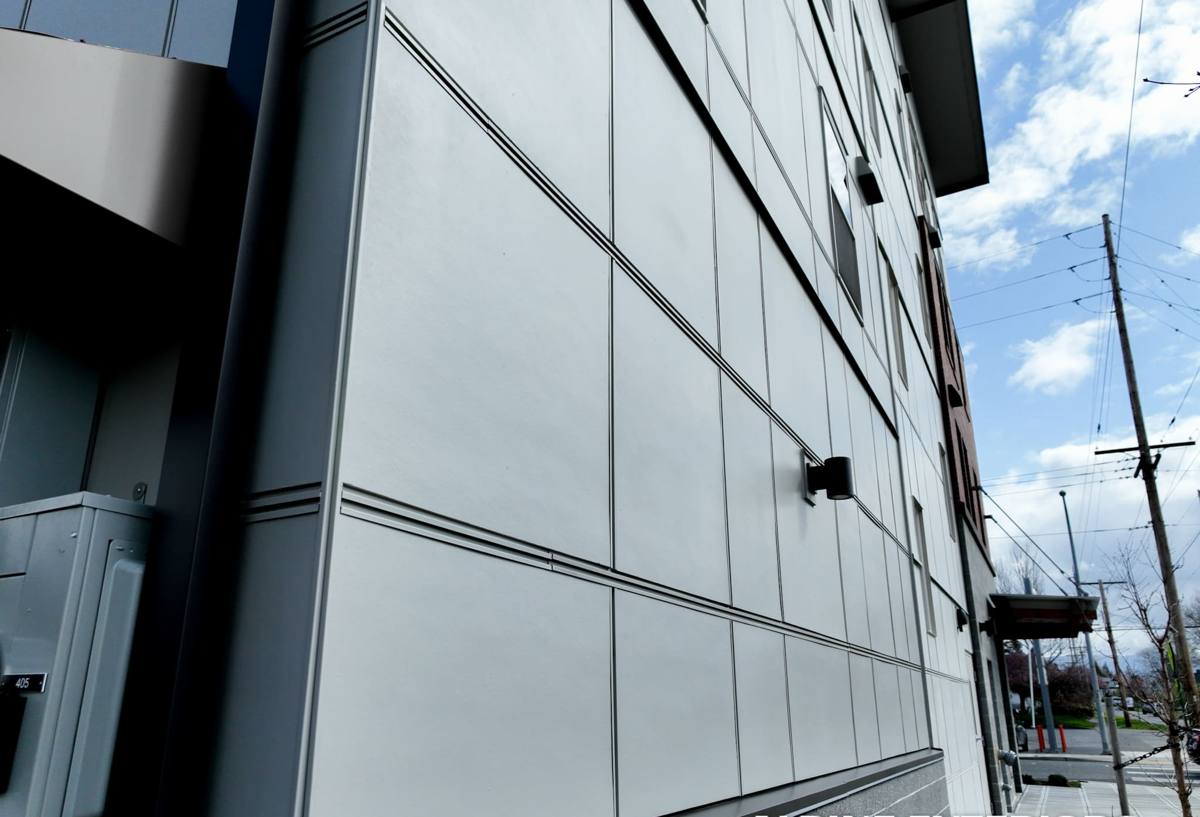
Signs a Repair Is Needed — and What They Usually Mean
Visual Signs
Cracked, split, or warped boards; panels pulling away from the wall at seams or corners; peeling or bubbling paint concentrated in one area; and visible moss or algae buildup that keeps returning no matter how often it's cleaned. Any of these on their own can be a small fix. Several showing up on the same wall usually means something behind the siding is feeding the problem.
Moisture Signs
Staining or dark streaking below a seam, a musty smell near an exterior wall from the inside, soft or spongy drywall, or paint that keeps failing in the same spot are all signs that water is getting past the siding itself. These are the signs worth acting on quickly, because moisture problems compound the longer they sit.
Structural Signs
Siding that flexes or feels soft when pressed, boards that have separated from the sheathing, or fasteners that have backed out or rusted through point to damage that's gone past the surface. At this stage, a proper repair means opening up the area to see what's actually happening underneath, not just replacing what's visible.
What a Correct Siding Repair Actually Involves
A repair that holds up in this climate is not just "match the piece and caulk the edges." It's a smaller version of the same process that goes into a full installation, applied to a specific section of wall.
Diagnose Before Touching a Board
The first step is figuring out why the damage happened — impact, a failed seal, a flashing gap, or long-term moisture exposure — because the answer changes the repair. Replacing a board without fixing the cause just buys time before the same spot fails again.
Check What's Behind the Siding
Once the damaged section is removed, the water-resistive barrier, sheathing, and flashing underneath need to be inspected, not assumed to be fine. If the barrier has a gap, a tear, or was lapped incorrectly at some point, that's the real source of the problem and it has to be corrected before anything new goes back on.
Match the Material and the Finish
Whether the existing siding is fiber cement, vinyl, engineered wood, or cedar, a visible patch job with an obvious color or texture mismatch isn't a finished repair — it's a repair that will bother you every time you look at that wall. Matching factory-finished material, in particular, takes knowing what's actually installed and sourcing the right profile and color, not just something close.
Fasten and Seal to Spec
Correct fastener type, spacing, and depth, along with properly sealed joints and cut edges, are what keep a repair from becoming a recurring one. These are small details that take no longer to do right than to do wrong, but they're the difference between a repair that lasts and one that reopens the same problem in a year or two.
Repair or Replace? How We Make the Call for Hamilton Homes
Not every damaged section needs a full re-side, and not every "quick patch" candidate should stay a patch. The honest answer depends on a few factors we walk through on-site before recommending either direction.
| Factor | Repair Usually Makes Sense | Replacement Usually Makes Sense |
|---|---|---|
| Extent of damage | Limited to a few boards or one section of wall | Spread across multiple walls or elevations |
| Condition behind the siding | Water-resistive barrier and sheathing intact and dry | Sheathing soft, rotted, or showing long-term moisture intrusion |
| Material match | Existing product is still available or a close match can be sourced | Product is discontinued, faded beyond match, or was prone to failure to begin with |
| Cause of damage | A one-time event — storm impact, an isolated fastener failure | An ongoing issue — chronic moisture retention, failed flashing across the house |
| Repair history | This is the first repair needed in this area | The same section has already been repaired once or more |
When repairs start piling up in different spots, or the cost of chasing them approaches what a re-side would run, we say so directly. We'd rather give you a straight answer than sell a repair we don't think will hold.
Our Siding Repair Process
- On-site inspection of the damaged area and a walk of the rest of the exterior for related issues
- Diagnosis of the cause, including a check of moisture levels where damage suggests water intrusion
- A clear repair-vs-replace recommendation, explained in plain terms, before any work starts
- Sourcing matching material and color, or proposing a sensible transition detail if an exact match isn't possible
- Careful removal of the damaged section and inspection of the water-resistive barrier and flashing underneath
- Repair of anything found behind the siding before new material goes back on
- Installation to manufacturer specification — fastening, clearances, and sealed joints
- Final walk-through so you can see exactly what was done and why
Why Material Choice Still Matters, Even for a Repair
We install James Hardie fiber cement exclusively, and that shows up in repair work in a specific way: when a section is damaged badly enough to need full replacement rather than a patch, we replace it with Hardie rather than whatever happened to be on the house originally. There are a few reasons that's worth explaining rather than just doing quietly.
Hardie's ColorPlus factory finish is formulated to match consistently across batches, which matters when you're trying to blend a repaired section into siding installed years earlier. Its fiber cement composition doesn't absorb and release moisture the way wood-based products do, so a repaired section isn't sitting there as a future weak point in a climate that keeps testing every seam. And because Hardie backs its products with a strong transferable warranty, a repair done with it carries manufacturer support that older or discontinued materials often no longer offer.
That said, if your existing siding is vinyl, engineered wood, or cedar and the damage is limited and the material is still holding up structurally, a like-for-like repair is often the more sensible near-term move — we're not going to talk you into replacing more than the situation calls for. The material conversation only becomes a real decision point when the damage is extensive enough that replacement is already on the table.
Why Hiring a Crew That Already Works in Hamilton Matters
Siding repair is one of those jobs where local familiarity actually changes the outcome. A crew that regularly works Hamilton and the surrounding Skagit County towns has already seen how moss concentrates on the shaded, tree-covered walls that are common in this area, which sides of a house take the worst of the driving rain, and where older installations in this part of the county tend to develop the same recurring issues. That's the kind of pattern recognition that speeds up an accurate diagnosis instead of guessing.
There's also a practical side to it: a crew based nearby can get to a repair faster, which matters when you're dealing with active water intrusion, and can follow up easily if a question comes up after the work is done. And because Skagit County has its own permitting and inspection expectations, a contractor who already works here isn't learning the local requirements on your project.
Before You Call: A Quick Homeowner Checklist
- Is the damage limited to one area, or do you see similar issues on more than one wall?
- Do you notice staining, soft spots, or a musty smell on the inside of that wall?
- Has this same section of siding been repaired before?
- Do you know roughly what your siding is made of and how old it is?
- Is moss or algae buildup concentrated on shaded or north-facing walls?
- Has the damage gotten worse over the past season, or has it stayed the same?
Having rough answers to these ready before an inspection helps us give you a faster, more accurate read on whether you're looking at a repair, a partial re-side, or something more involved.
Get a Straight Answer, No Pressure
If you've got a section of siding on your Hamilton home that's cracked, staining, or just not sitting right, we're happy to come take a look and tell you honestly what we find — repair or replace. Reach out below for a free, no-pressure estimate.