 Skagit County
 Siding That Actually Holds Up in Concrete, WA
Concrete sits in the Skagit River valley, tucked against the foothills of the North Cascades, and that setting shapes what a house needs from its siding. The valley holds moisture longer than open, breezy ground — fog sits in the low areas, tree cover keeps siding shaded and damp well after a storm passes, and the growing season for moss and algae runs long here compared to drier parts of the county. Add in driving, wind-pushed rain off the foothills and the freeze-thaw swings that come with a river valley's cooler temperatures, and you've got a climate that's genuinely hard on exterior materials. Elsewhere in Skagit County, closer to saltwater, homes deal with salt air on top of all that. Concrete's version of the problem is less about salt and more about sustained dampness: siding here needs to shed water fast, resist moisture intrusion at every seam, and not feed the moss and mildew that thrive in shaded, humid conditions.
This page is about one thing: installing James Hardie fiber cement siding correctly on homes in and around Concrete, done by a crew that already knows this stretch of the valley.
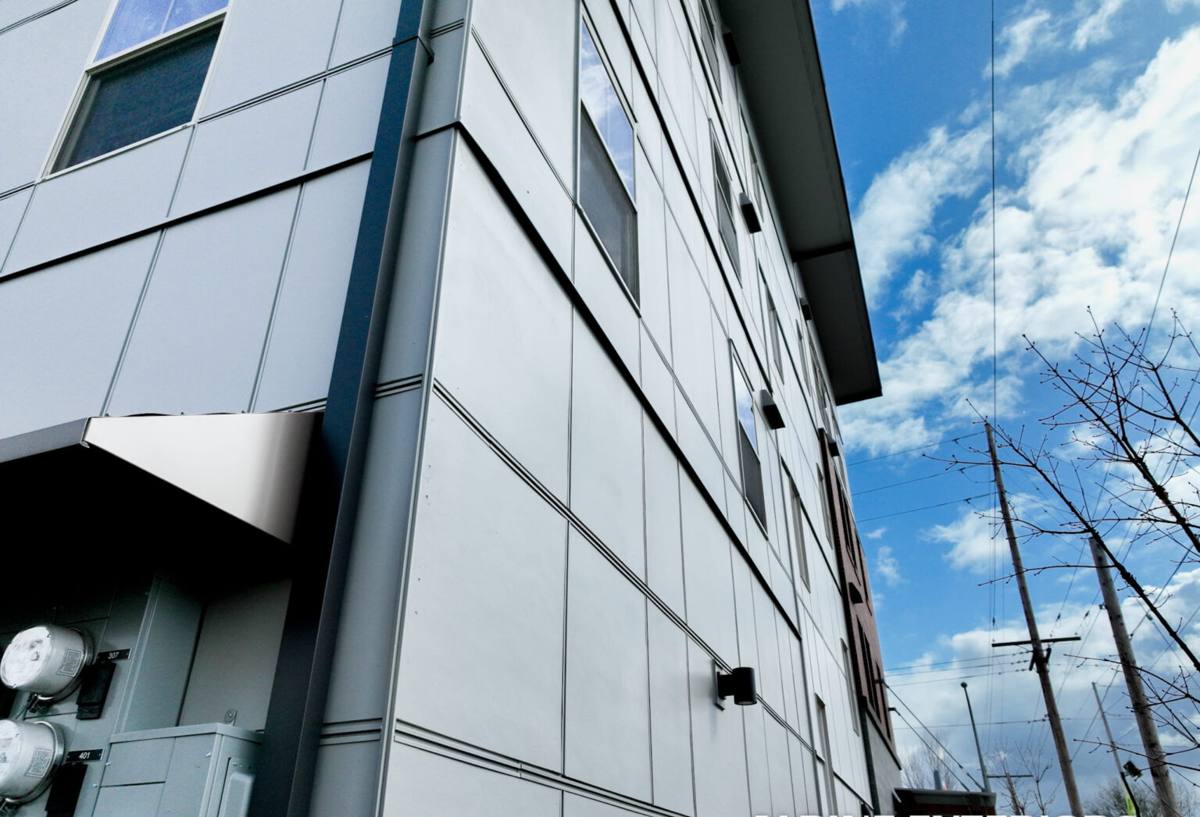
What This Climate Does to the Wrong Siding Choice
A lot of siding failures in this area aren't dramatic — they're slow. Wood and wood-composite products absorb moisture at cut edges and joints, and in a valley where things don't fully dry out between rain events, that moisture has more time to do damage before it evaporates. Vinyl doesn't rot, but it doesn't stop moss and algae growth either, and it can warp or buckle with the freeze-thaw cycling that a river valley sees more of than the immediate coastline. Engineered wood products depend heavily on an intact factory coating; once that coating is compromised at a scratch or a poorly sealed cut, the underlying wood fiber is exposed to exactly the kind of prolonged dampness Concrete gets more of than most.
None of this means those products are junk everywhere they're used. It means this specific climate — shaded, damp, slow to dry — punishes any weakness in a siding system's moisture management faster than a drier area would. That's the standard we install to.
The Moss Problem Specifically
Moss and algae aren't just a cosmetic nuisance here — they hold moisture against the siding surface, which accelerates whatever underlying weakness a product has. A siding material that can shed water and dry quickly limits how much of a foothold moss gets in the first place. One that traps or absorbs moisture gives moss exactly the damp surface it needs to spread.
Why Fiber Cement Is the Right Call for This Valley
James Hardie fiber cement is cement, sand, and cellulose fiber, factory-cured. It doesn't rot, it isn't a food source for moss and algae the way wood fiber can be, and it holds its shape through the freeze-thaw and wet-dry cycling that's routine in a river valley climate. The ColorPlus factory finish is baked on under controlled conditions rather than field-applied, which matters in a place where humidity can interfere with a site-applied coating curing properly. For homes in Concrete, that combination — a material that doesn't feed moss and a finish that isn't fighting the local humidity to cure right — is the whole reason we standardized on this product and stopped installing the alternatives.
James Hardie also engineers its product lines by climate zone. For the Pacific Northwest, that means HZ5 formulations built around moisture and moderate freeze-thaw exposure rather than the desert-heat or hard-freeze profiles other regions need. That's not a marketing detail — it's the difference between a board engineered for this valley's actual weather and one that just happens to be sold here.
What a Correct Installation Actually Involves
Fiber cement performs the way it's supposed to only when it's installed to spec. In a damp, shaded valley like this one, the installation details matter more than they would somewhere drier, because there's less margin for a moisture path to dry out before it causes a problem. A correct job includes:
- A drainage plane and rainscreen gap behind the siding, so any moisture that gets past the surface has somewhere to go and can dry out
- Proper flashing at every window, door, and roofline intersection — the most common places water actually gets behind siding
- Correct fastener type, spacing, and penetration depth per James Hardie's published specs, not generic nailing patterns
- Factory-cut and pre-primed edges kept intact wherever possible, with any field cuts properly sealed
- Manufacturer-specified clearances at grade, decks, and roof lines so siding isn't sitting in standing water or leaf litter
- Caulking only where James Hardie's install guide calls for it — not as a substitute for proper flashing and gapping
Skip any of these and you can install genuine James Hardie board and still end up with the exact moisture problems the product is supposed to prevent. The material is only as good as the install.
How the Job Works, Start to Finish
1. Walk-Through and Assessment
We look at the existing siding, the condition of the sheathing underneath where accessible, and the specific exposure your home has — how much shade, how close to the river or drainage, which walls take the worst of the wind-driven rain. That shapes the plan, not a one-size-fits-all spec.
2. Tear-Off and Substrate Check
Old siding comes off and we check what's underneath before anything new goes up. Hidden rot or moisture damage from a prior installation gets addressed at this stage — covering it over with new siding just hides the problem again.
3. Water Management First
House wrap, drainage plane, and flashing go in before a single piece of siding is hung. This is the step that determines whether the finished wall actually keeps water out over the next 20-plus years, and it's the step that's easiest for a rushed crew to shortcut.
4. Installing the Siding
HardiePlank, HardiePanel, or HardieShingle — whichever profile fits the home — goes up per manufacturer spec: correct fastening, correct clearances, correct joint treatment.
5. Final Inspection
We walk the finished job checking flashing lines, caulk joints, clearances, and fastening before calling it done.
Fiber Cement vs. the Alternatives, for This Climate Specifically
| Factor | James Hardie Fiber Cement | Vinyl | Wood / Engineered Wood |
|---|---|---|---|
| Moisture & rot resistance | Does not rot; not a moisture-absorbing material | Won't rot but can trap moisture behind panels if installed poorly | Vulnerable at cut edges, joints, and any coating failure |
| Moss / algae resistance | Non-organic surface; ColorPlus finish resists staining | No inherent resistance; grows moss like any surface | Wood fiber can feed organic growth once coating is compromised |
| Freeze-thaw stability | Engineered for regional cycling (HZ5) | Can become brittle or warp with temperature swings | Swells and contracts with moisture cycling |
| Finish durability | Factory-baked ColorPlus finish, long service life | Color molded through material but can fade; can't be easily repainted well | Depends entirely on field-applied or factory primer holding up |
| Fire resistance | Non-combustible | Combustible, can melt/deform near heat | Combustible |
| Typical service life when installed to spec | Decades, backed by a transferable warranty | Long-lived but prone to cosmetic degradation over time | Shorter if moisture management isn't perfect |
Why a Crew That Already Works Concrete Matters
Siding installation quality comes down to judgment calls made on-site — how much rainscreen gap a particular wall needs, where the wind-driven rain actually hits hardest on a given elevation, how a home's shade pattern affects drying time. A crew that's worked houses up and down this part of the Skagit valley has already seen how these variables play out here specifically. That's different from a crew showing up from outside the area applying a generic installation approach to a valley climate they don't have a feel for. We also know what permitting and inspection expectations look like locally, so there aren't surprises mid-project.
What to Expect After Installation
Correctly installed James Hardie siding is low-maintenance, not zero-maintenance. In a damp valley climate, we still recommend:
- An annual visual check for anything growing at ground-level clearances or in shaded corners
- Keeping gutters clear so water isn't overflowing onto siding surfaces
- Trimming back vegetation that keeps a wall shaded and damp longer than it needs to be
- A rinse-down if algae or moss staining starts to appear, before it has time to establish
- Prompt attention to any caulk joint that starts to crack or pull away
None of that is unusual maintenance — it's the same upkeep any exterior surface benefits from. The difference with fiber cement is that skipping it doesn't put the siding material itself at risk the way it can with an organic or coating-dependent product.
Signs Your Current Siding Isn't Keeping Up
- Persistent moss or algae staining that comes back within weeks of cleaning
- Soft spots, bubbling, or visible warping anywhere on the wall surface
- Paint or coating that's peeling rather than just fading
- Gaps opening up at seams, corners, or trim boards
- Musty smell or visible staining on interior walls that share an exterior wall
- Siding that's original to a home built more than 20-25 years ago with no major work done since
If any of those sound familiar, it's worth having someone look at the wall assembly, not just the surface.
Get a Straight Answer, Not a Sales Pitch
If you're in Concrete and dealing with siding that's showing its age, or planning ahead of a remodel, we're happy to take a look and give you an honest read on what your home actually needs. There's a form below — a free estimate comes with no pressure and no obligation.