 Skagit County
 Storm Damage Roof Repair for Burlington Homes
When a windstorm rolls through the Skagit Valley or a heavy rain event sits over Burlington for a few days, your roof takes the first hit. Most storm damage doesn't announce itself with a hole in the ceiling — it shows up as a lifted shingle tab, a bent piece of flashing, or a soft spot in the decking that only gets found because someone climbed up to look. Left alone through another wet season, small storm damage turns into a much bigger repair. This page covers what storm damage actually looks like on a Burlington roof, what a correct repair involves, and how our process works for homeowners in this area.
We're not going to pad this with generic roofing advice. Burlington sits in a specific spot — close enough to Puget Sound and the Skagit River delta to catch salt-laden air, low enough in elevation to collect standing moisture, and exposed enough to open valley wind that storm damage here has its own pattern. That's the pattern we look for.
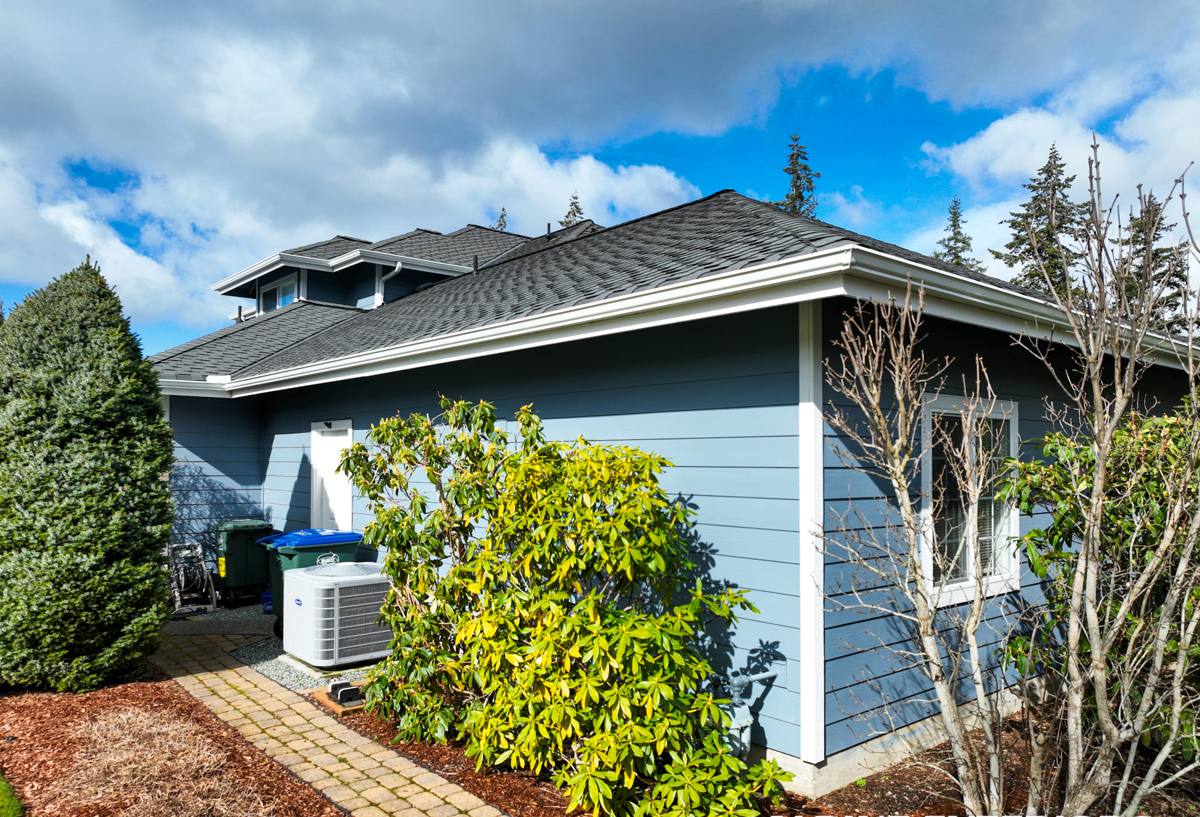
What Actually Counts as Storm Damage
Not every roof problem we get called about is storm-related, and we'll tell you honestly when it isn't. True storm damage generally falls into a few categories:
- Wind-lifted or torn-off shingles — usually along ridges, edges, and any spot where the roofline breaks (dormers, chimneys, valleys)
- Flashing displacement — metal around chimneys, skylights, and roof-to-wall joints pulled loose or bent by wind pressure
- Impact punctures — from tree limbs, blown debris, or hail in the harder storm events
- Granule loss and bruising — less obvious, but it thins the shingle's protective layer and shortens its life
- Ridge cap failure — the caps take the most direct wind load on the whole roof and are often the first thing to go
Wind Damage vs. Ordinary Wear
The honest distinction matters, especially if you're planning to file an insurance claim. A roof that's simply old and worn — curling shingles, granules washing into the gutters over years, general brittleness — is a maintenance issue, not storm damage, even if a storm is what got you up there looking. We separate the two clearly in our inspection notes, because claiming ordinary wear as storm damage rarely holds up and it's not a shortcut we'll suggest.
Why Burlington Roofs Take a Specific Kind of Beating
Skagit County's geography works against roofs in a few compounding ways, and Burlington sits right in the middle of it.
Salt Air and Fasteners
Proximity to Puget Sound and the tidal reaches of the Skagit River means the air here carries more salt than it does further inland. Salt air accelerates corrosion on exposed metal — nail heads, flashing seams, and vent fasteners — faster than manufacturers' standard warranty assumptions account for. A fastener that's quietly corroding won't hold a shingle down as well in the next windstorm, which is part of why we see repeat wind damage concentrated on the same roofs.
Driving Rain and Wind-Driven Water
Storms here don't just drop rain straight down — valley wind pushes it sideways, forcing water under shingle tabs and flashing laps that were never designed to shed water horizontally. A repair that only replaces the visible damaged shingle without checking the underlayment and flashing beneath it will often leak again in the next driving-rain event, even though the roof looks fine from the ground.
The Long Moss Season
Skagit County's moss season runs long — shaded, north-facing, and lower-pitch sections of roof stay damp for months at a stretch. Moss doesn't just look bad; it holds moisture against the shingle surface and works into any gap a storm has already opened, which is why storm-damaged spots on a mossy roof deteriorate faster than the same damage on a roof that dries out regularly. Storm repair and moss control aren't separate problems on most of the roofs we work on here — they're connected.
What a Correct Storm Repair Actually Involves
A lot of storm "repairs" are really just a shingle swap — pull the damaged piece, nail down a new one, call it done. That fixes what's visible but skips the part that determines whether the repair lasts.
Full Inspection Before Any Repair
We check the area around the visible damage, not just the damage itself. Wind that lifted one shingle usually stressed the ones around it. We also check the underlayment and decking underneath — if water got in before the repair, sealing over a damp deck traps the problem instead of solving it.
Matching Materials, Not Just Covering the Spot
Shingle color and profile change across product runs and years. We match as closely as the roof allows, and we're upfront when an exact match isn't possible — patchwork that's visibly mismatched isn't a standard we're willing to call finished.
Flashing and Fasteners Done Right
Given the salt-air corrosion issue in this area, we don't reuse questionable fasteners or bent flashing just to save a step. Flashing gets re-set with proper laps, not just caulked over — caulk is a stopgap, not a repair, and it fails faster here than in drier inland climates.
| Repair Approach | What It Actually Does | Typical Trade-Off |
|---|---|---|
| Surface patch / caulk-over | Covers the visible symptom quickly | Cheapest short-term, but common leak point returns within a season or two, especially with driving rain |
| Shingle-only replacement | Replaces damaged shingles, leaves flashing/underlayment as-is | Fine if that's genuinely all that's damaged; risky if wind stress or moisture reached further |
| Full storm repair (our standard) | Replaces damaged shingles, re-sets flashing, checks decking and underlayment | More labor up front, but addresses the underlying cause, not just the visible gap |
| Full re-roof | Necessary only when storm damage is widespread or the roof was already near end-of-life | Highest cost, but sometimes the honest answer if repair would just be delaying the inevitable |
Our Process for Burlington Storm Calls
- Initial call and triage — we ask what happened and when, so we know whether this is an active leak that needs same-window attention or a repair that can be scheduled normally
- On-site inspection — ground and roof-level assessment, photos of the damage and surrounding areas for your records
- Temporary protection if needed — if there's an active leak or exposed decking, we get it covered before we leave, not left open to the next rain
- Written scope and estimate — what's damaged, what we recommend, and why, in plain language before any work starts
- Repair — matched materials, proper flashing work, and a check of the surrounding roof area, not just the original damage spot
- Follow-up — we tell you what to watch for afterward, particularly if the roof has other aging areas near the repair
Insurance Claims: What to Know Going In
Storm damage is one of the more straightforward categories for a homeowner's insurance claim, but a few things help the process go smoothly. Document the damage and the date of the storm event as soon as you notice it — insurers generally want a clear timeline connecting the damage to a specific weather event, not general wear. A written, itemized estimate that separates storm damage from any pre-existing condition also moves the claim faster than a vague one. We provide that kind of documentation as a standard part of our estimate, but we're not a public adjuster and won't promise a specific claim outcome — that's between you and your insurer.
Reducing Repeat Storm Damage
Some of what shortens a roof's life against Skagit County storms is preventable maintenance, not repair work. A few things worth staying on top of between storm seasons:
- Keep gutters clear so wind-driven rain has somewhere to go instead of backing up under the roof edge
- Address moss buildup on shaded or low-pitch sections before it holds moisture against a full winter's worth of storms
- Have loose or lifted shingles re-secured promptly — a small lifted tab is an easy fix; the same tab torn off in the next windstorm often takes flashing or decking with it
- Check attic ventilation — trapped moisture from poor ventilation weakens decking from underneath, making it more vulnerable when a storm does hit
- Have flashing around chimneys and skylights checked periodically, since these are the first points salt-air corrosion tends to reach
Why It Matters That We Already Work in Burlington
Storm damage repair isn't a service where unfamiliarity is a small issue. A crew that already works Skagit County roofs knows which sections of a Burlington-area roof typically take the wind load first, recognizes moss-related soft spots for what they are instead of treating every issue as a fresh storm event, and understands why flashing and fasteners here need more attention than a generic repair checklist would call for. That local pattern recognition is the difference between a repair that holds through the next wind event and one that gets you back up on the roof again in a few months.
If you've got storm damage on a Burlington roof — or you're not sure whether what you're looking at is storm-related or just wear — we're happy to take a look and give you a straight answer. Reach out for a free, no-pressure estimate using the form below.