 Skagit County
 Why Siding Takes a Beating in Bow
Bow sits in a stretch of Skagit County where farmland meets saltwater — close enough to Samish Bay and Padilla Bay that marine air is a daily fact of life, not an occasional weather event. That mix of open, wind-exposed flatland and salt-laden moisture is a harder environment on exterior materials than most inland Skagit County neighborhoods see. If you've owned a home here more than a few years, you've probably already noticed it: fasteners rusting faster than they should, paint failing early on the north and west-facing walls, and moss creeping into anything that stays damp for more than a day or two.
None of that is unusual for this part of the county. It's just what siding has to survive here, and it's why the material and the installation details matter more in Bow than they would in a drier, more sheltered part of the state.
The Three Things Working Against Your Siding
- Salt air: Airborne salt from the bay accelerates corrosion on fasteners, flashing, and any metal trim that isn't rated for coastal exposure.
- Driving rain: Open exposure and wind off the water push rain sideways into siding joints and laps, not just straight down onto the field of the wall.
- A long moss season: Cool, damp conditions here last most of the year, giving moss and algae far more time to establish on shaded or north-facing siding than they'd get in a drier climate.
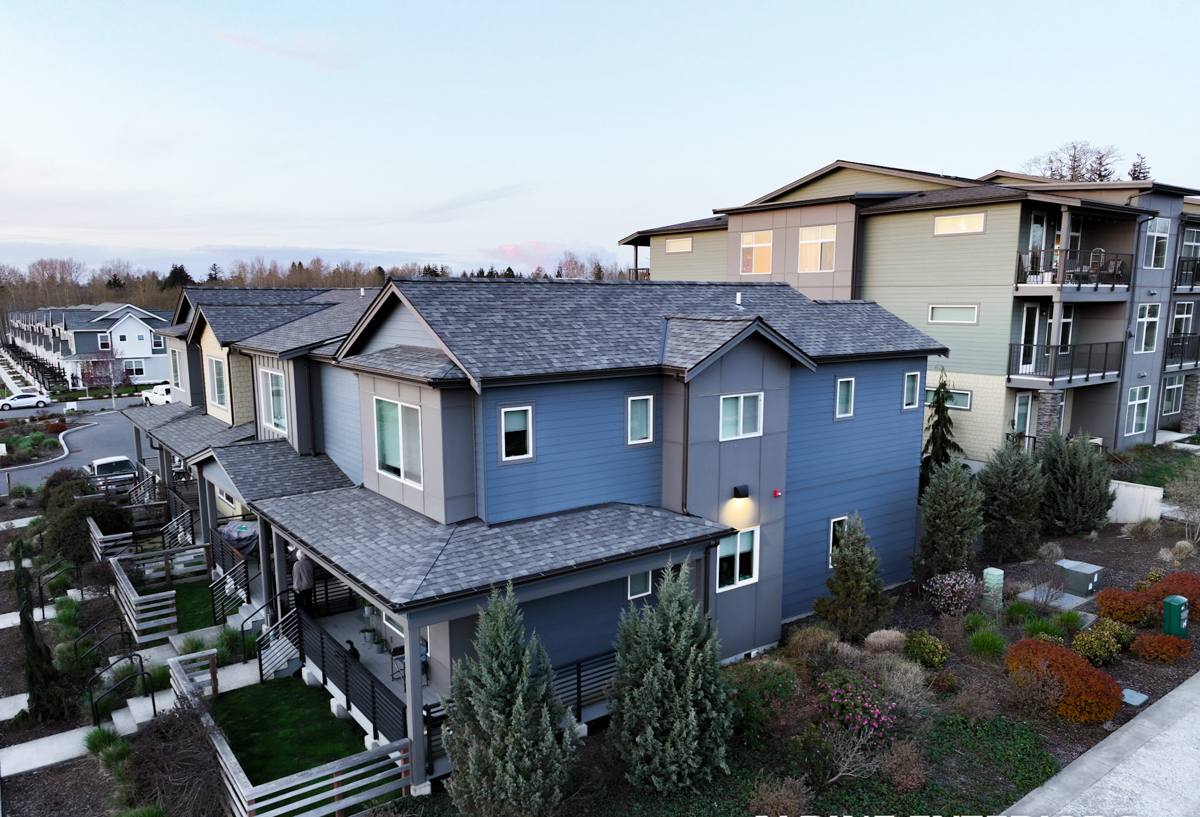
What "Correct" Fiber Cement Installation Actually Means Here
Fiber cement siding is a durable, non-combustible product, but durability on paper doesn't mean much if the installation doesn't account for how water actually moves on a Bow property. A lot of the siding problems we get called out to inspect aren't material failures — they're installation shortcuts that let water in behind a product that was otherwise doing its job.
The Details That Matter in This Climate
- Proper weather-resistive barrier and rainscreen gap so any moisture that does get behind the siding can drain and dry out instead of sitting against the sheathing.
- Correct fastener type and spacing — stainless or coated fasteners rated for coastal/marine exposure, not standard galvanized, driven at the manufacturer's specified pattern.
- Flashing at every horizontal joint, window, door, and roofline intersection, lapped the right direction so wind-driven rain can't work its way upward under a course.
- Minimum clearance from grade, decks, and roof lines so splashback and standing moisture don't sit against the bottom course of siding.
- Caulking only where the manufacturer calls for it — sealing joints that are supposed to be able to drain traps water instead of shedding it.
Skip any one of these and you can end up with a wall that looks fine for a year or two and then starts showing swelling, staining, or paint failure at the joints — the classic signs of trapped moisture, not a bad product.
Why We Install James Hardie and Nothing Else
We standardized on James Hardie fiber cement for every job we do, including in Bow, and we won't install vinyl, LP SmartSide, Cemplank, Allura, or bare wood siding in its place. That's not a marketing position — it's a decision built around what actually holds up in this climate over the long term.
What That Gets a Bow Homeowner
| Feature | Why It Matters in Bow |
|---|---|
| Non-combustible fiber cement core | Doesn't feed a fire the way wood-based or vinyl products can, and doesn't soften or warp from prolonged damp exposure the way engineered wood siding can. |
| HardieZone HZ5 engineering | James Hardie formulates its siding for specific climate zones. Western Washington falls in the HZ5 zone, engineered for cooler, wetter conditions with freeze-thaw cycles — not the same formulation used in the Southeast. |
| ColorPlus factory finish | A baked-on finish that resists fading and holds up better against salt air and UV than field-applied paint, which is the first thing to fail on a lot of older Bow homes. |
| Dense, moisture-resistant board | Resists moisture absorption far better than wood-based products, which matters directly in a long moss season where surfaces stay damp for extended stretches. |
| Transferable, manufacturer-backed warranty | Coverage that follows the house, which matters to buyers if you ever sell — a real consideration in a market where waterfront and near-waterfront homes turn over. |
We're not saying every other product is unusable everywhere. We're saying that for the specific combination of salt exposure, driving rain, and sustained dampness that Bow properties deal with, Hardie's fiber cement is the product we're willing to put our name behind and back with our own installation.
Fiber Cement vs. the Alternatives, in Bow's Climate
| Material | How It Handles Salt Air & Damp | Long-Term Maintenance |
|---|---|---|
| James Hardie fiber cement | Dense, factory-finished, engineered for this climate zone | Occasional cleaning; finish holds color for years |
| Vinyl siding | Won't rot, but can warp/fade and joints can allow water behind the panel with no rigid backing | Low upkeep but limited lifespan and repair options if damaged |
| LP SmartSide / engineered wood | Wood-based core is more vulnerable to sustained moisture and edge swelling | Needs diligent caulk and paint upkeep to keep water out |
| Bare cedar / primed wood | Attractive but absorbs moisture readily; moss and rot risk is highest of the group here | Frequent repainting/staining and moss treatment |
Our Process for a Bow Fiber Cement Project
Every job starts with actually looking at the wall, not just the siding. We check the sheathing, flashing, and any existing moisture damage before we ever talk about product selection.
- On-site assessment: We inspect current siding, trim, flashing, and any signs of trapped moisture or moss buildup, and check drainage and grade clearance around the home.
- Tear-off and sheathing check: Old siding comes off so we can see the sheathing underneath and address any rot or damage before it's covered up again.
- Weather barrier and drainage plane: We install a proper weather-resistive barrier with a rainscreen gap so the wall can dry out even if some moisture gets behind the cladding.
- Flashing and trim: Every penetration, window, and joint gets flashed correctly before siding goes on — this is the step that determines whether the wall stays dry for the next 30 years.
- Hardie installation to spec: Fasteners, spacing, clearances, and caulking follow James Hardie's published installation guidelines, not shortcuts.
- Final walkthrough: We go over the finished job with you, including what maintenance (if any) it actually needs going forward.
Living With Fiber Cement Siding in a Moss-Prone Climate
Correctly installed Hardie siding needs very little upkeep, but "very little" isn't "none" in a climate like Bow's. A yearly rinse-down on shaded or north-facing walls where moss and algae tend to settle keeps growth from taking hold and staining the ColorPlus finish. Keeping gutters clear and trimming back vegetation that shades the wall also goes a long way — most of the moss and mildew issues we see trace back to a wall that never gets sun or airflow, not a failure of the siding itself.
Signs Your Current Siding Is Past Its Useful Life
- Paint or finish failing repeatedly in the same spots, especially near joints or trim
- Soft or spongy spots when you press on the siding, particularly near the bottom courses
- Persistent moss or algae staining that comes back within months of cleaning
- Visible gaps, warping, or separation at seams and corners
- Rising heating bills that point to a wall that's no longer sealing properly
What Drives the Cost of a Bow Siding Project
| Factor | Why It Affects Price |
|---|---|
| Home size and wall complexity | More corners, dormers, and trim details mean more cutting, flashing, and labor time |
| Condition of existing sheathing | Rot or moisture damage found during tear-off needs repair before new siding goes on |
| Siding profile and finish | Lap width, panel style, and ColorPlus color selection affect material cost |
| Access and site conditions | Waterfront or wooded lots can add setup and staging time |
| Trim and accessory work | Fascia, soffit, and trim replacement alongside siding adds scope but often makes sense to do at once |
We give straight, itemized numbers up front rather than a vague ballpark, because the biggest cost swings on a Bow project usually come from what we find once the old siding is off — not from the siding itself.
Why It Matters That We Already Work in Bow
A crew that's worked this part of Skagit County knows to expect salt exposure on fasteners and trim, knows how long the moss season really runs, and knows to check for wind-driven rain intrusion at joints that an inland installer might not think twice about. That local knowledge shows up in small decisions throughout a project — which fastener grade to use, how much clearance to leave at grade, where a rainscreen gap earns its keep — and those small decisions are what determine whether siding lasts 10 years or 40 in a climate like this one.
If you're weighing a siding replacement in Bow, we're happy to take a look at your home, walk you through what we'd actually recommend for your walls, and give you a straightforward, no-pressure estimate using the form below.