 Skagit County
 Siding That Has to Hold Up Around Big Lake
Big Lake sits in a part of Skagit County where the water itself becomes part of your home's exterior environment. Mature trees shade the lots closest to the shoreline, humidity hangs in the air longer than it does a few miles inland, and moss finds a foothold on anything that stays damp for more than a day or two. Add in Skagit County's broader marine climate — salt-tinged air moving in off the Sound, months of driving rain, and a moss season that can run from fall through spring — and you have an exterior environment that punishes siding that isn't built for it. This page is about one thing specifically: what it takes to install siding correctly on a home in Big Lake, and why the approach here is different from a generic siding job.
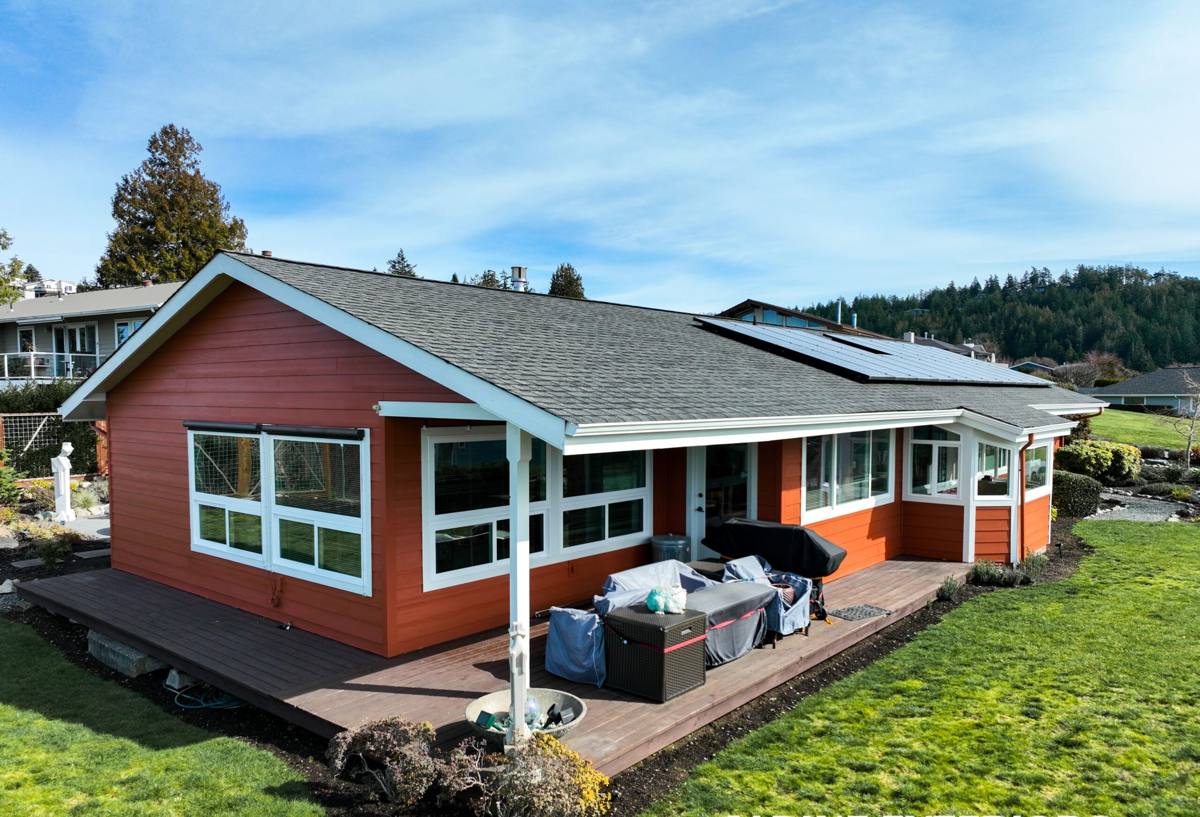
What Driving Rain and Moss Actually Do to Siding
Most siding failures we see in this part of the county aren't dramatic. They're slow. Water finds a seam, a fastener hole, or a cut edge that wasn't sealed, and it works its way behind the siding a little at a time. Combine that with shade and lake-driven humidity, and you get the conditions moss and algae need to take hold — first as cosmetic staining, then as a moisture trap that keeps the surface behind it wet for days after every rain.
Why This Matters More at Big Lake
Homes tucked among trees near the water dry out slower than homes on open, sun-exposed lots elsewhere in the county. That's not a reason to avoid siding altogether — it's a reason to be precise about drainage, ventilation behind the cladding, and material choice. Siding that absorbs moisture, swells, or delaminates when it stays wet will fail faster here than it would on a drier lot ten miles away.
Where the Damage Shows Up First
- North- and west-facing walls that get the least direct sun and stay damp longest
- Bottom courses near grade, decking, or landscaping where splash-back keeps siding wet
- Corners, butt joints, and around windows where caulking and flashing quality make the difference
- Areas shaded by trees or the lake itself, where moss and algae growth is heaviest
Why We Install Only James Hardie Fiber Cement
We don't install vinyl, LP SmartSide, Cemplank, Allura, primed spruce, or cedar. That's a deliberate standard, not a lack of options. Each of those products has real strengths, but in a climate like Skagit County's — wet for much of the year, shaded lots common around water, and a long moss season — the trade-offs stack up in ways that show up as callbacks and premature repairs.
Vinyl expands and contracts with temperature swings and can warp or crack over time; it also can't be painted to refresh a faded color without voiding warranties on many products. Wood-based siding, including cedar and primed spruce, needs a maintenance schedule most homeowners don't keep up with, and once moisture gets past the paint film, rot follows. Engineered wood products like LP SmartSide perform well when installed and maintained exactly to spec, but they're wood-based at the core, which means edge sealing and caulk maintenance are non-negotiable in a wet climate — miss that upkeep and moisture damage follows.
James Hardie fiber cement is non-combustible, doesn't support rot, and holds paint and factory finish far longer than wood-based alternatives. Hardie engineers its products by climate zone, and homes in the Pacific Northwest fall under the zone built for wet, moderate-freeze conditions rather than the hot, humid zone used in the Southeast. That climate engineering, combined with the factory-applied ColorPlus finish and a strong transferable warranty, is why we standardized on it. It's the product we're comfortable putting our name behind on a lake-adjacent lot in Big Lake.
What a Correct Installation Actually Involves
Fiber cement siding is only as good as the installation behind it. A rushed or generic install can undermine even the best material, especially in a climate that gives water every opportunity to find a way in.
Water Management Comes First
Before a single piece of siding goes up, the wall needs a proper weather-resistive barrier, correctly lapped and taped, with flashing integrated at every window, door, and penetration so water sheds outward instead of tracking behind the cladding. This step matters more here than almost anywhere else in the state — it's the difference between siding that sheds Skagit County's rain and siding that traps it.
Clearance and Ventilation
Fiber cement siding needs proper clearance from grade, roof lines, decks, and other horizontal surfaces so water can't wick up into the material or pool against it. On lake-adjacent lots where humidity lingers, we also pay close attention to keeping a drainage gap behind the siding so any moisture that does get past the surface has somewhere to go besides sitting against the sheathing.
Fastening, Cutting, and Sealing to Spec
James Hardie publishes specific fastener patterns, cut-edge treatment requirements, and caulking standards, and following them precisely is what keeps the manufacturer's warranty intact. Cut edges get sealed. Joints get the right sealant, not whatever's on the truck. Fasteners go where the manufacturer specifies, not just where it's convenient.
Finish Details
ColorPlus factory-finished panels need touch-up product matched to the specific color line, and any field-cut edges get sealed before installation rather than after. Done right, the factory finish is what gives Hardie siding its long service life without repainting; done carelessly, it's just an expensive board with the same exposure problems as anything else.
Our Process for a Big Lake Project
- On-site assessment: We walk the property, check the current siding and sheathing condition, and look specifically at shade, drainage, and grade — the factors that matter most on lake-adjacent lots.
- Product and color selection: We help you choose the right Hardie plank profile, panel style, and ColorPlus color for your home and lot conditions.
- Prep and removal: Old siding comes off, sheathing is inspected and repaired where needed, and any hidden moisture damage gets addressed before new material goes up — not covered over.
- Weather barrier and flashing: House wrap, flashing, and drainage details go in correctly the first time, since this layer is invisible once siding is installed but does most of the long-term work.
- Installation to manufacturer spec: Fastening, clearances, and sealing follow James Hardie's published requirements so the warranty stays intact.
- Final walkthrough: We review the finished work with you and go over care and maintenance specific to a shaded, moisture-prone lot.
Cost Factors for Siding Installation in Big Lake
Every home is different, but the factors that move the price on a Big Lake project tend to be the same handful of variables. Broad ranges depend heavily on home size, existing conditions, and product selection — a firm number only comes after an on-site look.
| Factor | Why It Matters Here |
|---|---|
| Home size and wall area | Straightforward driver of material and labor cost on any project |
| Removal of existing siding | Older wood or vinyl siding on shaded lots often has hidden moisture damage that adds sheathing repair costs |
| Siding profile and accessories | Lap siding, panels, and trim details vary in material and labor cost |
| Story count and access | Multi-story homes near trees or slopes toward the water may need more scaffolding or staging |
| Moisture barrier and flashing scope | Homes with more windows, dormers, or roof intersections require more flashing detail work |
| Color and finish selection | ColorPlus factory finishes vary slightly by line and color |
Why Hire a Crew That Already Works in Big Lake
A crew that regularly works this part of Skagit County already knows what to look for on a lake-adjacent lot: which walls stay wet longest, how much clearance a given lot's grade and drainage actually need, and how tree cover changes the moss and algae exposure on a given elevation. That local pattern recognition shows up in small decisions — where extra flashing attention goes, which walls get closer inspection for hidden rot before new siding covers them up — that a crew unfamiliar with the area might not think to make. It also means straightforward, predictable scheduling and permitting within Skagit County's process, without the learning curve of a crew working the area for the first time.
Signs Your Big Lake Home May Need New Siding
- Persistent moss or algae staining that returns shortly after cleaning
- Soft spots, bubbling, or visible warping in wood-based or vinyl siding
- Paint that's peeling or blistering rather than just fading
- Gaps opening up at seams, corners, or trim boards
- A musty smell or visible staining on interior walls that back up to exterior siding
- Siding that's more than 20-25 years old and hasn't been fully inspected recently
If any of that sounds familiar, it's worth having someone look before small problems become sheathing repairs. If you're weighing siding options for a home in Big Lake, we're happy to walk the property, look at what's actually going on with your current siding, and put together a free, no-pressure estimate using the form below.