 Skagit County
 Anacortes Roofs Deal With a Climate Most Repair Crews Underestimate
Anacortes sits right up against the water, and that location shapes everything about how a roof ages here. Salt-laden air off the Salish Sea works into metal fasteners, flashing, and vent housings year-round, not just during storms. Add in the driving, wind-pushed rain that comes through Skagit County in the fall and winter, and a roof here is being tested from multiple directions at once — moisture trying to get under laps and around penetrations, and corrosion working on anything metal that isn't properly coated or protected.
Then there's shade and moisture combining into a long moss season. Many Anacortes lots have mature conifers nearby, and even homes without direct tree cover get enough lingering dampness off the water that moss and algae find a foothold on north-facing slopes and shaded valleys. None of this means an Anacortes roof is doomed — it means repairs done here need to account for salt exposure, wind-driven water, and moss/moisture cycles specifically, not just patch the spot that's leaking.
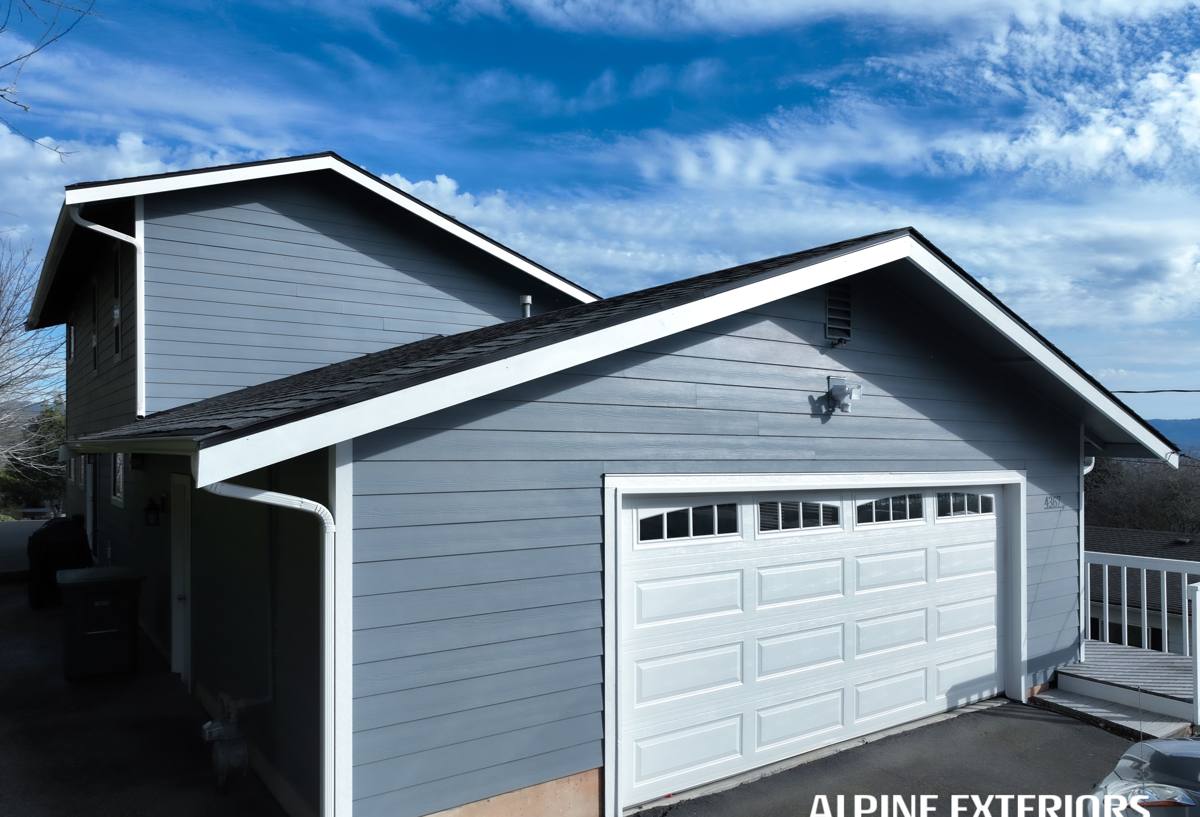
The Repair Issues We See Most Often on Anacortes Homes
Every roof repair call is a little different, but on the Fidalgo Island side of Skagit County, a handful of problems show up again and again:
- Corroded or failing metal flashing around chimneys, skylights, and roof-to-wall transitions — often the actual source of a leak that looks like it's coming from the shingles
- Shingle edges lifted or cracked from repeated wet-dry cycling and wind exposure off the water
- Moss colonies that have worked under shingle tabs, holding moisture against the roof deck long after the surface looks dry
- Clogged or sagging gutters and downspouts that back water up under the first course of shingles
- Nail pops and fastener corrosion, especially where lower-grade or improperly coated fasteners were used originally
- Soft or discolored decking discovered once a shingle is pulled back, usually from a slow leak that's been running longer than the visible damage suggests
What an Actual Roof Repair Should Involve
Diagnosing the Real Source, Not Just the Visible Damage
A leak stain on a ceiling rarely lines up directly with the point where water is entering the roof. Water travels along rafters, sheathing seams, and underlayment before it shows up indoors, sometimes several feet from the actual failure. A correct repair starts on the roof itself — checking flashing, valleys, penetrations, and the surrounding shingle field — rather than assuming the closest shingle is the culprit and sealing over it.
Fixing What's Underneath, Not Just What's on Top
If moss or a slow leak has reached the decking, patching the shingle layer without addressing the deck underneath just buys a season or two before the same spot fails again. A proper repair checks for soft spots, delamination, or rot in the sheathing before any new shingles or flashing go back down, and replaces compromised decking rather than fastening over it.
Matching Materials Correctly
Shingle color, profile, and even granule composition vary between manufacturers and product lines, and roofs age unevenly across their surface. A repair that uses mismatched shingles or the wrong underlayment weight for the slope can create a visibly patched look and, more importantly, a seam that behaves differently than the rest of the roof under wind and rain. We match products to what's already installed wherever it's still being manufactured, and we're upfront when an exact match isn't available so you can decide how much that matters to you.
Repair or Replace? How We Help You Decide
Not every damaged roof needs to come off. But a repair on a roof that's near the end of its service life, or one with widespread rather than localized damage, can end up costing money without solving the underlying problem. Here's how we generally weigh it:
| Factor | Leans Toward Repair | Leans Toward Replacement |
|---|---|---|
| Age of roofing material | Under 12-15 years, most of the field still sound | Nearing or past manufacturer's expected service life |
| Extent of damage | Isolated to one section, flashing point, or valley | Spread across multiple slopes or recurring in different spots |
| Decking condition | Solid, dry sheathing found under the damaged area | Soft, delaminated, or rotted decking in multiple areas |
| Moss/algae staining | Surface growth, roof still structurally sound underneath | Long-term growth that's degraded granules and held moisture for years |
| Cost over time | Repair cost is a small fraction of replacement cost | Repeated repairs are adding up close to replacement pricing |
We'll always tell you honestly which side of that table your roof falls on, even if the answer is "this is a repair job, not a replacement" — we're not going to push a bigger project than the roof actually needs.
Our Process for a Roof Repair Call in Anacortes
- On-roof inspection. We get up on the roof itself rather than estimating from the ground, checking flashing, valleys, penetrations, and the general condition of the surrounding field, not just the reported leak spot.
- Straight explanation and written estimate. You get a plain explanation of what's failing, why, and what it will take to fix it correctly — along with a written price before any work starts.
- The repair itself. This includes replacing compromised decking if we find it, correcting flashing details, matching shingles as closely as materials allow, and re-securing anything that's come loose nearby.
- Cleanup and gutter check. Old material, debris, and any moss we've disturbed gets cleared, and we check that gutters and downspouts are actually moving water off the roof rather than contributing to the next leak.
- Follow-through. We stand behind the work and are straightforward about what's covered under our workmanship and what falls under the shingle manufacturer's own warranty terms.
Moss and Long-Term Roof Care in a Marine Climate
Moss doesn't just sit on top of a roof — given enough time in a damp, shaded climate like Skagit County's, it works under shingle tabs and holds water against the surface, which is what actually shortens a roof's life rather than the moss itself being purely cosmetic. During a repair, we remove active moss growth from the affected area and the surrounding field rather than leaving it in place around new material. We're also candid about what moss control can and can't do long-term: zinc or copper strips near the ridge reduce regrowth over time in a lot of cases, but they're not a guarantee on every roof, especially ones with heavy tree cover or persistent shade. Where a roof's layout makes moss a recurring issue, we'll say so and talk through realistic maintenance intervals rather than promising a one-time fix.
Why It Matters That We Already Work Roofs in This Area
A roofer who mainly works inland doesn't necessarily think about salt-air corrosion on fasteners and flashing the same way, because it's not what they see every week. Working regularly on Fidalgo Island and around Skagit County means we're used to spotting corrosion patterns on metal components before they become active leaks, recognizing which shingle products actually hold up under this area's wind-driven rain, and knowing how moss behaves differently on a shaded north slope near the water than it does further inland. That familiarity shows up in smaller ways too — knowing what a normal amount of granule loss looks like on a coastal roof versus a sign of real deterioration, for instance — and it's the kind of judgment that only comes from doing the work here repeatedly, not from a general roofing checklist.
Signs It's Time to Call for a Repair
Some roof problems are obvious. Others are quiet for a long time before they show up as a stain on a ceiling. Worth checking for, or having us check for:
- Shingle tabs that are cracked, curling at the edges, or missing outright
- Visible moss or dark algae streaking on north-facing or shaded roof slopes
- Rust staining or visibly deteriorating metal around chimneys, vents, or skylights
- Granules collecting in gutters or at downspout outlets in noticeably larger amounts than before
- Daylight visible through the roof deck from inside the attic
- Soft or spongy spots when the roof surface is walked, or sagging visible from the ground
- Water stains on interior ceilings or walls, especially ones that appear or grow after wind-driven rain
If any of these sound familiar, it's worth having someone look before the next round of Skagit County storms turns a small repair into a bigger one.
If you're dealing with a leak, moss buildup, or damaged flashing on an Anacortes roof, we're glad to take a look and give you a straight answer about what it actually needs. Use the form below to request a free, no-pressure estimate.