 Skagit County
 Storm Damage Roof Repair Built for Mount Vernon's Weather
Mount Vernon sits where Skagit Valley wind funnels off the water and up the river corridor, and that combination brings a specific kind of wear to local roofs. It's rarely one dramatic event that takes a roof out — more often it's a windstorm that lifts a few shingles, followed by weeks of driving rain that finds the opening, followed by a moss season that's already working on everything else. By the time a homeowner notices a stain on the ceiling, the roof has usually been compromised for a while. Storm damage repair here isn't just patching what broke in the last storm — it's fixing what broke and understanding why it broke in this particular climate, so the same spot doesn't fail again next winter.
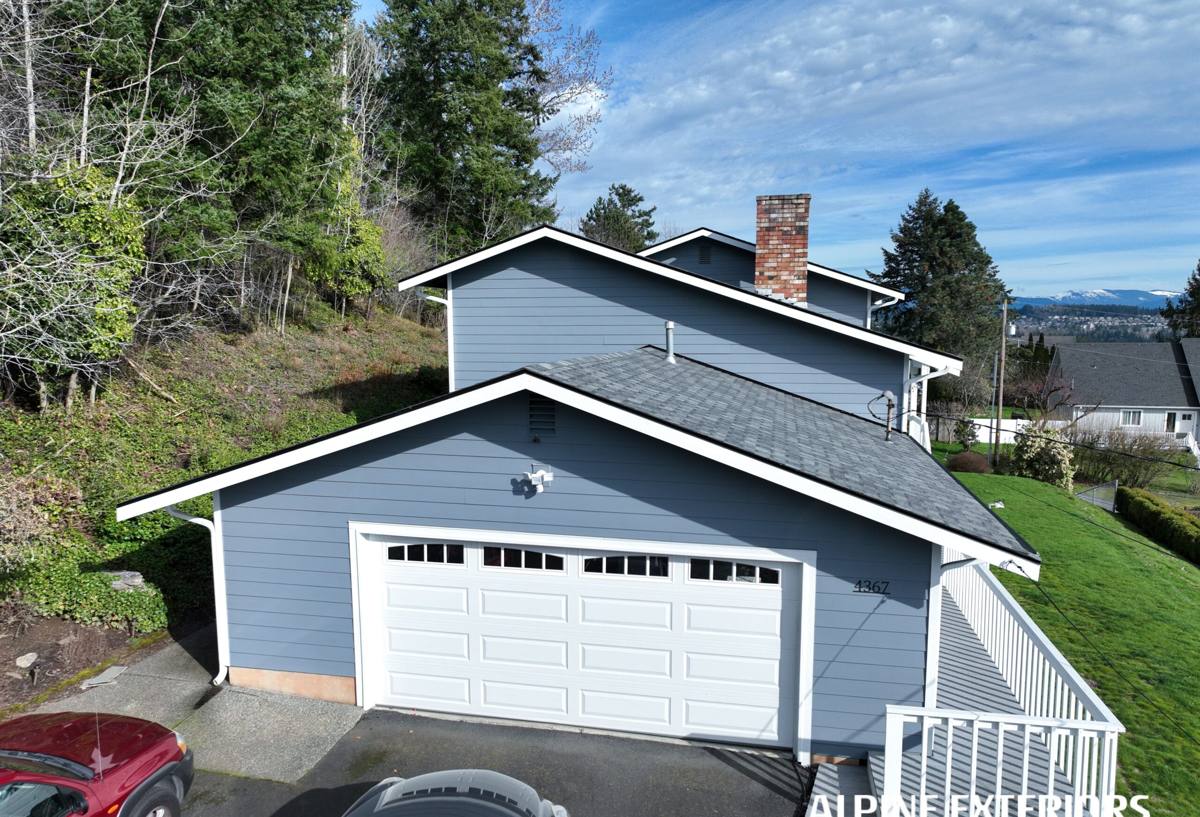
What Skagit County Storms Actually Do to a Roof
Wind and Driving Rain
Wind damage to a roof rarely looks like missing shingles scattered across the yard. More commonly, wind gets under a shingle's edge, breaks the seal strip, and leaves it looking mostly intact but no longer watertight. Add Skagit County's sideways, wind-driven rain — rain that hits a roof at an angle instead of falling straight down — and water finds its way under those loosened shingles, behind flashing, and into valleys that would otherwise shed water fine in calm weather.
Moss and Moisture
Mount Vernon's long wet season and heavy tree cover in many neighborhoods mean moss isn't a cosmetic issue — it's a moisture problem. Moss holds water against the roof surface for days after a storm has passed, which softens shingles, works into fastener holes, and accelerates rot on the decking underneath. A roof that took wind damage during a storm and then sat under a mat of wet moss all winter is in worse shape than the storm alone would explain.
Salt Air
Homes closer to Skagit Bay and the surrounding waterways deal with salt air that speeds up corrosion on exposed metal — flashing, fasteners, gutter hardware, and vent caps. Corroded flashing is one of the most common hidden causes of a "storm leak" that seemed to come out of nowhere; the flashing had already been weakening for a season or two before the storm finally pushed water past it.
Signs Your Mount Vernon Roof Has Storm Damage
Some damage is obvious. Most of it isn't. Here's what we tell homeowners to check for after any significant wind or rain event:
- Shingles that look curled, cracked, or lifted at the edges, even if none are missing
- Granules collecting in gutters or at the base of downspouts
- Soft or discolored patches on ceilings, especially near exterior walls or chimneys
- Daylight visible through the attic roof deck
- Flashing around chimneys, skylights, or vent pipes that looks bent, lifted, or rusted
- Moss buildup in valleys or along the north-facing slope, where a roof stays wet longest
- A musty smell in the attic, which usually means moisture has been sitting longer than one storm
Any one of these on its own might be minor. Two or three together usually mean water has already gotten past the roofing material and into the deck below.
What a Correct Repair Actually Involves
Assessment Before Anything Gets Touched
A proper storm damage repair starts with figuring out how far the damage actually spreads, not just where it's visible. Wind and water don't stop at the shingle you can see is torn — we check the surrounding courses, the underlayment beneath them, the decking, and the flashing at any nearby penetration. Repairing only the obvious spot and skipping this step is how homeowners end up calling back six months later for a "new" leak that's really the same problem, missed.
Matching Materials, Not Just Covering the Hole
Whenever possible, a repair should use shingles or materials that match the existing roof in type, weight, and color, so the repaired section weathers at the same rate as the rest and doesn't stand out or create a mismatched seal line. When an exact match isn't available — common on older roofs — we explain the trade-offs honestly rather than mixing incompatible products and hoping for the best.
Addressing the Cause, Not Just the Symptom
If moss contributed to the failure, a real repair includes moss removal and a plan to slow regrowth, not just a shingle swap. If corroded flashing let water in, the flashing gets replaced, not caulked over. Caulk and sealant have a place in roofing, but they're a short-term measure, not a substitute for proper flashing or fastening — we use them where they belong and tell you plainly when a spot needs more than that.
Our Storm Repair Process in Mount Vernon
- Inspection and documentation — We get on or above the roof, photograph the damage, and identify both the visible and underlying issues. This documentation also supports an insurance claim if you're filing one.
- Written scope and options — You get a clear explanation of what needs to happen, what's optional, and roughly what each option costs, before any work starts.
- Repair — Damaged shingles, underlayment, decking, or flashing are removed and replaced to match the surrounding roof as closely as possible.
- Moss and debris treatment — Where moss contributed to the damage, we clear it and address drainage or shade issues where we can.
- Final check — We walk the repair with you, confirm it's sealed and weathertight, and point out anything else on the roof worth keeping an eye on.
Repair Options and What Drives the Cost
Storm repair costs vary a lot based on what's actually wrong, not just how big the damaged area looks from the ground. The table below is meant to help you understand what's driving the price when you get a quote — not to promise an exact number, since every roof is different.
| Factor | Lower Cost End | Higher Cost End |
|---|---|---|
| Extent of damage | A few shingles, no deck damage | Rotted decking or multiple sections affected |
| Roof access | Single story, walkable pitch | Steep pitch, multiple stories, or limited access |
| Flashing condition | Existing flashing reusable | Corroded flashing needs full replacement |
| Moss involvement | Light moss, easily cleared | Heavy moss with underlying moisture damage |
| Material match | Common shingle still in production | Discontinued or specialty shingle requiring a closer color/size match |
Storm Damage and Insurance Claims
Most homeowners insurance policies cover sudden storm damage — wind lifting shingles, a branch impact, wind-driven rain intrusion during a specific event. Coverage for gradual damage, like long-term moss deterioration or wear that built up over several seasons, tends to be handled differently and often isn't covered the same way. This is one reason documentation matters: a clear record of what happened, when, and what it caused helps separate a legitimate storm claim from ordinary maintenance a policy likely won't cover. We're happy to provide photos and a written scope you can hand to your adjuster, but we don't work for the insurance company — our job is an honest assessment of your roof, and we'll tell you plainly if something looks more like wear than storm damage.
Why It Matters That We Already Work in Mount Vernon
A roofing crew that mostly works other regions will treat a Mount Vernon storm repair like any other repair. A crew that works Skagit County regularly knows which neighborhoods hold moss longest, which areas take the worst of the wind off the valley, and which older homes in the area were built with materials and flashing details that need particular care during a repair. That local pattern recognition is what keeps a repair from being a one-season fix — it's the difference between patching what a storm broke and building the repair to hold up through the next one.
What to Do Right After a Storm
- Check the attic for daylight, damp insulation, or a musty smell as soon as it's safe to do so
- Look at ceilings and walls near exterior corners for new staining
- From the ground, look for shingle pieces, granules, or metal flashing debris in the yard or gutters
- Take photos of anything you notice before it's cleaned up or covered by more rain
- Avoid walking a wet or moss-covered roof yourself — it's one of the more dangerous DIY mistakes homeowners make after a storm
- Get a professional inspection before deciding whether a claim is worth filing
If a recent storm has you wondering about the condition of your roof, we're glad to take a look. Reach out for a free, no-pressure estimate using the form below, and we'll give you a straight answer about what your roof needs and what it doesn't.