 Skagit County
 Why Skyline Roofs Wear Out Differently Than Roofs Inland
Skyline sits close enough to the water and the tree line that its roofs deal with a specific combination of stress most inland Skagit County homes don't see in the same intensity: salt-laden air moving in off the water, long stretches of driving, wind-blown rain, and a moss season that can run eight months or more depending on how much shade a property has. None of these things individually destroys a roof overnight. What they do is shorten the useful life of a roof that wasn't built or installed with them in mind, and accelerate the failure of one that's already past its prime.
Salt air is corrosive to exposed metal fasteners, flashing, and vent components over time. Driving rain finds its way into laps, seams, and fastener penetrations that would stay dry in calmer weather. And moss doesn't just look bad — its root structures lift shingle edges, hold moisture against the roof deck, and create channels for water to travel sideways instead of down. A new roof installation in Skyline needs to account for all three from day one, not as an afterthought.
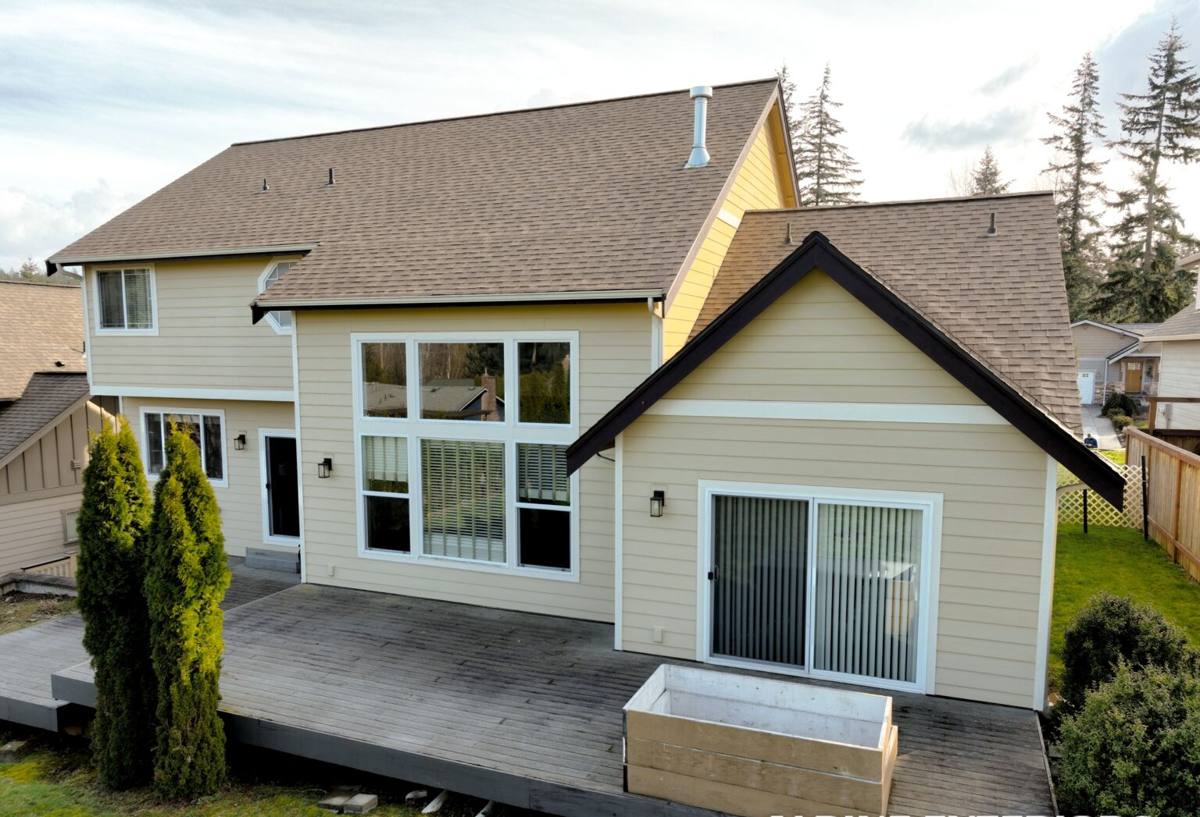
Signs a Skyline Home Needs Full Replacement, Not Another Repair
We get called out to plenty of roofs that homeowners assume just need a patch. Sometimes that's true. Often, by the time there's a visible leak, the underlying materials have been failing for years. Here's what tends to separate a repair situation from a replacement situation on the roofs we see in this area:
- Granule loss heavy enough that you can see bare asphalt on multiple shingles, not just one weathered spot
- Moss or moss staining across large sections rather than isolated shaded patches
- Soft or spongy decking felt underfoot in the attic, especially near valleys or eaves
- Daylight visible through the roof deck from inside the attic
- Shingles curling, cupping, or cracking across most of the roof rather than just the oldest slope
- A roof already at or past 20-25 years old, regardless of how it looks from the ground
- Repeated repairs to the same areas over the last few years without the leaks fully stopping
If only one or two of these apply and the roof is otherwise mid-life, a repair may genuinely be the right call — we'll tell you that. This page is specifically about the situations where a full new roof installation is the honest recommendation.
What a Correct New Roof Installation Actually Involves
A roof replacement is more than swapping old shingles for new ones. The materials most homeowners think about — the shingles, metal, or membrane on top — are only doing their job correctly if everything underneath and around them was installed right first.
Tear-Off and Deck Inspection
We remove the old roofing down to the deck rather than layering over it. That's the only way to actually see what condition the plywood or plank decking is in. In a climate that pushes this much moisture at a roof, it's common to find soft or delaminated decking around old leak points, valleys, and chimney or vent penetrations. Any compromised decking gets replaced before anything new goes down — installing new roofing over a weak deck just hides the problem and shortens the life of the new roof.
Moisture Barrier and Underlayment
This layer matters more here than it does in drier parts of the state. We install synthetic underlayment across the full roof and use self-adhered ice-and-water membrane at the vulnerable spots — eaves, valleys, around chimneys, skylights, and any roof-to-wall transitions — where wind-driven rain is most likely to work its way backward under the shingles.
Ventilation
Proper intake and exhaust ventilation keeps the attic space closer to outside temperature and lets moisture escape instead of condensing on the underside of the deck. In a region with this much ambient humidity, poor ventilation shows up as premature deck rot, mold, and shingles failing from underneath years before their rated lifespan. We evaluate existing soffit and ridge ventilation on every replacement and correct it where it's inadequate, rather than just reusing whatever was there.
Flashing and Edge Details
Flashing is where most roof leaks actually start, not in the open field of shingles. Step flashing at wall intersections, counter-flashing at chimneys, drip edge at eaves and rakes, and valley metal all get installed new rather than reused, and detailed to shed water outward rather than relying on caulk or sealant to do that job long-term.
Matching the Roofing Material to Skyline's Conditions
There's no single "best" roofing material for every home — the right choice depends on your roof's pitch, your budget, how much shade and moss exposure the property gets, and how long you want to go before the next full replacement. Here's how the common options compare for a home in this specific climate:
| Material | Typical Lifespan Here | Moss Resistance | Salt Air Considerations |
|---|---|---|---|
| Architectural asphalt shingle | 20-30 years | Moderate — algae-resistant granules help; still needs cleaning | Standard fasteners and flashing detailed for coastal exposure |
| Standing seam metal | 40-50+ years | Strong — steep slopes shed moss growth well | Requires marine-grade or coated fasteners to resist corrosion |
| Synthetic/composite shingle | 30-40 years | Good — resists moisture absorption better than wood | Low-maintenance, holds up well to salt exposure |
| Cedar shake | 20-30 years with upkeep | Weak without regular treatment — moss loves wood shakes | Highest maintenance burden in this climate; not our default recommendation |
Asphalt architectural shingle remains the most common, cost-effective choice for Skyline homes, and modern algae-resistant shingles have closed a lot of the gap on moss performance. Metal is a strong option on steeper roofs or for homeowners who want to minimize moss cleaning and maximize lifespan, at a higher upfront cost. We steer most clients away from untreated cedar shake in this specific climate — not because it can't be made to work, but because the maintenance commitment to keep moss and moisture from taking hold is significant, and most homeowners underestimate it going in.
Our Installation Process, Start to Finish
- On-site inspection and estimate. We walk the roof, check the attic where accessible, and give you a written estimate with material options — no pressure, no inflated "today only" pricing tactics.
- Material selection and scheduling. We help you weigh cost, lifespan, and appearance against your specific roof and budget, then lock in a install date around the weather.
- Property protection. Landscaping, siding, gutters, and outdoor living areas get covered or protected before tear-off starts.
- Tear-off and deck inspection. Old roofing comes off, the deck gets inspected, and any needed repairs are addressed before moving forward — we'll show you what we found.
- Underlayment, flashing, and ventilation install. The details that determine how the roof performs in wet, salty, moss-prone conditions go in correctly, not rushed.
- Roofing material installation. Shingles, metal, or composite goes on per manufacturer specification to keep your warranty intact.
- Cleanup and magnetic sweep. Full site cleanup, including a magnetic nail sweep of the yard and driveway.
- Final walkthrough. We review the finished roof with you and go over any care recommendations specific to your property.
Living With a New Roof: Moss, Salt Air, and Ongoing Care
A properly installed new roof dramatically reduces moss and leak problems, but it doesn't make maintenance optional. In Skagit County's moss season, the roofs that stay healthiest longest are the ones that get looked at regularly rather than ignored until there's a stain on the ceiling.
- Have moss growth removed gently (never pressure-washed) before it establishes root structures under shingle edges
- Keep gutters clear so water isn't backing up under the roof edge during heavy rain
- Trim back overhanging branches where practical — shade and debris are the biggest drivers of moss growth
- Have flashing and roof penetrations visually checked every year or two, especially after wind storms off the water
- Address small issues (a lifted shingle, a gap in caulking) before the next wet season rather than after
These habits add years of usable life to a roof that was installed correctly in the first place. On a roof that was installed poorly, no amount of maintenance fully compensates for shortcuts made in the underlayment or flashing.
What a New Roof Typically Costs in Skyline
Pricing depends on roof size, pitch, tear-off complexity, decking condition, and material choice, so any number without an on-site look is a rough guide only. In general terms, homeowners in this area should expect a wide range depending on material:
| Factor | How It Affects Cost |
|---|---|
| Roof size and pitch | Larger and steeper roofs require more material and labor time |
| Number of layers being removed | Tear-off of multiple old roofing layers adds disposal and labor cost |
| Decking condition | Rotted or soft plywood/plank sections add replacement cost once uncovered |
| Material choice | Asphalt shingle is generally the most budget-friendly; metal and composite cost more upfront but often last longer |
| Roof complexity | Valleys, dormers, skylights, and multiple penetrations add flashing detail and labor time |
We give firm, itemized written estimates after seeing the actual roof — not ballpark numbers over the phone that change once the crew shows up.
Why It Matters That We Already Work in Skyline
A roof installed by a crew unfamiliar with local conditions is more likely to get generic details right and local details wrong — the flashing choices, ventilation balance, and moss-prevention decisions that matter specifically because of where the house sits. We work throughout Skagit County and know how this stretch of coastline and tree cover behaves through the wet season, which informs real decisions on your roof: how aggressive the underlayment coverage needs to be, whether the existing ventilation is adequate for the humidity here, and which material options make sense given how much shade and moss exposure a given lot actually gets.
We're also easy to reach after the job is done. If a question comes up two years down the road about a roof we installed, you're calling a local crew that's still working in your area, not chasing down a company that did one job here and moved on.
Ready to Get an Honest Look at Your Roof?
If your roof is showing its age or you just want a straight opinion on whether it's a repair or replacement situation, we'll come take a look and give you a clear, no-pressure estimate — free, with no obligation to move forward. Fill out the form below and we'll get in touch to schedule a time that works.