 Skagit County
 Why Avon Roofs Take a Beating
Avon sits on low-lying delta land along the Skagit River, just north of Mount Vernon, and that location puts roofs here in the direct path of everything Skagit County weather throws around. Winter storms roll in off the Sound with sustained wind and driving, sideways rain that finds every weak seam in a roof system. Add in the salt-laden air that reaches inland from the coast and the long, wet moss season that runs from fall through spring, and you've got a combination that ages roofing materials faster than most homeowners expect. A roof that would hold up fine in a drier inland climate can develop real problems here in half the time.
We work storm damage repairs in Avon regularly enough to know the patterns: which roof styles in this area tend to lose shingles first, where flashing typically fails, and which attics show moisture staining before the homeowner ever sees a drip inside. That local pattern recognition is worth more than it sounds like — it's the difference between a repair that treats the visible symptom and one that catches the actual cause before it turns into a bigger bill.
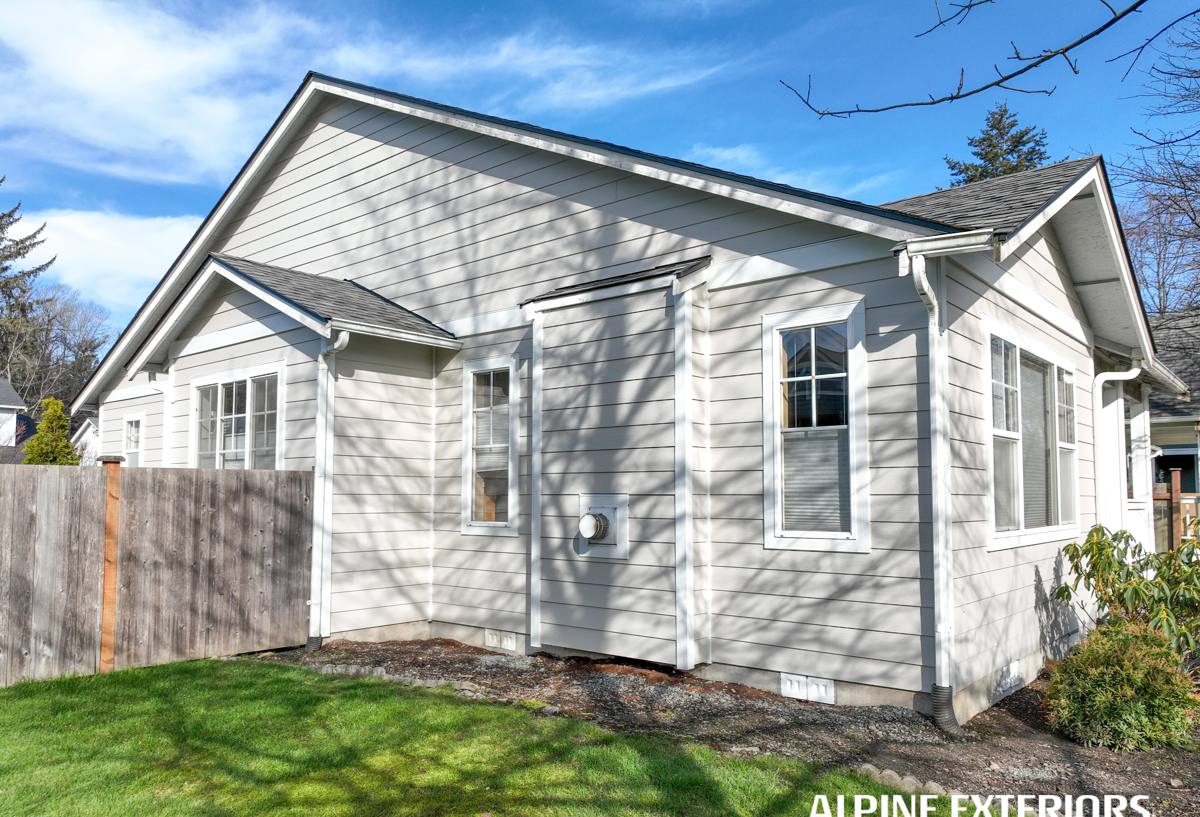
What Counts as Storm Damage on a Skagit County Roof
Storm damage isn't always a dramatic hole in the roof. In this climate, it's usually more gradual and easier to miss until it's already caused water intrusion. The main categories we see on Avon homes:
Wind Damage
Sustained wind and gusts during winter storm systems lift shingle edges, break shingle seals, and can tear tabs off entirely. Once a shingle's seal is broken, it doesn't always blow away — it just sits there loose, letting wind-driven rain get underneath it every time the weather kicks up again.
Moss and Moisture Damage
Moss isn't cosmetic here — it's structural. Moss holds moisture against the roofing material and works its way under shingle edges, and on shaded, north-facing roof slopes (common on lots with mature trees around Avon) it can accelerate shingle deterioration and cause decking rot underneath. A storm that dumps heavy rain onto a moss-covered roof often reveals damage that was already building for a season or two.
Flashing and Penetration Failures
Flashing around chimneys, vents, and roof valleys takes the worst of driving rain because it relies on a tight mechanical and sealed connection rather than overlapping shingle courses. Salt air speeds up corrosion on metal flashing and fasteners, and once flashing starts to lift or corrode, it's usually the first place a storm finds its way into the attic.
Debris Impact
Falling branches and wind-blown debris are common during Skagit County storm events, especially on lots with tall conifers nearby. Impact damage can crack shingles, dent metal roofing, or knock granules loose in a way that isn't always obvious from the ground.
What a Correct Repair Actually Involves
A storm damage repair that's done right isn't just replacing what's visibly missing. It requires checking the areas around the damage, because storm damage rarely stays contained to one spot.
- Full roof inspection, not just the damaged section — wind and moss damage often show up in more than one place
- Decking check underneath any area with missing or lifted shingles, since Avon's rain volume can rot exposed decking fast
- Underlayment inspection where shingles were compromised, since a torn or saturated underlayment defeats the point of a shingle repair
- Flashing inspection at every penetration near the repair area, not just the obvious damage
- Matching materials — shingle color, profile, and manufacturer where possible, so the repair doesn't stand out or create a mismatched wear pattern later
- Gutter and drainage check, since storm damage and clogged or damaged gutters often show up together
Skipping any of these steps is how a "quick patch" ends up being redone within a year or two. We treat the inspection as part of the repair, not a separate add-on.
Our Process for Avon Storm Damage Calls
1. Inspection and Assessment
We walk the roof (or use a ladder and safe vantage points where the roof pitch or condition makes walking it unwise) and document the damage, including anything beyond what prompted the call. We also check the attic from inside when accessible, since interior staining tells us how far water has already traveled.
2. Straight Answer on Repair vs. Replace
Not every storm-damaged roof needs full replacement, and we're not going to tell you it does. If a targeted repair will genuinely hold up, we say so. If the roof is old enough or damaged enough that a repair is just delaying a bigger cost, we tell you that too, with our reasoning.
3. Written Scope Before Work Starts
You get a clear description of what we're fixing and why before any work begins — no surprise add-ons discovered mid-job without a conversation first.
4. The Repair
We match materials as closely as possible, address the root cause (not just the surface damage), and re-check flashing, decking, and drainage in the repaired area before calling the job done.
5. Follow-Up
For repairs tied to an active storm season, we're available to come back if a related issue shows up — storm damage sometimes reveals itself over a few weeks of subsequent rain, not all at once.
Repair vs. Replace: What Actually Drives the Decision
| Factor | Leans Toward Repair | Leans Toward Replacement |
|---|---|---|
| Roof age | Under 10-15 years, most of roof still in good condition | Nearing or past expected material lifespan |
| Extent of damage | Isolated to one section or a handful of shingles | Spread across multiple areas or slopes |
| Decking condition | Solid, no rot found on inspection | Soft spots or rot found under damaged area |
| Moss history | Minimal moss, roof has been maintained | Heavy moss coverage with granule loss underneath |
| Material availability | Matching shingles still available | Discontinued product, mismatch would be obvious |
None of these factors alone makes the call — it's the combination. A roof that's otherwise sound but has one storm-damaged slope is usually a good repair candidate. A roof with scattered damage, heavy moss, and visible decking issues is often better served by replacement, even if the immediate storm damage looks minor.
Insurance and Storm Claims
Many storm damage repairs in Skagit County are at least partially covered by homeowners insurance, depending on your policy and the cause of damage. We can document what we find during inspection — photos, notes on cause and extent — in a way that's useful if you decide to file a claim, but we're not adjusters and don't promise coverage outcomes. If you're unsure whether a repair is claim-worthy, it's worth a call to your insurance company before or shortly after our inspection so you understand your deductible and coverage before committing to a repair path.
Why Local Avon Experience Matters
A crew that hasn't worked this specific area doesn't know that moss builds up faster on the shaded slopes common around Avon's tree-lined lots, or that salt-air corrosion on flashing fasteners shows up sooner here than it would twenty miles inland. That local knowledge changes what we look for during an inspection and how aggressively we recommend addressing moss and flashing issues before the next storm season, not just after damage has already happened.
It also means a faster, more realistic response when storm damage happens. We're not driving in from across the region trying to estimate a Skagit County roof from unfamiliar assumptions — we already know what this climate does to roofing materials over time.
Preventing the Next Round of Storm Damage
Once a storm repair is done, a few maintenance habits go a long way toward keeping the next storm season from causing a repeat visit:
- Have moss treated or removed before it builds up thick enough to hold moisture against shingles
- Keep gutters clear so storm rain has somewhere to go instead of backing up under roof edges
- Trim back branches that overhang the roof, reducing both debris impact risk and shade that encourages moss
- After any major wind event, do a visual check from the ground for lifted or missing shingles
- Have flashing checked every few years, especially around chimneys and vents, since corrosion and sealant failure aren't always visible from the ground
- Address small leaks immediately — a stain the size of a dinner plate today can mean rotted decking within a season if ignored
These are simple habits, but they matter more here than in drier climates because Skagit County's combination of rain volume, wind exposure, and moss growth compounds neglect faster than most homeowners expect.
Get a Straight Look at Your Roof
If a recent storm left you with missing shingles, a new leak, or just a nagging feeling that something's not right up there, it's worth getting it looked at before the next system rolls through. We offer free, no-pressure estimates for Avon homeowners — we'll tell you honestly what we find and what it actually needs, whether that's a targeted repair or something more. Reach out through the form below to get started.