 Skagit County
 Windows Built for Skyline's Marine Climate
Skyline sits close enough to open water that homes here take a different kind of weathering than a house twenty minutes inland in Skagit County. Salt-laden air moves through window hardware and frame seams year-round, driving rain off the Salish Sea hits west- and south-facing glass at an angle instead of straight down, and shaded, damp corners of the property grow moss and algae for a good chunk of the year. Windows are one of the first places that shows up — sticking sashes, fogged glass, soft trim, and hardware that seizes up faster than it should.
This page covers custom window installation and replacement specifically for Skyline homes: what the local climate actually does to windows, what a correct installation looks like, how our process works, and what to weigh when you're choosing materials and a contractor.
What "Custom" Means for a Window Job
Custom doesn't mean expensive — it means the window is built or ordered to fit an opening and a purpose that a stock size doesn't cover. That's common in Skagit County, where a lot of housing stock spans several decades of construction styles.
Older and Character Homes
Homes built before standardized window sizing became common often have openings that don't match today's off-the-shelf dimensions. Rather than reframe the whole opening — which adds cost and disturbs siding and interior trim you don't need to touch — we order windows built to the actual opening.
Unusual Shapes and Placements
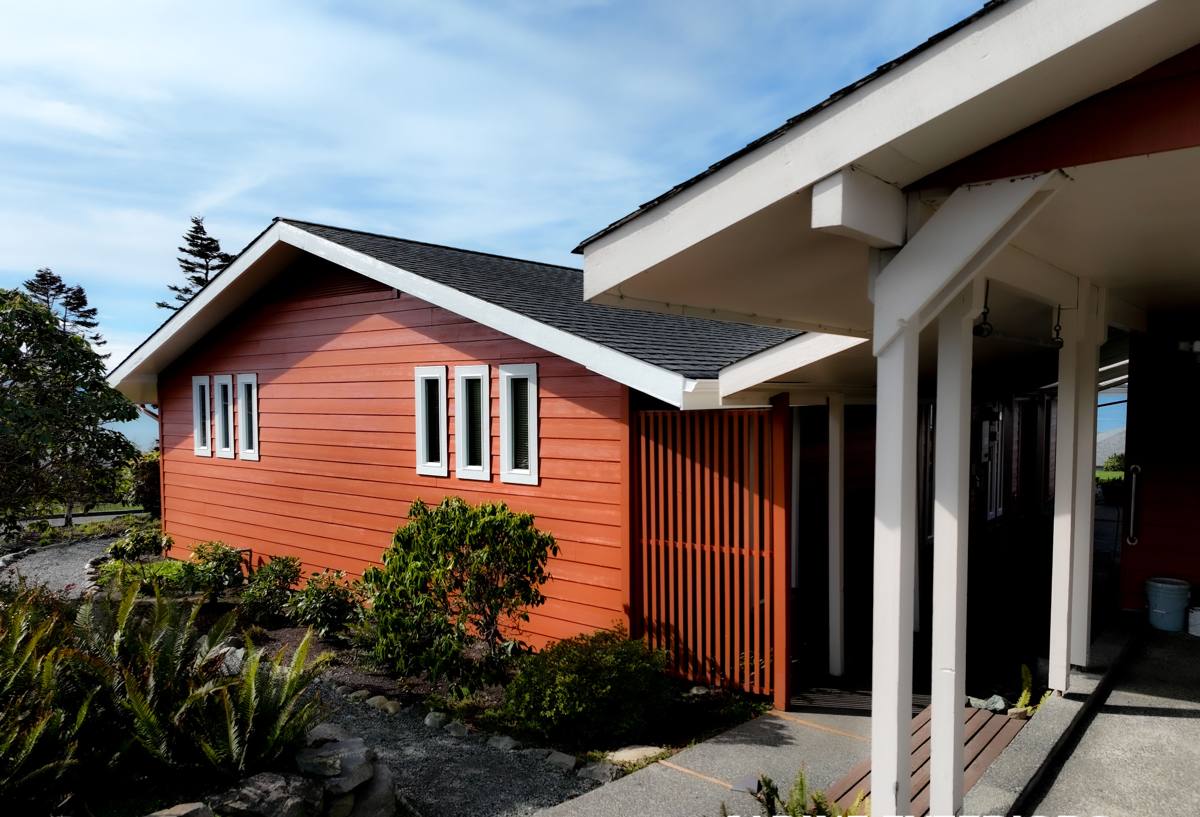
Arched tops, oversized picture windows meant to take advantage of a water or tree-line view, corner window configurations, and odd door-adjacent openings all fall outside standard sizing. These need to be measured and ordered individually, not pulled off a shelf.
Additions and Renovations
When a room addition or remodel changes the wall layout, the window openings are new and need to be sized to match the design intent — not squeezed to fit whatever size happened to be in stock.
Why Frame Material Matters More Here Than Inland
Every window frame material has real trade-offs, and those trade-offs shift when a home sits closer to salt air and takes more direct rain exposure. We're honest about this with every Skyline customer rather than pushing one product line as a universal answer.
| Frame Material | How It Handles Salt Air & Rain | Maintenance | Where It Fits Best |
|---|---|---|---|
| Vinyl | Won't corrode; seams and welded corners are the weak point if not installed tight | Low — occasional cleaning | Most standard replacements, budget-conscious projects |
| Fiberglass | Very stable in temperature swings and moisture; holds paint well over time | Low to moderate | Larger openings, custom shapes, longer-term ownership |
| Aluminum | Prone to pitting and corrosion in salt air unless marine-grade and properly finished | Moderate — finish needs monitoring | Modern architectural styles, sunrooms; needs a quality finish spec |
| Wood / Wood-Clad | Handsome, but bare wood is the most vulnerable to driving rain and rot if seals fail | Highest — refinishing, seal checks | Historic-style homes where appearance matters most |
We'll tell you plainly if a material you're drawn to on looks alone is going to be a maintenance commitment in this climate. That's not us steering you away from a product — it's us wanting you to make the call knowing what upkeep it actually needs once it's facing Skagit County weather every winter.
Full-Frame Replacement vs. Insert Windows
This decision matters more when a house also needs siding attention, which is common on a job like this.
Insert (Pocket) Replacement
The new window goes into the existing frame, which stays in the wall. It's faster and less disruptive to siding and interior trim, and it's the right call when the existing frame is still solid and dry.
Full-Frame Replacement
The old frame comes out entirely, exposing the rough opening down to the framing and sheathing. This is the better — sometimes the only honest — option when there's evidence of water intrusion, soft wood around the opening, or when the siding is being removed anyway for repair or replacement. It's also the only way to properly correct flashing that was installed wrong the first time, which is a real issue on older homes in wet climates.
If your project involves siding work at the same time, full-frame replacement is usually the smarter sequence — it lets us tie the window flashing into the new water-resistive barrier and siding as one continuous system instead of patching two separate jobs together.
Getting the Water Management Right
In a spot that takes driving rain off open water, the window itself matters less than what's around it. Most window failures we get called out for in Skagit County aren't glass or frame failures — they're flashing failures.
- Sloped sill pans that carry water out and away from the framing, not into it
- Proper head flashing that sheds water over the top of the window, not behind the siding
- Correct lap order — building paper or house wrap over the flashing at the top, under it at the sill and sides
- Sealant used to back up the flashing, never as a substitute for it
- A drainage path so any water that does get behind the cladding has somewhere to go besides the framing
None of this is visible once the trim goes back on, which is exactly why it has to be done right the first time and by someone who does it the same way on every window, not just the ones that show.
Our Process for a Skyline Window Job
- On-site assessment. We look at existing window condition, framing, and any signs of moisture, moss, or salt-related wear before recommending anything.
- Measuring and product selection. Custom openings are measured precisely; we walk through frame material, glazing, and full-frame vs. insert based on what we found.
- Written estimate. Clear pricing before any work starts — what's included, what isn't, and realistic timing.
- Careful removal. Old windows and, where needed, surrounding siding or trim come out without damaging material that's staying.
- Flashing and installation. New flashing and water-resistive barrier tie-in, then the window is set, shimmed, and fastened to spec.
- Trim and siding integration. Exterior trim and siding are finished around the new window so the whole wall reads as one job, not a patch.
- Walkthrough and cleanup. We check operation, sealing, and site cleanup with you before calling it done.
What Affects the Cost
| Factor | Why It Moves the Price |
|---|---|
| Frame material | Vinyl is typically the most economical; fiberglass and wood-clad cost more up front |
| Full-frame vs. insert | Full-frame takes more labor and often involves siding and trim repair |
| Size and shape | Custom or oversized openings, arches, and multi-unit combinations cost more than standard rectangles |
| Glazing package | Low-E coatings and tempered or laminated glass add cost but pay off in comfort and durability here |
| Number of windows | Doing several at once typically brings a better per-window cost than one-offs over time |
| Access and condition | Rot, hidden damage, or hard-to-reach openings add labor once the wall is opened up |
We won't quote a number without seeing the openings — anyone who does is guessing, and in a climate that hides moisture damage behind trim, guessing gets expensive for you, not us.
Signs Your Windows Need Attention
- Sashes that stick, drag, or won't stay open on their own
- Condensation or fogging between double-pane glass — a sign the seal has failed
- Soft or discolored trim and sill material around the frame
- Visible moss or dark staining at the corners or sill, even if the glass itself looks fine
- Drafts or a noticeable temperature difference near the window on windy days
- Hardware — locks, cranks, hinges — that's pitted, stiff, or corroded
- Paint or finish failing faster around windows than on the rest of the exterior
Why a Crew That Already Works Skyline Matters
A contractor who works Skagit County regularly already knows how differently a wall performs a few hundred yards from open water compared to further inland — where the driving rain hits hardest, which orientations grow moss fastest, and which off-the-shelf products hold up and which ones become a maintenance project within a few years. That's knowledge you don't get from a single job; it comes from doing this work repeatedly in this specific climate, on homes with the same exposure yours has.
It also matters for how the job is sequenced. If your siding needs attention too, a crew that handles both means the window flashing and the siding water-resistive barrier get installed as one integrated system instead of two contractors each assuming the other handled the transition.
If you're weighing a window project in Skyline — whether it's one custom picture window or a full-home replacement tied into siding work — we're happy to take a look and give you a straight assessment. Reach out for a free, no-pressure estimate using the form below.