 Skagit County
 Why La Conner's Waterfront Location Is Hard on Siding
La Conner sits right on the Swinomish Channel, with Skagit Bay and the open water of Puget Sound close enough that salt air is a daily fact of life, not an occasional nuisance. Salt-laden moisture works differently than plain rain — it gets into seams, fasteners, and paint film and stays there, accelerating corrosion and finish breakdown in ways that inland Skagit County homes don't deal with to the same degree. Add in driving rain off the water during fall and winter storms, and siding on La Conner homes takes on wind-blown moisture from angles that flat-on rain never reaches.
Then there's shade and moss. Many La Conner properties sit under mature trees or close to neighboring structures, and combined with our long wet season, that means extended damp periods where algae and moss get a foothold and never fully dry out between rain events. Moss holds moisture directly against the siding surface for months at a time — that's a very different stress than a quick summer downpour that dries out by afternoon.
None of this means La Conner homes need exotic materials. It means the siding, the water-resistive barrier behind it, and the installation details all have to be chosen and executed with this specific combination — salt air, wind-driven rain, and prolonged dampness — in mind.
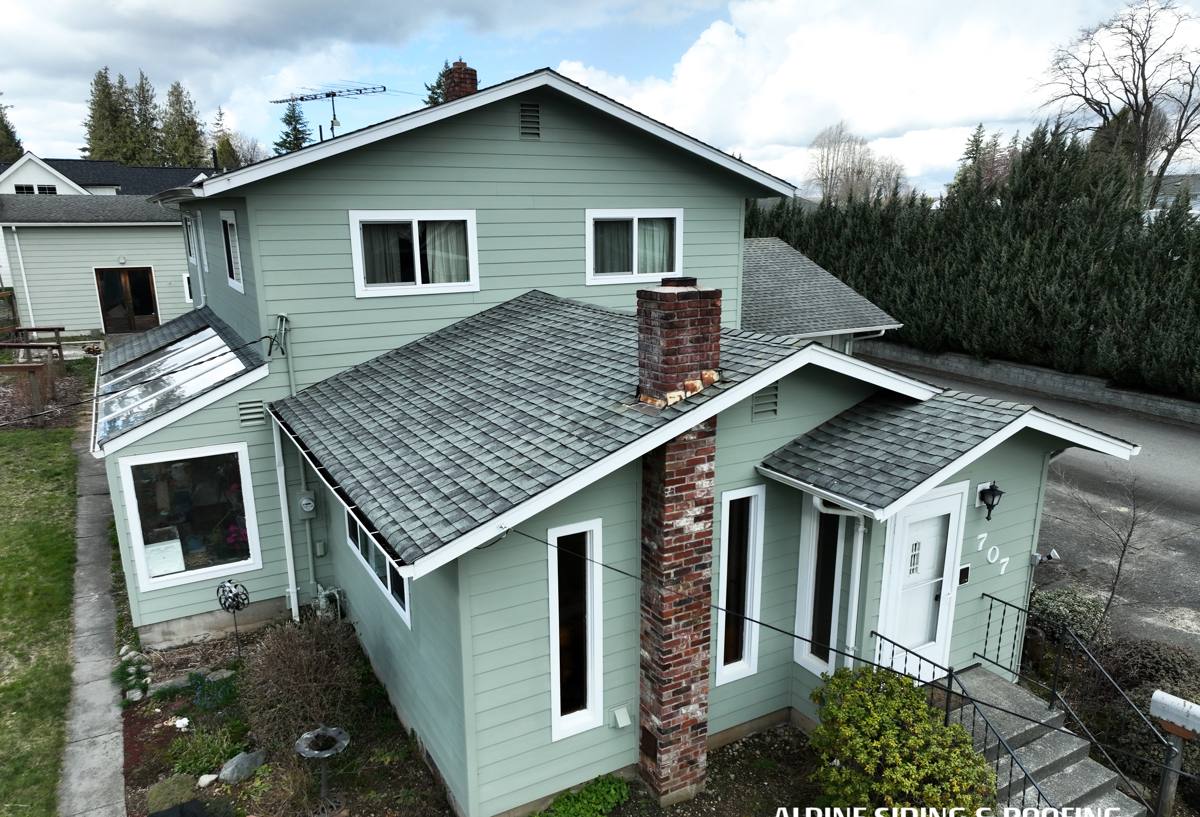
Signs a La Conner Home Needs Siding Replacement, Not Just Repair
Not every siding problem calls for a full tear-off. But there's a point where patching stops making sense and full replacement becomes the honest recommendation. Look for these signs:
- Soft or spongy spots when you press on the siding, especially near the bottom courses and around windows
- Paint that's failing repeatedly in the same spots within a year or two of repainting
- Persistent moss or algae growth that returns within weeks of cleaning
- Visible gaps, warping, or buckling panels, particularly on the water-facing side of the house
- Interior signs — musty smell, peeling interior paint near exterior walls, or visible staining — that point to moisture getting past the siding entirely
- Corroded or rust-streaked fasteners, common on older siding in salt-air locations
If you're seeing two or more of these, especially on a home that's been through a few decades of Skagit County winters, it's worth having someone look at what's underneath the siding, not just the surface.
What a Correct Siding Replacement Actually Involves
Siding replacement is not just swapping old panels for new ones. Done right, it's a full building-envelope job:
Tear-off and inspection
Old siding comes off down to the sheathing so we can see the actual condition of the wall — rot, insect damage, or water staining that was hidden behind the old material. This is often the first real look anyone's had at the wall assembly in years, and in a waterfront town like La Conner it's common to find moisture damage that never showed on the outside.
Water-resistive barrier and flashing
A new weather-resistive barrier goes on before any new siding, along with correctly lapped flashing at every window, door, and roofline intersection. This layer is what actually keeps water out of the wall — the siding itself is the first line of defense, but the WRB and flashing details are what stop a small leak from becoming rot. Given how much wind-driven moisture La Conner homes face, we don't cut corners here.
Fastening and gapping
Fiber cement siding has manufacturer-specified fastener patterns, gap tolerances at butt joints, and clearance requirements above rooflines and decks. These specs exist because siding installed too tight, fastened wrong, or without proper clearance traps moisture instead of shedding it — which defeats the purpose of upgrading in the first place.
Trim, caulking, and paint touch-up
Corner boards, trim, and caulking at penetrations finish the job. On a ColorPlus-finished product, factory-applied color means almost no field painting is needed, which also means fewer seams where water can get behind the finish later.
Why We Install Only James Hardie Fiber Cement
We don't install vinyl, LP SmartSide, or other fiber cement brands — we've standardized on James Hardie for every job, including here in La Conner. Vinyl siding can warp and fade faster in the kind of sun-and-salt-air cycling this area gets, and its seams and expansion joints give wind-driven rain more places to work. Wood-based and engineered-wood products depend heavily on paint film and edge-sealing to stay dry, and a coastal climate with a long moss season is exactly the environment where any gap in that maintenance shows up as rot.
James Hardie fiber cement is non-combustible, doesn't swell or rot from moisture exposure the way wood-based products can, and comes with a factory-applied ColorPlus finish that's baked on and warranted separately from the product itself. Hardie also makes climate-engineered HZ product lines — HZ5 for wetter, harsher climates like ours in Western Washington — which matters more in a place like La Conner than it would somewhere drier. That combination of non-combustible material, factory finish, and a formulation matched to our climate is why it's the only product we put on homes.
Our Process for a La Conner Siding Replacement
- On-site assessment — we walk the exterior, check for moisture damage, and look at how the home is exposed to wind and water off the channel
- Written estimate — scope, product line, color, and price, with no pressure to sign on the spot
- Tear-off and sheathing inspection — old material removed, any rot or damage repaired before anything new goes on
- WRB and flashing installation — the moisture-management layer that does the real work of keeping the wall dry
- Hardie siding installation — installed to manufacturer spec for fastening, gapping, and clearance
- Trim, caulk, and final walkthrough — finishing details and a final inspection with the homeowner
What Siding Replacement Costs — and What Drives the Price
Every La Conner home is different, and we won't quote a number without seeing the house. But these are the main factors that move the price up or down:
| Factor | Why It Matters |
|---|---|
| Home size and wall complexity | More corners, dormers, and cutouts mean more labor and material waste |
| Extent of hidden damage | Rot found after tear-off adds sheathing or framing repair before new siding can go on |
| Siding profile and accessories | Lap siding, panel systems, and trim/batten details vary in material and labor cost |
| Access and site conditions | Waterfront lots, tight setbacks, or difficult staging areas can affect scheduling and labor |
| Color and finish | Factory ColorPlus finishes cost more upfront than field-painted product but eliminate a repaint cycle |
The honest range for a full siding replacement varies widely based on these factors — which is exactly why we do an in-person assessment before giving a number instead of quoting off a phone call.
Why Hiring a Crew That Already Works in La Conner Matters
La Conner isn't a big town, but it has its own quirks — waterfront exposure, older housing stock, tighter lots near the historic district, and permitting that runs through Skagit County. A crew that's already worked in the area knows what wind-driven rain off the channel actually does to a wall, has a feel for which properties tend to hide moisture damage, and isn't guessing at how to sequence a job around narrow driveways or limited staging space. That local familiarity shows up in fewer surprises mid-project and a more accurate estimate up front.
Keeping New Siding Looking Right in a Salt-Air, Moss-Prone Climate
Fiber cement with a factory finish needs far less upkeep than wood or repainted vinyl, but "low maintenance" isn't "no maintenance," especially this close to the water. A simple annual routine goes a long way:
- Rinse the siding once or twice a year with a garden hose to clear salt residue and organic buildup
- Trim back tree branches and shrubs that keep siding shaded and damp
- Check caulking at trim and penetrations annually and re-caulk any cracked or shrunk joints
- Address moss at first sign rather than letting it establish — a soft wash is enough on Hardie's factory finish
- Watch gutters and downspouts for overflow that sprays water back onto the wall
None of this is heavy labor, but skipping it in a climate like La Conner's lets small issues — a cracked caulk joint, a patch of moss — turn into bigger ones over a few wet seasons.
Ready to Talk About Your Siding?
If your La Conner home is showing signs of wear, or you just want an honest read on how much life is left in your current siding, we're happy to take a look. The estimate is free, there's no pressure, and you'll get a straight answer about what your home actually needs.