 Skagit County
 Why Big Lake Siding Wears Out Faster Than Homeowners Expect
Homes around Big Lake sit in a specific kind of exposure: open water on one side, heavy tree canopy on the other, and Skagit County's marine-influenced weather wrapping around both. That combination is harder on exterior siding than a typical suburban lot. Humidity rising off the lake keeps wall surfaces damp longer after a storm, and mature trees shade the north and west walls of many homes for much of the day, slowing that drying time even further. Add in the driving rain that comes through the county on a regular basis, plus the broader marine air pattern that carries salt-tinged moisture in off Puget Sound during windier stretches, and you get siding that spends more of the year wet than dry.
Moisture That Doesn't Leave
Siding is designed to shed water, not sit in it. When walls stay damp for extended periods — because of shade, lake humidity, or poor drainage detailing behind the siding — that's when problems start: paint failure, swelling in wood-based products, and moisture finding its way behind panels through worn caulk joints or old flashing. It's a slow process, which is exactly why it goes unnoticed until the siding is already compromised.
The Moss Problem
Skagit County's long moss season is one of the more visible signs of this moisture load. Moss and algae need sustained dampness to establish, and shaded, lake-adjacent walls give them exactly that. Beyond the cosmetic staining, moss holds water against the siding surface, which accelerates whatever underlying wear is already happening.
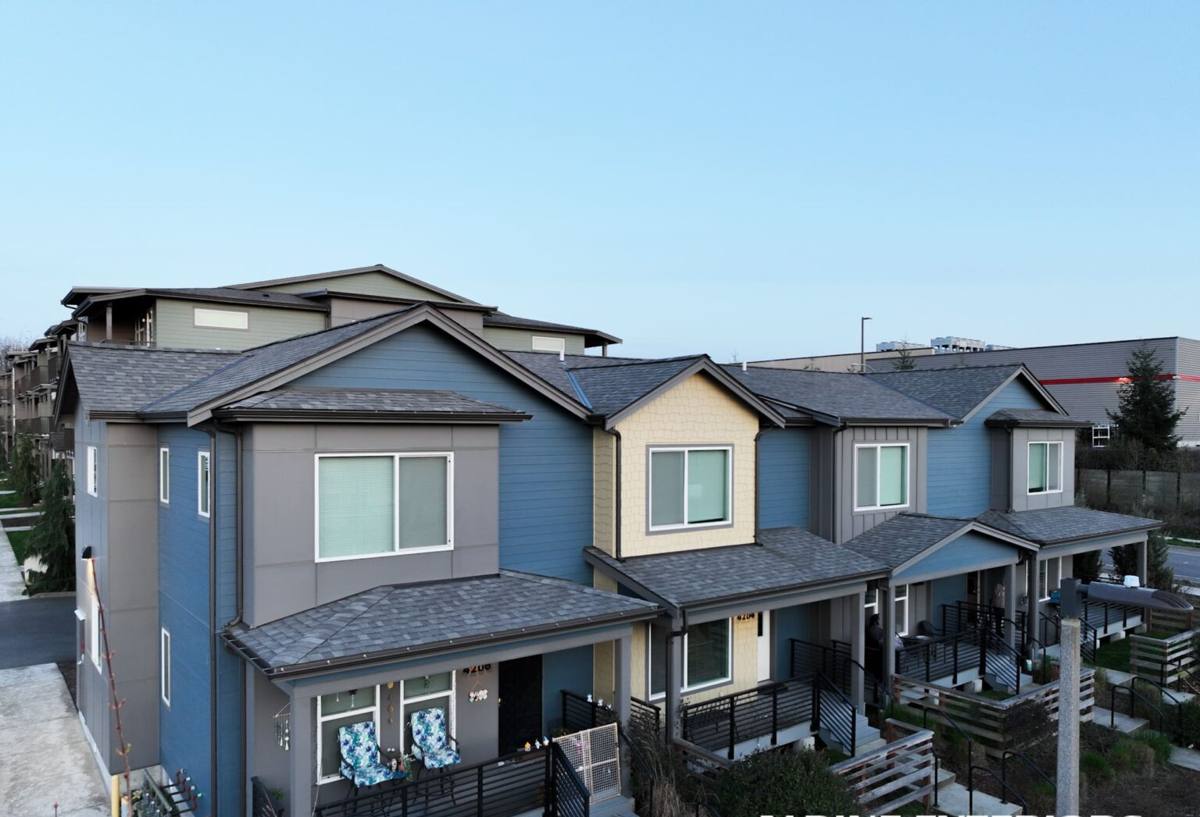
What a Correct Siding Replacement Actually Involves
Siding replacement isn't just removing old panels and nailing up new ones. Done correctly, it's a system — and every layer of that system matters more in a lake environment than it would somewhere drier.
Tear-Off and Sheathing Inspection
Once the old siding comes off, the sheathing underneath tells the real story. This is the point where hidden rot, soft OSB, or water-damaged framing gets found — and it needs to get fixed before anything new goes up. Skipping this step, or patching over damaged sheathing instead of replacing it, is one of the most common shortcuts that leads to premature siding failure.
Flashing, Drainage Plane, and Fastening
A correctly installed weather-resistive barrier, properly lapped and taped, is what actually keeps bulk water out of the wall assembly — the siding itself is the first line of defense, not the only one. Window and door flashing needs to direct water out and away, not behind the barrier. Fastener placement, spacing, and depth need to match the manufacturer's specifications exactly, because over- or under-driven fasteners are a leading cause of siding that fails early. Proper clearance from grade, roof lines, and decks also matters — siding installed too close to the ground or to a roof surface stays wet longer and invites rot at the bottom edge.
Signs a Big Lake Home Needs Replacement, Not Just Repair
Not every siding problem calls for a full tear-off. But in a lake and moss-heavy environment, certain signs mean the siding has moved past the point where patching makes sense.
- Soft or spongy spots when you press on the siding, especially near the bottom courses
- Paint that keeps failing within a year or two of repainting, even after proper prep
- Moss or algae staining that returns within months of cleaning
- Visible warping, cupping, or gapping at panel seams
- Popped or backed-out nails across multiple areas of the wall
- A musty smell or bubbling interior paint near exterior walls
- Siding that's original to a home 20-25+ years old, particularly wood-based products
Any one of these on its own might be a repair. Several at once, especially on the shaded or lake-facing walls, usually means the siding has already let moisture in behind it.
Comparing Siding Materials in a Lake and Moss Environment
We get asked why we don't install every product on the market. Here's an honest comparison of how the common options actually perform under Big Lake's conditions — sustained shade, lake humidity, and Skagit County's wet season.
| Material | Moisture Behavior | Moss/Algae Resistance | Maintenance Burden |
|---|---|---|---|
| Vinyl | Can warp or bow under temperature swings and driving rain; doesn't hold caulking well long-term | Poor — stains are hard to fully remove without damaging the surface | Low, but limited lifespan in this climate |
| LP SmartSide (engineered wood) | Wood-based core is vulnerable if moisture gets past the finish; edges need meticulous sealing | Moderate — factory finish helps, but damaged areas absorb moisture quickly | High — relies on intact caulking and touch-up paint at every cut edge |
| Cedar | Natural material, absorbs and releases moisture readily; prone to swelling in shaded, damp areas | Poor without frequent treatment | High — needs regular staining or sealing to hold up |
| James Hardie fiber cement | Cement-based composition doesn't swell, rot, or absorb moisture the way wood products do | Better resistance; factory ColorPlus finish sheds staining more easily | Low — no repainting cycle required for the life of the finish warranty |
Why We Only Install James Hardie Fiber Cement
We made a deliberate decision to install one siding system: James Hardie fiber cement, and only Hardie. That's not a marketing position — it's a professional standard we hold to after weighing the trade-offs above against what a Skagit County home actually needs to survive decades of lake humidity and driving rain.
Fiber cement is non-combustible, which matters on its own merits. But the bigger factor for Big Lake specifically is moisture behavior: it's not a wood product, so it doesn't swell, cup, or rot the way engineered wood or cedar can when moisture gets behind a panel edge or a compromised caulk joint. Hardie's HZ10 product line is climate-engineered for exactly this kind of wet, marine-influenced weather, and the ColorPlus factory finish means the color is baked on rather than field-painted — it holds up against moss staining and fading without a repainting cycle. Hardie also backs its products with a strong, transferable warranty, which only holds real value when the installation itself is done to spec.
We're not going to tell a homeowner that vinyl, LP SmartSide, or cedar are bad products — each has real strengths and each has its place. But given what we see happen to siding around Big Lake over 10, 15, and 20 years, we stopped installing anything other than Hardie because it's what we're willing to stand behind long-term.
Our Process, Start to Finish
Estimate and Inspection
We walk the home, look at the current siding condition, check the shaded and lake-facing walls specifically, and talk through what we're seeing before any work starts.
Prep and Tear-Off
Old siding comes off, sheathing gets inspected, and any rot or moisture damage gets addressed and documented before new material goes up — not covered over.
Installation to Manufacturer Spec
Weather-resistive barrier, flashing, fastening, and clearances are all installed to James Hardie's published specifications, which is what keeps the manufacturer's warranty valid and the wall assembly actually performing.
Final Walkthrough
We walk the finished job with the homeowner, check every elevation, and make sure trim, caulking, and paint lines are clean before calling it done.
What Affects the Cost of a Big Lake Siding Replacement
Every home is different, but the same handful of factors drive most of the cost variation we see on lake-area projects.
| Factor | Why It Matters |
|---|---|
| Home size and number of stories | More wall area and taller elevations mean more material and labor time |
| Condition of existing sheathing | Rot or water damage found during tear-off adds repair work before new siding goes up |
| Trim and architectural complexity | Dormers, multiple rooflines, and detailed trim take more time than a simple rectangular wall |
| Site access | Lakefront lots with limited driveway or yard access can slow staging and material handling |
| Product selection | Standard Hardie plank versus the HZ10 climate-engineered line affects material cost |
We give straight numbers during the estimate rather than a vague range, once we've actually seen the home's condition and access.
Why Hiring a Crew That Already Works Big Lake Matters
A crew that's worked lake-area homes in Skagit County before already knows what to look for on a tear-off in this environment — where moisture tends to hide, how much drying time to expect between weather windows, and how shaded walls behave differently than sun-exposed ones on the same house. That experience shows up in fewer surprises mid-project and a finished install that's actually built for the conditions it has to survive, not just a generic installation done the same way regardless of where the house sits.
If your Big Lake home's siding is showing its age, we're happy to take a look and give you a straightforward, no-pressure estimate — no obligation, just an honest read on what your home actually needs.