 Skagit County
 Siding Repair in Lyman: A Different Climate Than It Looks Like From the Road
Lyman sits up the Skagit River valley, tucked between farmland and the foothills that lead toward the Cascades. It doesn't get the direct salt spray that coastal Skagit County towns deal with, but it gets its own version of the same problem: a long, wet season, heavy tree cover in a lot of yards, and river-valley humidity that lingers longer than it does out on the flats. Add in the driving rain that blows through the whole county most winters and a moss season that can run from October into May, and you have a climate that is patient and relentless with any weak point in a home's siding.
Siding repair here isn't about slapping a patch over a hole. It's about understanding why that spot failed in the first place — because in Skagit County, if you don't fix the cause, the same failure comes back in the same place within a couple of seasons.
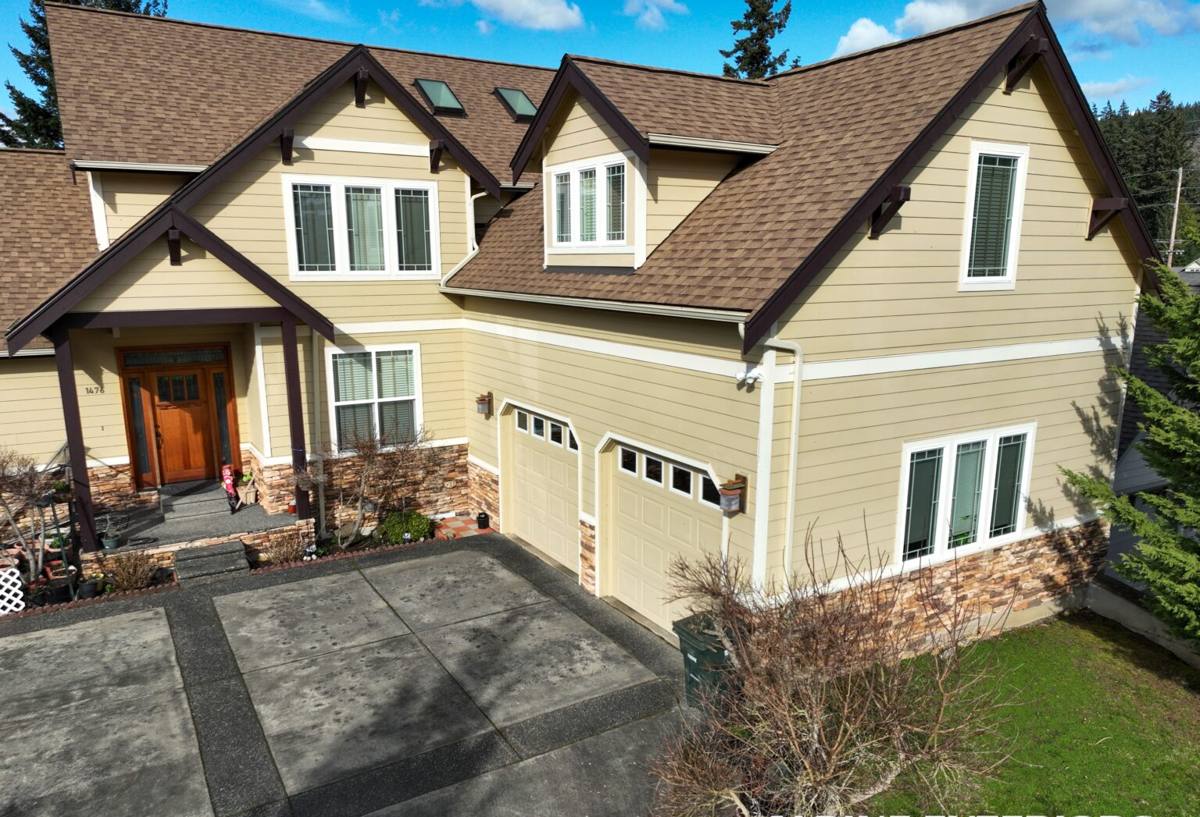
How Skagit County's Climate Shows Up in Lyman Siding Damage
Moisture that gets behind the siding, not just on it
Most siding damage we find in this area isn't from a single storm — it's from water finding a gap and working behind the boards over months or years. Once moisture is behind the siding instead of running off the face of it, you get soft trim, staining, and eventually rot in the sheathing underneath. By the time it's visible from the outside, it's usually been happening a while.
Moss, algae, and shaded north walls
Lyman's tree cover and valley humidity are a good recipe for moss and algae growth on siding, especially on north-facing walls and anywhere siding sits close to landscaping. Moss holds moisture against the surface far longer than open air would, which accelerates whatever damage is already starting underneath.
Temperature swings in the foothills
Being closer to the foothills than the coast, Lyman sees a bit more temperature swing than towns right on Puget Sound — colder snaps in winter, warmer stretches in summer. Siding materials expand and contract with those swings, and joints or caulk lines that were fine when installed can open up over time, giving water a new way in.
What a Correct Siding Repair Actually Involves
A repair that just covers the visible damage without addressing why it happened is a repair you'll pay for twice. Here's what we actually check and do on a Lyman siding repair call.
Diagnosing past the visible spot
We pull back or remove the damaged section and look at what's underneath — the house wrap, flashing, and sheathing — before we decide the repair is just cosmetic. If there's soft wood or a failed flashing detail behind the damage, patching the siding without fixing that is a short-term fix at best.
Matching material, profile, and finish
A repair that doesn't match the existing siding's profile, reveal, and color stands out immediately, and mismatched materials can behave differently in the same weather — expanding, absorbing moisture, or aging at different rates. Getting this right matters as much for long-term performance as it does for appearance.
Flashing and water management, not just the board
Most siding failures we see trace back to water management details — flashing above windows and trim, kick-out flashing at rooflines, or gaps where siding meets a deck or porch — rather than the siding material itself failing on its own. A repair that replaces the board but skips fixing the flashing underneath it is treating the symptom, not the cause.
Repair or Replace? How We Make That Call
Not every damaged section needs full replacement, and not every home is a good candidate for another round of spot repairs. Here's how we think through it with homeowners.
| Factor | Leans toward repair | Leans toward replacement |
|---|---|---|
| Extent of damage | Isolated to one or two areas | Recurring in multiple spots across the home |
| Underlying sheathing | Solid, dry once uncovered | Soft, stained, or rotted in more than one location |
| Age of existing siding | Newer, still well within its service life | Original siding is decades old or a shorter-lived material |
| Cause of failure | A single, fixable flashing or caulking issue | Systemic — poor original installation or a failing material |
| Match availability | Existing material/color can still be matched closely | Discontinued line or badly faded, mismatched patches would be obvious |
Honest answer: if we find damage in more than a couple of spots on a home, or the sheathing is compromised in several places, we'll tell you that repair is a band-aid and replacement is the better use of your money. We don't sell replacement jobs to homeowners who just need a repair, and we don't recommend patching a home that's going to need the same call again next winter.
Why We Repair — and Recommend — James Hardie Fiber Cement
We install and repair James Hardie fiber cement siding exclusively. We don't install vinyl, LP SmartSide, or cedar, and here's the honest reasoning that applies directly to repair work: fiber cement doesn't rot, doesn't swell with moisture the way wood-based products can, and is non-combustible. When we're patching a section of siding on a Lyman home, we want confidence that the new piece will age the same way as the rest of the wall, not faster or slower.
If your home already has Hardie siding, repairs are straightforward — Hardie's ColorPlus factory finish is designed to be matched, and touch-up products exist specifically to blend a repaired section without a visible seam. If your home has an older wood, vinyl, or engineered-wood siding that's failing in multiple spots, we'll say plainly that our standing recommendation is to move to Hardie at replacement time rather than keep repairing a material with a shorter service life — but that's a conversation, not a sales pitch, and we'll still do honest repair work on what you have if that's what makes sense for your home and budget.
Why the finish matters for repairs specifically
A factory-applied finish like ColorPlus resists fading and moisture intrusion better than paint applied on site, which matters when you're trying to match a patch to siding that's been up for several years. Field-painted repairs on other materials tend to show a visible difference within a season or two, especially in a climate as wet as Skagit County's.
Our Process for Lyman Siding Repair Calls
- Inspection: We look at the damaged area and the surrounding wall assembly, not just the spot you called about.
- Diagnosis: We identify whether the cause is a flashing failure, a caulking gap, impact damage, or a material issue, and we tell you which one it is.
- Honest recommendation: Repair, or replace — with the reasoning behind it in plain terms.
- The repair itself: Correct flashing and water management first, then matched siding material, sealed and finished to blend with the existing wall.
- Follow-up: We tell you what to keep an eye on afterward, especially if the damage was tied to a landscaping or drainage issue on your property that we can't fix ourselves.
Signs a Lyman Home Needs Siding Repair Now, Not Later
- Soft or spongy spots when you press on the siding, especially near the bottom courses or under windows
- Visible cracking, splitting, or buckled panels
- Persistent moss or dark staining that keeps coming back after cleaning
- Paint or finish that's peeling or bubbling in one concentrated area rather than evenly across the wall
- Gaps opening up around trim, window frames, or where siding meets the foundation
- A musty smell or visible staining on an interior wall that backs up to an exterior wall
Any one of these on its own might be minor. Two or more together, especially in the same part of the house, usually means water has been getting behind the siding for a while.
Why It Matters That We Already Work in Lyman and the Rest of Skagit County
A crew that only occasionally works this area has to relearn the local conditions every time — how far moss season really runs here, how a river-valley property's shade and humidity differ from a home a few miles away on open ground, and what the county's permitting and inspection expectations are. A crew that works Skagit County regularly already knows which repair details actually hold up through a full wet season here, because we've seen what happens when they don't. That local pattern-recognition is the difference between a repair that lasts and one you're calling about again next year.
If you're dealing with damaged, stained, or failing siding on a Lyman home, we're happy to take a look and give you a straight answer — repair or replace, and why — with no pressure either way. Fill out the form below for a free estimate.