 Skagit County
 Cedardale's Climate Is Hard on Siding
Cedardale sits in the part of Skagit County where marine air off the water meets heavy tree cover, and that combination is tougher on a house exterior than most homeowners realize until they're dealing with the damage. Salt-laden air corrodes fasteners and hardware over time. Driving rain, pushed sideways by wind off the water, finds every gap in a wall assembly that wasn't detailed correctly. And the shade from mature trees that makes Cedardale lots so pleasant also means siding stays damp longer after every storm, which is exactly the condition moss and algae need to take hold.
None of this means siding is a losing battle here — it means the material and the installation both have to be chosen for these conditions specifically, not for a generic Pacific Northwest spec sheet. A siding product that performs fine in a dry, open subdivision can struggle on a shaded, moisture-prone lot near the water. The installation details matter just as much as the product: flashing, gaps, fastening, and drainage all have to be done right for the climate the house actually sits in, not the climate on the label.
What Correct Siding Installation Actually Involves
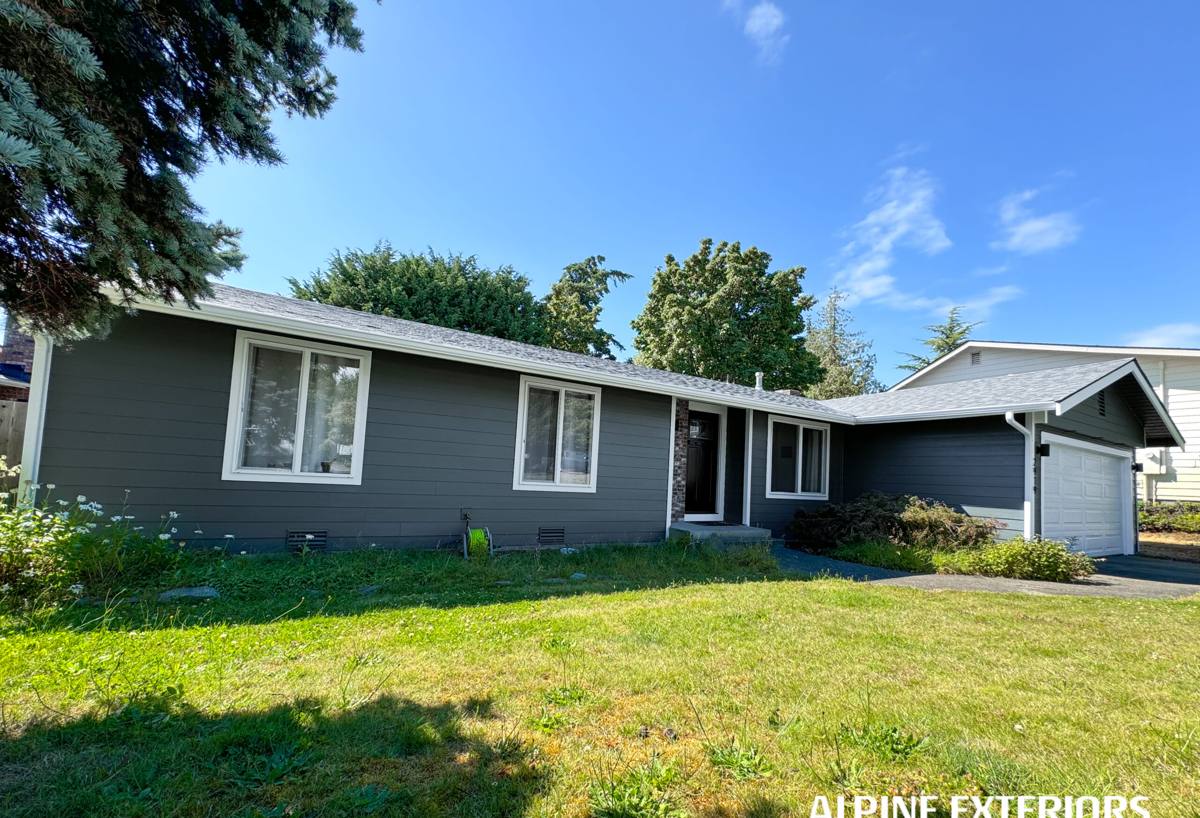
Siding installation looks simple from the curb — boards or panels go up, seams get caulked, done. In practice, the visible siding is the last layer of a system, and most siding failures trace back to something behind the board that was never installed correctly in the first place. On a job in this part of Skagit County, that system has to account for constant moisture exposure, not just occasional rain.
The Weather-Resistive Barrier and Flashing
Every wall needs a continuous weather-resistive barrier underneath the siding, lapped correctly so water sheds outward and down rather than working its way behind the barrier at a seam. Flashing at windows, doors, and any horizontal trim has to integrate with that barrier in the right order — installed so water is always directed out, never trapped behind the cladding. In a location that sees long stretches of wet weather, a flashing detail that's "close enough" will eventually let water in, and by the time it shows up as a stain or soft spot on the interior, the damage behind the wall is usually already significant.
Fastening and Clearances
Fiber cement siding has to be fastened per the manufacturer's specifications — correct fastener type, spacing, and depth. Overdriven or underdriven nails compromise the siding's ability to move slightly with temperature and moisture changes, which can crack the board or loosen it over time. Ground clearance and clearance from roof lines, decks, and other horizontal surfaces also has to be maintained; siding installed too close to grade or to a roof deck stays wet longer and is more exposed to splashback, which accelerates both moss growth and long-term wear.
Trim, Corners, and Caulking
The trim details — outside corners, inside corners, window and door casings, and butt joints between siding boards — are where most amateur installs go wrong. These are the highest-risk points for water intrusion on any home, and they need to be sealed with the right product and detailed so water sheds rather than collects. A correctly trimmed and caulked installation also just looks better and holds its lines longer, which matters on a home you're planning to own for years, not just for the next inspection.
Why We Install Only James Hardie Fiber Cement
We install one siding system: James Hardie fiber cement. That's a deliberate standard, not a lack of options. We've made the call that for the climate homes face in Skagit County — sustained moisture, salt air, and long stretches of shade — fiber cement gives homeowners the best combination of durability, low maintenance, and long-term value, and Hardie is the manufacturer whose product line, factory finish, and warranty structure back that up.
Fiber cement is non-combustible, which matters increasingly in the Pacific Northwest as wildfire risk becomes part of the conversation even in wetter counties. It doesn't rot, and it holds paint and color far longer than wood-based products because it doesn't move with moisture the way wood does. Hardie's ColorPlus finish is baked on at the factory under controlled conditions, which gives a more consistent, longer-lasting color than field-applied paint — a real advantage on a house that's going to spend a lot of its life damp.
Hardie also builds region-specific product lines. Their HZ5 formulation is engineered for climates with more freeze-thaw cycling, while the HZ10 line is built for the wetter, moisture-heavy zones like ours, with warranty coverage that reflects that engineering. That's a meaningful difference from a one-size-fits-all siding product — it means the material specified for a Cedardale home was actually formulated for the conditions it's going to sit in, not just rated for them on paper.
We get asked from time to time why we don't install vinyl, LP SmartSide, or cedar. Each of those products has legitimate uses and each has a fanbase for good reason. Vinyl is inexpensive and low-maintenance but it can warp in heat and doesn't hold up to impact the way fiber cement does. Wood-based engineered siding performs well when it's kept dry and maintained on schedule, but it's more vulnerable to sustained moisture exposure than fiber cement — exactly the exposure this area delivers. Cedar is beautiful and has real appeal, but it needs ongoing maintenance to keep performing, and in a shaded, damp environment that maintenance schedule gets demanding fast. We'd rather put one product on a house that's proven itself for these conditions than offer a menu of products with different long-term risk profiles.
Our Installation Process for Cedardale Homes
The process is the same discipline on every job, adjusted for the specific house and lot.
Assessment and Estimate
We start by looking at the existing siding, the wall assembly underneath where it's accessible, and the specific exposure the house has — how much direct rain and wind it takes, how much shade it sits in, and where moisture has historically been a problem. That assessment is what the estimate is built on, not a generic per-square-foot number.
Tear-Off and Prep
Old siding comes off, and we inspect the sheathing and framing underneath for any moisture damage or rot before anything new goes up. Any damaged sheathing gets repaired or replaced before the weather-resistive barrier and flashing go on — covering a problem behind new siding just delays it and makes it worse and more expensive to fix later.
Weather Barrier, Flashing, and Installation
We install the weather-resistive barrier and all flashing details first, then the Hardie siding itself, fastened and spaced to manufacturer specification. Corners, trim, and joints are detailed to shed water, not just to look finished from the street.
Final Walkthrough
Before we consider the job done, we walk the house with the homeowner, check every seam and corner, and confirm the finished work matches what was estimated. Any punch-list items get handled before we leave.
James Hardie vs. Common Alternatives on a Cedardale Lot
| Factor | James Hardie Fiber Cement | Vinyl | Wood-Based (LP-style / cedar) |
|---|---|---|---|
| Moisture resistance | Engineered for wet climates (HZ product lines); doesn't rot | Doesn't rot but can trap moisture behind panels if not detailed correctly | Vulnerable to sustained moisture; needs consistent maintenance to stay ahead of it |
| Salt air / coastal exposure | Non-combustible, dimensionally stable, holds finish well | Can become brittle and fade under UV and salt exposure over time | Finish breaks down faster near salt air; more frequent recoating needed |
| Moss and algae in shaded, damp conditions | Factory finish resists staining better than field-applied paint | Can develop chalking and staining that's hard to fully clean | Porous surface is more hospitable to moss and mildew growth |
| Maintenance | Periodic washing; repainting isn't needed for many years | Low maintenance but limited repair options if damaged | Regular repainting/resealing on a maintenance schedule |
| Fire resistance | Non-combustible | Combustible | Combustible |
What Influences the Cost of a Cedardale Siding Installation
Every house is different, and we don't quote a job without seeing it, but the same handful of factors move the price on most installations in this area.
| Cost Factor | Why It Matters |
|---|---|
| House size and wall complexity | More corners, dormers, and roof lines mean more trim work and flashing detail, not just more square footage |
| Condition of existing sheathing | Moisture-damaged sheathing found during tear-off has to be repaired before new siding goes on |
| Siding profile and finish selection | Lap width, panel style, and ColorPlus color selection affect material cost |
| Access and site conditions | Tree cover, slope, and how close the house sits to property lines can affect labor time |
| Trim and accent work | Additional trim boards, batten details, or accent siding add labor and material |
Signs Your Cedardale Home's Siding Needs Attention
Some warning signs are easy to spot from the yard; others take a closer look. Worth checking for:
- Persistent moss or dark green-black staining that comes back soon after cleaning
- Soft or spongy spots when you press on siding, especially near the bottom courses or under windows
- Visible warping, cracking, or gaps opening up at seams and corners
- Paint that's peeling, bubbling, or failing faster than it should on a recently painted surface
- Interior signs like musty smells, peeling interior paint, or stains on walls near exterior corners
- Fastener heads showing rust streaks or popping through the siding surface
- Higher heating bills without another clear explanation, which can point to a compromised weather barrier
Any one of these on its own isn't necessarily an emergency, but a few together are usually a sign the siding system — not just the visible surface — needs a real look, not just a repaint.
Why a Crew That Already Works Cedardale Matters
Siding installation isn't a one-size-fits-all trade, and a crew that regularly works Skagit County lots near the water understands things a crew from a drier, more sheltered area might not think to plan for — how much clearance to leave given the shade and moisture pattern, where flashing needs extra attention because of prevailing wind and rain direction, and how a given lot's tree cover is going to affect drying time after installation. That local pattern recognition doesn't replace following the manufacturer's installation spec, but it does mean fewer surprises and a job that's built for the actual conditions the house will face for the next several decades, not just for the day it was installed.
It also means accountability that isn't going anywhere. A crew that lives and works in this county has a reputation here to protect, long after the last invoice is paid. That's a different incentive structure than a crew passing through on a regional contract.
Caring for Your New Siding After Installation
Hardie fiber cement is low-maintenance, not no-maintenance. A periodic gentle wash — garden hose pressure, not a pressure washer aimed directly at seams — keeps moss and algae from establishing on shaded walls. It's worth walking the exterior once or twice a year, especially after a hard winter, to check caulking at trim and corners and catch anything early. Keep gutters clear and downspouts directed away from the foundation, since standing water and constant splashback are still the fastest way to shorten the life of any siding, Hardie included. None of this is demanding work, but skipping it entirely does give moisture and moss the opening they need in a climate like this one.
If you're weighing a siding replacement or repair on a Cedardale home, we're glad to come take a look and walk you through what we'd actually recommend for your house — no pressure, no generic quote pulled from a square-footage chart. Use the form below to request a free estimate.