 Skagit County
 Building Decks That Actually Hold Up in Sedro-Woolley
Sedro-Woolley sits in a part of Skagit County where the Skagit River valley funnels moisture year-round — long stretches of drizzle, heavy dew, low winter sun angles that keep shaded areas damp for days, and a moss season that can run from October clear through April. A deck that looks great in July can be a slick, algae-covered liability by January if it wasn't built with that reality in mind. We build custom decks for homeowners in and around Sedro-Woolley with that climate as the starting point, not an afterthought.
This page covers what a custom deck project actually involves here: material choices that make sense for this specific moisture load, structural details that matter more in Skagit County than they would in a drier part of the state, and what our process looks like from first call to final walkthrough.
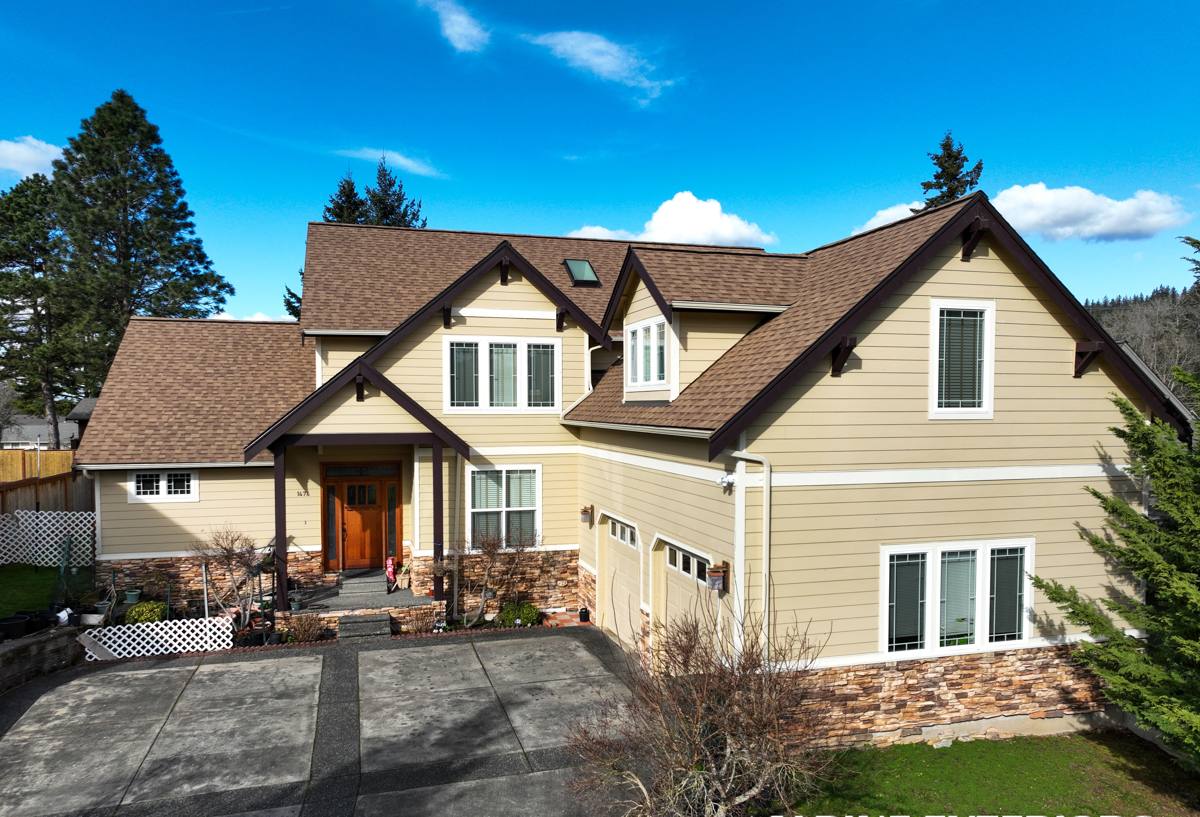
What Skagit County's Climate Does to a Deck
Three things wear on decks here more than almost anywhere else in Washington:
- Sustained moisture exposure. It's not just rainfall totals — it's the number of days a surface stays wet. Framing and decking that can't shed water or dry out between storms starts to break down from the inside, long before it looks bad on top.
- Moss and algae growth. Shaded decks, north-facing decks, and decks under mature trees (common on older Sedro-Woolley lots) grow moss on almost any surface if it isn't detailed to drain and dry properly. Moss holds moisture against the wood or composite surface and turns walking surfaces slick.
- Salt-tinged, driving rain. Weather systems moving up the valley from Puget Sound and the Sound-facing lowlands bring wind-driven rain that gets pushed under railings, into ledger connections, and behind fascia if flashing details are an afterthought. Over years, that's where rot and fastener corrosion start.
None of this means a deck can't last decades here — it means the framing, fasteners, drainage, and surface material all need to be chosen and installed with this specific climate in mind, not a generic build.
Where We See the Most Damage on Existing Decks
When we're called out to look at an aging or failing deck in the Sedro-Woolley area, the same few spots come up again and again: the ledger board connection to the house (especially if it wasn't flashed correctly at the time of the original build), joist tops that were never protected before decking went down, stair stringers sitting close to grade where they wick moisture from the soil, and any hidden fastener or hardware that wasn't rated for exterior/coastal-influenced exposure.
Material Choices for This Climate
There's no single "right" decking material for every project — it depends on budget, how much shade the deck gets, and how much maintenance the homeowner actually wants to do. We lay out the honest trade-offs rather than pushing one product.
| Material | Moss/Moisture Behavior Here | Maintenance | Typical Lifespan |
|---|---|---|---|
| Pressure-treated wood decking | Sheds water fine if gapped and finished correctly; bare or unsealed boards absorb moisture and grow moss faster in shaded spots | Needs re-staining/sealing every 2-3 years to keep moisture out | 15-25 years with upkeep |
| Cedar decking | Naturally rot-resistant but still needs sealing to resist moss in shaded, low-airflow areas | Similar refinishing schedule to treated wood | 20-25 years with upkeep |
| Composite decking | Doesn't absorb water into the board itself, but moss and algae can still grow ON the surface in shaded spots — needs occasional washing | No staining/sealing; periodic cleaning | 25-30+ years, manufacturer-warrantied |
| PVC/capped polymer decking | Best moisture resistance of the common options; surface algae is still possible in deep shade but doesn't affect the board core | Lowest maintenance; occasional cleaning | 25-30+ years, manufacturer-warrantied |
For decks that sit in heavy shade — common on lots with mature evergreens around Sedro-Woolley — we lean homeowners toward composite or capped polymer decking simply because the maintenance burden of keeping a wood deck sealed in a low-sun spot is real. For decks that get good sun exposure and airflow, a well-built wood deck with a realistic refinishing schedule performs well and costs less up front.
Structural and Framing Details That Matter Here
The decking surface is what homeowners see, but the framing underneath is what determines whether a deck lasts 15 years or 30. In a climate that stays wet this long, we treat a few details as non-negotiable:
- Proper ledger flashing. Where the deck attaches to the house, the flashing has to shed water away from the band joist, not into it. This is the single most common failure point we find on older decks in this area.
- Joist tape or joist caps. Protecting the tops of the joists from standing water dramatically extends framing life, especially under composite or PVC decking where moisture can sit longer than it would evaporate off bare wood.
- Corrosion-resistant fasteners and hardware. Given the moisture exposure here, we use fasteners and structural connectors rated for wet, coastal-influenced environments — not standard interior-grade hardware.
- Deck board spacing and airflow. Correct gapping between boards and adequate under-deck airflow both matter for how quickly a deck dries out after rain, which directly affects how much moss and mildew take hold.
- Footing depth and drainage. Skagit County soil conditions vary lot to lot; footings need to be sized and set to local frost depth and drainage requirements, not just "deep enough."
Our Process for a Custom Deck Build
1. On-Site Assessment
We walk the property, look at sun exposure, existing drainage, grade, and how the deck will tie into the house. Shade patterns matter as much as square footage when we're talking about material recommendations.
2. Design and Material Selection
We go over layout, railing style, decking material, and any features like built-in seating, stairs, or multi-level design. This is where we walk through the cost/maintenance trade-offs above so the homeowner picks a material that fits their budget and how much upkeep they actually want to do.
3. Permitting
Most custom deck projects in Skagit County require a permit, particularly for elevated decks or anything attached to the primary structure. We handle the permit process as part of the project so the work is inspected and up to code.
4. Framing and Structural Work
This is where the details in the section above get built in — correct ledger flashing, proper footings, corrosion-resistant hardware, and joist protection, before a single deck board goes down.
5. Decking, Railing, and Finish Work
Surface material goes down with correct spacing for drainage and airflow, followed by railings and any trim or finish details.
6. Final Walkthrough
We walk the finished deck with the homeowner, cover basic care and cleaning recommendations specific to the material chosen, and make sure everything meets the agreed design before we call it done.
Maintenance That Actually Extends the Life of a Deck Here
Whatever material a deck is built with, a few habits make a real difference in this climate:
- Sweep leaves and debris off the deck regularly, especially in fall — trapped organic matter holds moisture and feeds moss growth.
- Keep gutters and downspouts near the deck clear so water isn't being dumped directly onto or near the structure.
- For wood decks, stick to a realistic sealing schedule rather than waiting until boards look visibly gray or worn.
- Rinse composite or PVC decking periodically in shaded areas to keep surface algae from building up.
- Check railing posts and stair connections annually for any looseness, which can be an early sign of moisture getting into a connection point.
Why a Local Sedro-Woolley Crew Matters for This Project
Deck framing and material decisions that work fine in a drier climate can fail early here if they're copied from a generic build spec. A crew that already works decks throughout Skagit County knows which details — ledger flashing, fastener grade, joist protection, drainage — actually matter for this specific moisture and moss exposure, and which corners tend to get cut on decks that don't hold up. We're not learning the local climate on your project; we're applying what we already know works here.
Quick Checklist: What to Ask Before Hiring a Deck Builder in This Area
- Will the ledger connection be properly flashed, and can you explain how?
- What fastener and hardware grade will be used, and is it rated for wet/coastal-influenced exposure?
- Will joist tops be protected before decking goes down?
- Is a permit required for this project, and will you handle that process?
- Given the shade and sun exposure on my specific lot, what decking material do you actually recommend — and why?
If you're planning a new deck or replacing one that's showing its age, we're happy to walk your property, talk through material options for your specific sun and shade conditions, and give you a straightforward, no-pressure estimate. Use the form below to get in touch.