 Skagit County
 Decks in La Conner Take a Different Kind of Beating
La Conner sits close enough to the water that decks here deal with a different combination of stresses than decks further inland in Skagit County. Salt-laden air moves in off the water and settles on every horizontal surface, including deck boards, railings, and the fasteners holding it all together. Add driving rain that comes in sideways during winter storms, plus a moss season that can stretch from October through April in shaded or north-facing yards, and you've got a structure that's working hard year-round just to stay intact.
Most deck problems we see in this area aren't dramatic. They're slow — a fastener that's started to weep rust, a board that cups slightly at the edges, a railing post that's gone soft at the base. Caught early, these are small repairs. Left alone through another wet season, they turn into structural work. Our job is to catch them at the small-repair stage as often as possible, and to do the bigger repairs right when that's what's needed.
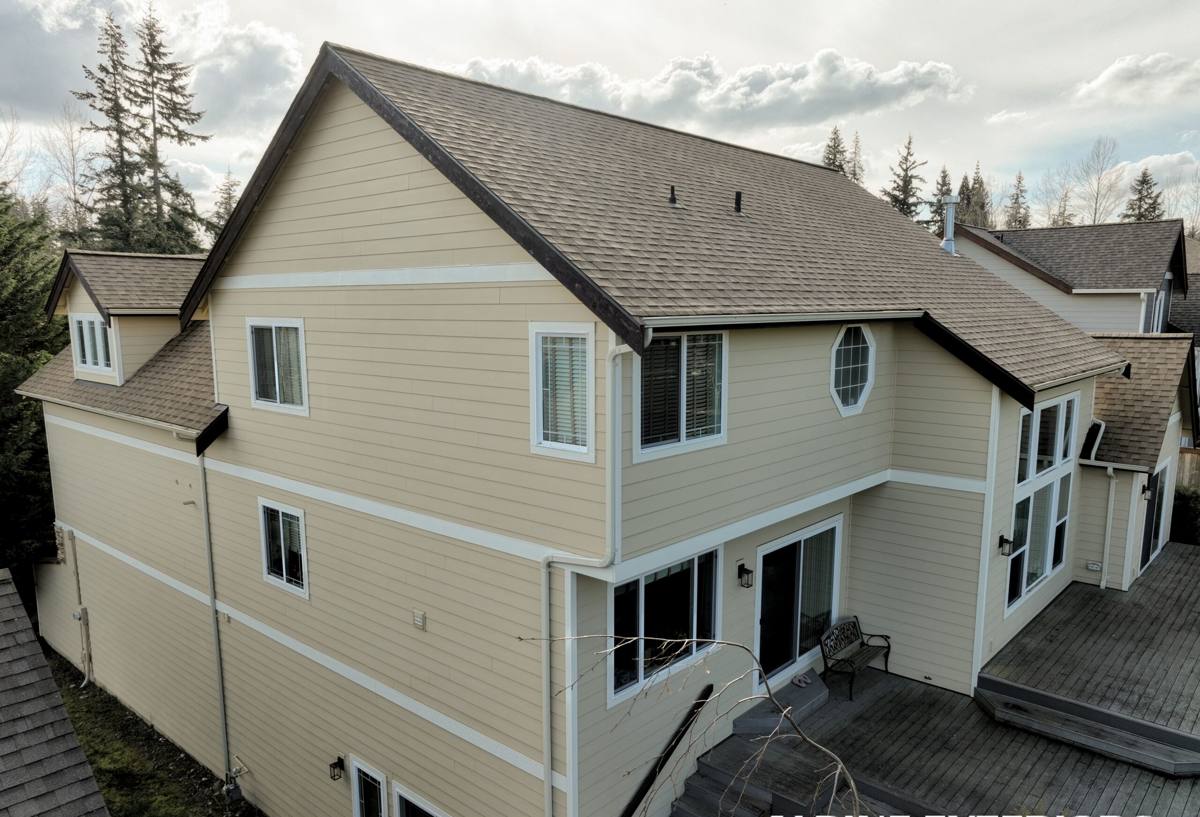
What Salt Air and Moisture Actually Do to a Deck
Fastener and Hardware Corrosion
Salt air accelerates corrosion on any metal that isn't properly rated for coastal exposure. Standard galvanized nails and screws can start rusting within a few seasons this close to the water. Once a fastener weakens, it stops holding the board tight, which lets water pool in the gap and speeds up rot underneath. This is one of the most common repair calls we get in La Conner — decks that look fine on the surface but have fastener failure happening quietly underneath the boards.
Moss and Trapped Moisture
Moss doesn't just grow on roofs. It takes hold on deck boards, especially in shaded corners, under furniture that never gets moved, and along the north side of a house where sun never really reaches. Moss holds moisture against the wood surface far longer than open air would, which is exactly the condition wood rot needs to get started. A deck that looks mossy but otherwise sound can have soft spots developing right underneath that moss mat.
Driving Rain and Water Intrusion
Wind-driven rain finds its way into places vertical rain never would — end grain on joists, ledger board connections, the tops of posts, and any spot where two pieces of lumber meet without proper flashing. In La Conner's exposure, we pay particular attention to the ledger board (where the deck attaches to the house) and to post bases, since both take on more water here than they would in a more sheltered yard.
Signs Your La Conner Deck Needs Attention
- Boards that feel spongy, springy, or noticeably softer underfoot than the rest of the deck
- Rust streaks running down from screw heads or nail holes
- Railings or posts that wiggle more than they should when you lean on them
- Persistent moss or algae that comes back within weeks of cleaning
- Gaps opening up between boards, or boards that have visibly cupped or crowned
- A ledger board area that stays damp long after the rest of the deck has dried
- Stair stringers or the bottom of support posts showing discoloration or crumbling wood
What a Correct Repair Actually Involves
A proper deck repair starts with figuring out how far the damage actually goes — not just fixing what's visible. We check board condition from above and, where accessible, from underneath, since rot at the joist or ledger level doesn't always show on the surface. We test railings and posts for movement, and we look closely at the ledger connection, since that's the single most common source of hidden water damage on this type of home.
Board Replacement Done Right
When boards need replacing, we match fastener spacing and gapping to the existing deck so water sheds the way it's supposed to, rather than pooling in tighter-than-intended gaps. We also use fasteners rated for the exposure the deck actually faces — which, in La Conner, usually means stainless steel or high-grade coated fasteners rather than standard galvanized, given how much faster ordinary hardware corrodes this close to the water.
Structural Repairs
If joists, ledger boards, or posts have rot, patching over it isn't a real fix — that section gets replaced or properly sistered with new lumber, and any flashing that failed gets redone at the same time. We're not going to reattach new decking to a structure that's still compromised underneath; that just moves the problem down the road a season or two.
Railing and Guard Repairs
Loose or rotted railing posts get addressed at the base connection, which is almost always where the failure starts. We check that post spacing and railing height still meet code once repairs are made, since older decks in this area were sometimes built before current guard height requirements.
Repair vs. Replacement: How We Help You Decide
| Factor | Points Toward Repair | Points Toward Replacement |
|---|---|---|
| Structural frame condition | Joists and ledger are sound | Widespread rot in framing or ledger |
| Age of decking | Under 10-15 years, isolated damage | Original decking near end of service life |
| Extent of damage | A few boards, one section, or railing only | Damage spread across most of the deck surface |
| Fastener condition | Localized corrosion | Widespread rust and fastener failure |
| Budget goals | Extend usable life affordably | Reset the clock with better materials for this exposure |
There's no universal answer here — a deck with a sound frame and a couple of damaged boards is almost always a repair. A deck where the frame itself is failing in multiple spots is usually money better spent on a rebuild. We'll walk you through what we actually find and let you make the call with real information, not a sales pitch toward the bigger job.
Materials That Hold Up to This Exposure
For repairs in a salt-air, high-moisture environment like La Conner, material choice matters more than it might further inland. Pressure-treated lumber remains a solid, cost-effective choice for structural repairs when properly sealed at cut ends. For decking boards themselves, composite and PVC options tend to handle the moisture and moss cycle with less maintenance than untreated wood, though they come at a higher upfront cost. Cedar is another common choice in this region and can perform well, but it does require more consistent maintenance — sealing and cleaning on a regular schedule — to keep moss and moisture from getting the upper hand.
We'll talk through the trade-offs honestly: upfront cost, expected maintenance, and how each material tends to behave over time in this specific climate, rather than pushing whatever has the best margin.
Our Process for La Conner Deck Repairs
- Inspection. We walk the full deck — surface, railings, posts, and accessible framing — and note everything, not just what you called about.
- Honest assessment. We tell you what's actually happening, including if a repair is likely to be a short-term fix versus a lasting one.
- Written estimate. Clear scope, materials, and price before any work starts — no surprises mid-project.
- The repair. Proper fasteners, matched materials, and attention to the water-management details that matter most in this climate.
- Final check. We confirm the repair is solid, railings meet code, and nothing was missed before we call it done.
Why a Crew That Already Works La Conner Matters
Deck repair advice that works for a dry, inland yard doesn't always hold up in La Conner's exposure. Fastener choice, flashing details, and even where moss tends to establish itself all shift once you're this close to the water. A crew that regularly works decks in this part of Skagit County has already seen how salt air, driving rain, and the long moss season play out on real homes here — which means fewer surprises and repairs that are built for the conditions your deck actually faces, not generic conditions from a manual.
We're not going to recommend tearing out a deck that just needs targeted repair, and we're not going to patch a deck that genuinely needs structural work. Either way, you get a straight answer and a repair built to hold up through the next several wet seasons, not just look good until the next one.
If you've noticed soft spots, rust stains, stubborn moss, or a railing that doesn't feel as solid as it used to, we're happy to take a look. Fill out the form below for a free, no-pressure estimate on your La Conner deck repair.