 Skagit County
 Why La Conner's Climate Is Hard on Roofs
La Conner sits right on the Swinomish Channel, and that waterfront location shapes almost every roof problem we see here. Salt-laden air moves off the water and settles on shingles, flashing, and fasteners, speeding up corrosion in a way that inland Skagit County homes just don't deal with as much. Add driving rain that comes in sideways during winter storms, and water gets pushed into laps and seams that would stay dry in a calmer climate. Then there's the moss. Western Washington's long wet season, roughly October through May most years, keeps roofs damp for weeks at a time, and shaded or north-facing slopes in La Conner rarely get enough sun or wind to dry out between rains. That combination of salt exposure, wind-driven rain, and a moss season that never really ends is why roof repair here is a different job than it is twenty miles inland.
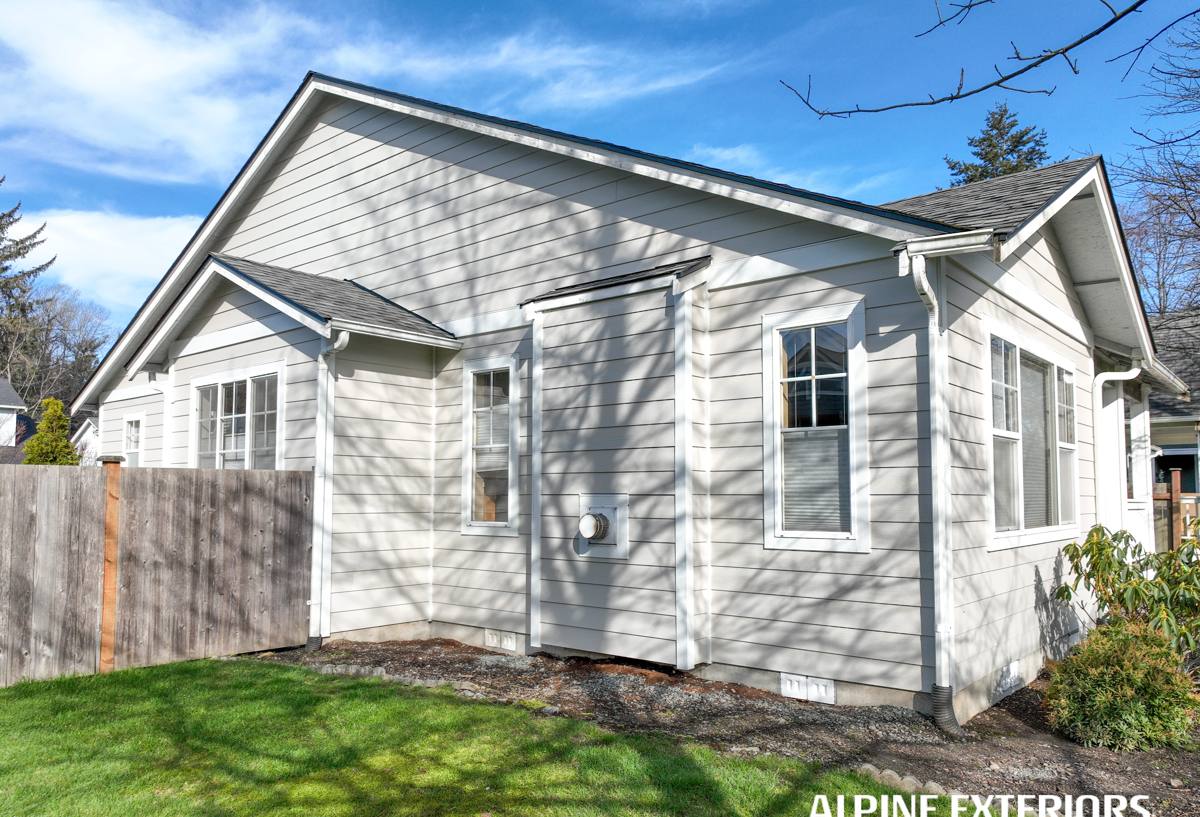
Common Roof Problems We Fix in La Conner Homes
Most of the repair calls we run in this area fall into a handful of categories, and almost all of them trace back to the climate factors above.
Moss and Organic Growth
Moss does more than look bad. It holds moisture directly against the roofing material, and on shingle roofs it lifts the tabs slightly as it grows, opening a path for wind-driven rain to get underneath. On older cedar or aging composition roofs, thick moss can trap enough water that the decking underneath starts to soften long before anyone notices a leak inside.
Flashing and Valley Leaks
Flashing around chimneys, skylights, dormers, and roof valleys is where we find the majority of active leaks. It's not usually the field of the roof that fails first, it's the transitions and penetrations. Sealant degrades faster in salt air, and once a bead of caulk that was doing the real work cracks, water finds its way in during the next hard rain.
Salt Air and Metal Fatigue
Nails, flashing, and gutter hardware corrode faster this close to the water. We regularly find fastener heads that have rusted through on roofs that are otherwise in decent shape, which lets shingles work loose in wind well before the shingles themselves are worn out.
Wind-Driven Rain Intrusion
Storms coming off the channel don't just drop rain straight down, they push it sideways under ridge caps, into exposed nail heads, and along poorly lapped underlayment. Homes with lower-slope sections or additions are especially exposed to this kind of intrusion.
Signs Your Roof Needs a Repair, Not Just a Look
Some problems are obvious from the ground. Others only show up once you're actually on the roof or in the attic. Here's what tends to mean it's time to call someone rather than wait for the next dry stretch:
- Water stains or discoloration on ceilings, especially near chimneys, skylights, or where two roof planes meet
- Thick, spreading moss or dark streaking across shingles, particularly on shaded or north-facing slopes
- Shingles that are curling, cupping, or missing granules in patches rather than evenly across the roof
- Visible daylight through the roof deck when viewed from inside the attic
- Rust streaks below flashing or fastener heads, or flashing that's visibly pulled away from a wall or chimney
- Soft or spongy spots underfoot in the attic, which usually means the decking has already absorbed water
- Granules collecting in gutters after a storm, a sign the shingles are wearing faster than they should
- A leak that shows up only during wind-driven rain, not in calm downpours
Any one of these on its own might be minor. Two or three together, especially after a stretch of storms off the water, usually means it's worth a real inspection rather than a guess.
Matching Symptom to Cause: A Quick Reference
Homeowners often ask what a particular symptom actually means before they commit to a repair call. This is a general guide, not a diagnosis, since the same symptom can have more than one cause.
| What You're Seeing | Likely Cause | Typical Fix |
|---|---|---|
| Ceiling stain near a chimney | Failed chimney flashing or cracked sealant | Re-flash the chimney base and counterflashing |
| Thick moss on a shaded slope | Prolonged moisture, poor drying between rains | Careful moss removal, treatment, and inspection of the decking underneath |
| Leak only during windy storms | Wind-driven rain under ridge caps or laps | Re-seat ridge caps, correct shingle lap and nailing |
| Rust streaks below a valley | Corroded valley flashing | Replace valley metal, not just the shingles over it |
| Granules in the gutters | Normal aging vs. accelerated wear from salt exposure | Depends on roof age; may be a repair or a sign to plan for replacement |
| Soft spot in the attic decking | Sustained moisture intrusion, often moss-related | Cut out and replace the affected decking, then re-roof that section |
What a Proper Roof Repair Actually Involves
Inspection Before Anything Else
A repair that starts without a real inspection is a guess. We get on the roof, check the attic from below when possible, and trace the water path rather than just patching where the stain shows up on the ceiling. Water travels along rafters and decking before it drips, so the leak's source is often several feet from where the damage appears indoors.
Matching Materials, Not Just Patching
A repair should use materials compatible with what's already on the roof, in weight, profile, and in some cases color, so the patch performs the same way the surrounding roofing does under sun, rain, and salt air. Mismatched materials can create new points where water behaves differently, which sometimes causes a new leak a season or two later.
Flashing Done Right
Since flashing failures cause most of the leaks we see in this area, we treat flashing repair as a metalwork job, not a caulk job. That means re-forming or replacing the flashing itself where it's corroded or undersized, then integrating it properly under the surrounding shingle courses so gravity and water flow are working with the repair instead of against it.
Skip the Quick Caulk Fix
Sealant has a place, mainly as a secondary defense at fastener heads and small gaps, but it's not a substitute for correct flashing or shingle lap. Caulk-only repairs tend to fail within a year or two in this climate because salt air and UV exposure break down sealant faster than they do properly lapped metal and shingle.
Repair or Replace? How We Help You Decide
Not every roof problem calls for a full replacement, and not every leak can be reliably fixed with a patch. We walk homeowners through the same factors we use ourselves:
| Factor | Repair Usually Makes Sense | Replacement Usually Makes Sense |
|---|---|---|
| Roof age | Under roughly two-thirds of expected material lifespan | Near or past expected lifespan for the material |
| Extent of damage | Isolated to one section, flashing point, or slope | Spread across multiple slopes or found in several unrelated spots |
| Decking condition | Solid, dry decking under the affected area | Soft, delaminated, or repeatedly wet decking |
| Moss history | First significant moss issue, caught early | Recurring heavy moss with prior undetected moisture damage |
| Material availability | Matching shingle or metal still reasonably available | Original material discontinued, making a clean match difficult |
We'll tell you honestly which side of that table your roof falls on. If a repair will genuinely hold, that's what we recommend and price. If the damage is bigger than it looks from the ground, we'll explain why before any work starts, not after.
Our Process, Start to Finish
Roof repair work in La Conner runs the same basic path on every job, adjusted for the specific roof and the access it needs:
- You reach out and describe what you're seeing, whether that's a stain, a draft, or visible damage from the ground
- We schedule an on-site inspection, checking the roof surface, flashing points, and attic where accessible
- You get a written scope of work and price before anything is touched, including what we found and why we're recommending it
- Repair day: we remove and replace only what's actually failed, matching materials and correcting the flashing or decking underneath as needed
- Cleanup and a walkthrough, so you can see what was done and ask questions on the spot
- A follow-up check after the next significant storm if there's any reason to confirm the fix is holding
Why a Crew That Already Works La Conner Matters
Roofing crews that work this stretch of Skagit County regularly develop a feel for which slopes hold moss longest, which flashing details tend to fail first in salt air, and how local permitting and inspection processes actually run. That familiarity shows up in small but real ways: knowing which repairs will genuinely hold up against driving rain off the water, sourcing shingle or metal profiles that match older La Conner homes without a long special-order wait, and being able to get back out quickly if a repair needs a follow-up look after a storm. A crew that only occasionally works this area is starting from scratch on all of that every time.
Keeping a Repair Lasting: Simple Maintenance Between Visits
A correct repair should hold for years, but a few habits stretch that further given how much moisture and salt air this area sees:
- Clear gutters and downspouts at least twice a year so water isn't backing up under the roof edge
- Trim back branches that keep a section of roof shaded and slow to dry after rain
- Have moss treated before it gets thick, rather than waiting until it's visibly lifting shingles
- Walk the property after any unusually windy storm and look for lifted shingles, displaced ridge caps, or new stains
- Check attic insulation and ventilation occasionally, since poor airflow traps moisture and speeds up decking damage
- Have flashing points looked at every few years even if there's no visible leak yet, since sealant degrades before it fails outright
If you're dealing with a leak, heavy moss, or just want an honest read on what shape your roof is really in, we're happy to take a look. The estimate is free, there's no pressure to sign anything on the spot, and you'll get a straight answer about whether you're looking at a repair or something bigger.